

Why Should Plain Washers Never Be Reused in Critical Torque-Controlled Tightening Operations
2026-05-20
In precision fastening systems, Plain Washers serve a fundamental role in load distribution and surface protection. However, under critical torque-controlled tightening operations, reusing these components introduces significant risks. At Huijue, engineering data confirms that once a Plain Washer has been tightened to a specified torque value, its mechanical properties change permanently. Reusing it compromises joint integrity, leading to clamp load loss and potential assembly failure.
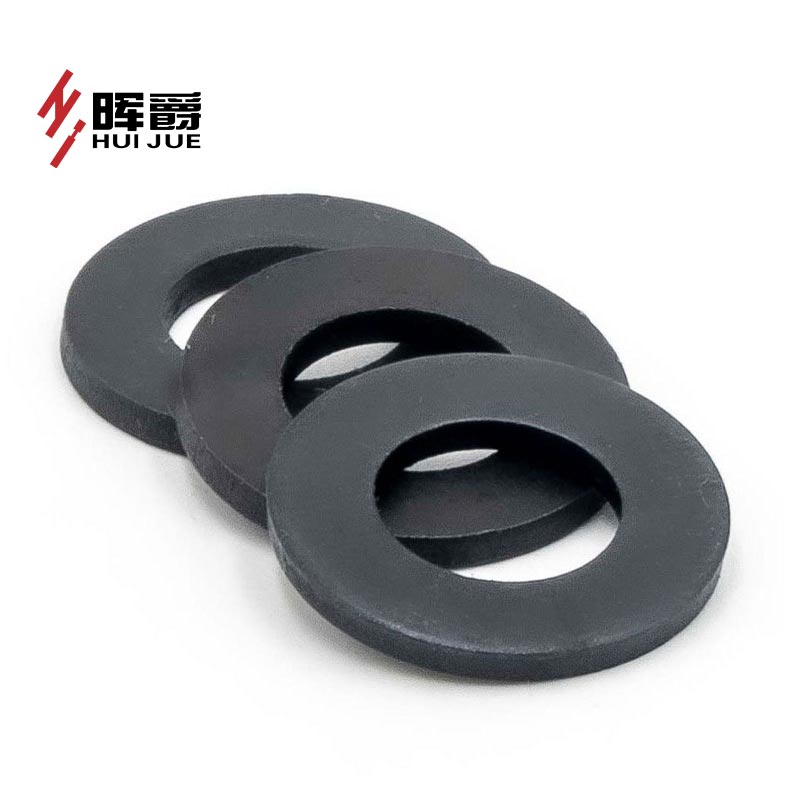
The Mechanical Degradation of Reused Plain Washers
When torque is applied, a Plain Washer undergoes localized plastic deformation. This creates indentations and hardness changes that reduce its ability to maintain consistent friction and clamp force.
| Parameter | New Plain Washer | Reused Plain Washer |
|---|---|---|
| Surface hardness (HRC) | 35–42 | 28–33 (work-softened) |
| Coefficient of friction | 0.12–0.15 | 0.18–0.25 (erratic) |
| Clamp force retention | 92–97% | 65–78% after retightening |
| Risk of bolt loosening | Low | High |
Why Reuse Fails in Torque-Controlled Systems
Torque-controlled tightening assumes consistent friction. A reused Plain Washer alters friction unpredictably, leading to under-torquing or over-torquing without indication. Additionally, embedded particles or scratches from previous installation accelerate wear on bearing surfaces. Huijue recommends replacing Plain Washers after every removal in applications such as engine assembly, structural steel, and pressure vessel bolting.
Key Risks Summary
-
Loss of preload accuracy – Torque-angle relationship becomes unreliable.
-
Surface galling – Metal transfer between washer and nut or joint material.
-
Micro-crack propagation – Repeated loading initiates fatigue failure.
-
Non-concentric seating – Previous deformation prevents even load distribution.
Plain Washers FAQ – Common Questions Answered
Question 1: Can I reuse Plain Washers if they appear undamaged with no visible bending or cracks?
Answer: Visual inspection is insufficient for Plain Washers used in torque-controlled tightening. Even without visible damage, plastic deformation occurs at the microscopic level, reducing hardness and altering surface flatness. This changes the friction coefficient by up to 40%, directly affecting torque-to-tension conversion. For non-critical applications like low-torque furniture assembly, reuse may be acceptable, but never in critical joints where safety or precision matters. Huijue advises mandatory replacement for any fastener tightened above 20 Nm.
Question 2: What types of Plain Washers are most vulnerable to damage from reuse in high-torque applications?
Answer: Through-hardened Plain Washers (e.g., HV 200 or HV 300 per ISO 7089) lose their original spring properties after first compression. Soft annealed Plain Washers suffer from embedment and permanent set. High-strength applications using Grade 10.9 or 12.9 bolts cause the most severe degradation because the clamping force far exceeds the yield strength of standard washers. Huijue recommends using precision-ground, case-hardened Plain Washers for torque-critical environments, and discarding them after each use.
Question 3: How does reusing Plain Washers affect the calibration of torque wrenches and angle-controlled tightening tools?
Answer: Reused Plain Washers introduce uncontrolled friction variation. A torque wrench set to 100 Nm may achieve only 70% of intended clamp force with a reused washer, or overload the bolt by 30% if friction decreases unexpectedly. In angle-controlled tightening (e.g., torque-to-yield bolts), reused Plain Washers cause premature yield because the angle required to reach target torque changes unpredictably. This invalidates assembly documentation and quality assurance records. Huijue engineering standards explicitly prohibit reuse of Plain Washers in any calibrated tightening process.
Conclusion – Why Huijue Prioritizes New Plain Washers for Every Critical Assembly
Reusing Plain Washers in torque-controlled operations introduces undetectable risks: altered friction, reduced clamp force, and hidden material fatigue. For industries where bolted joint integrity affects safety or performance—automotive, construction, energy, and heavy machinery—Huijue supplies Plain Washers engineered for single-use precision. Every washer meets ISO, DIN, or ANSI standards with certified hardness and surface finish.
Contact us today to request engineering specifications or discuss your torque-controlled fastening requirements. Huijue provides custom Plain Washers, bulk order support, and technical guidance for critical bolted assemblies.
