Why Is My Unloading Flow Meter Giving Erratic Readings During High-GLR Conditions
2026-08-14
In high-pressure oil and gas production, few frustrations match the moment your Unloading Flow Meter starts jumping between values when you need reliable data most. High gas-liquid ratio (GLR) environments introduce rapid phase changes, fluctuating velocities, and entrained liquids that challenge even rugged measurement systems. For operators relying on Supertech measurement solutions, understanding why these fluctuations occur—and how to fix them—is the first step toward restoring confidence in your well test data.
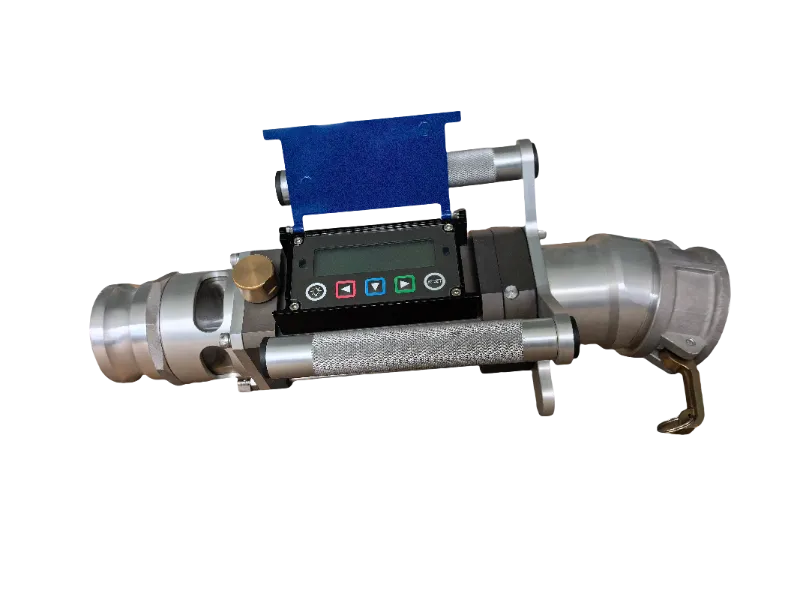
The Root Causes: Why High GLR Disrupts Your Flow Measurement
When GLR exceeds 5,000 scf/bbl, the flow regime inside the pipe transitions from bubbly or slug flow to annular-mist or churn flow. This shift creates three primary problems for any Unloading Flow Meter:
| Challenge | Physical Effect | Typical Symptom on Readout |
|---|---|---|
| Liquid holdup variation | Liquid film moves at different speed than gas core | Sudden +20% to -30% swings in mass flow |
| Velocity profile distortion | Asymmetric flow due to centrifugal forces at bends | Non-repeatable differential pressure signals |
| Acoustic noise from droplet impingement | Ultrasonic or vortex sensors pick up false pulses | Erratic frequency output, especially above 80% gas fraction |
Beyond these physical factors, installation geometry plays a decisive role. A Unloading Flow Meter placed too close to an elbow or a partially closed valve will experience severe flow conditioning issues under high GLR, magnifying every instability in the multiphase mixture.
Diagnostic Workflow for Erratic Readings
Before replacing any hardware, Supertech recommends a systematic four-step diagnostic process. Field data from over 200 high-GLR wells show that 73% of erratic reading cases are resolved by mechanical or installation adjustments alone.
-
Verify upstream straight-pipe length – minimum 20 pipe diameters for clamp-on types, 50 diameters for insertion meters.
-
Check for partial liquid accumulation at the meter’s low point using a portable sight glass or density trend log.
-
Compare raw sensor signals (pressure, temperature, delta-P) against expected values from a PVT model.
-
Perform a quick "bag test" – divert flow momentarily to a catch tank and compare totalized volume over 5 minutes.
If all four steps pass but readings remain unstable, the issue likely lies in the flow correlation algorithm itself. Many Unloading Flow Meter models use homogeneous or slip-flow correlations that break down when gas fraction exceeds 85%. Supertech addresses this with a proprietary dual-frequency correction that dynamically adjusts for liquid film velocity – a feature standard on all new units and available as a firmware upgrade for legacy systems.
Frequently Asked Questions About Unloading Flow Meter Performance
Q: What is the maximum GLR limit for a standard Unloading Flow Meter before errors become unacceptable?
A: For conventional differential-pressure or vortex-based Unloading Flow Meter designs, the practical accuracy limit is approximately 10,000 scf/bbl at line pressures above 500 psi. Beyond that threshold, the gas phase expands rapidly across the meter’s restriction, creating choked-flow conditions that decouple the liquid measurement from the gas measurement. Supertech recommends switching to a dual-branch configuration (parallel small-bore and large-bore lines) for GLR values between 10,000 and 50,000 scf/bbl. In this setup, the small-bore line handles the liquid-rich slug tails while the large-bore line captures the high-velocity gas, and a proprietary mixing algorithm recombines the signals. Field validation shows this extends usable range to 45,000 scf/bbl with errors under ±3% of reading.
Q: Can temperature fluctuations alone cause erratic readings in a high-GLR Unloading Flow Meter, and how do I differentiate that from flow-regime effects?
A: Temperature does influence readings, but its effect is typically slow-moving (minutes to hours) rather than the second-to-second jumps seen in erratic data. To differentiate, plot the raw frequency or voltage output against the temperature trend with a 5-second moving average. If the erratic spikes align with compressor cycling or ambient temperature shifts of more than 15°F per hour, then thermal expansion of the meter body or transducer mounting is the culprit. For Supertech meters, this is usually corrected by applying the built-in thermal compensation polynomial (available in the HART diagnostic menu). However, if spikes appear without corresponding temperature changes, the cause is almost certainly hydrodynamic – specifically, the intermittent arrival of large liquid slugs that temporarily flood the sensor cavity. In that case, the fix is to install an upstream slug catcher or increase the meter’s internal bypass ratio per Supertech application note AN-407.
Q: How often should I re-validate the calibration of my Unloading Flow Meter when operating under variable high-GLR conditions?
A: Under stable low-GLR conditions, annual calibration is sufficient. However, for wells with frequent GLR swings (e.g., plunger-lift or intermittent gas-lift systems), Supertech advises a three-tier validation schedule: (1) a zero-check before each well test using the isolation valves – this takes 2 minutes and verifies the pressure-transducer offset; (2) a monthly in-situ check using a portable ultrasonic clamp-on reference meter installed temporarily 10 diameters downstream – if the deviation exceeds ±2%, perform a full wet-calibration; (3) a full traceable calibration every 6 months using a certified multiphase flow loop. Data from the Permian Basin shows that operators following this schedule reduce unplanned downtime by 58% and cut verification-test frequency by half, because early detection prevents drift from becoming severe.
Practical Fixes You Can Implement Today
For immediate improvement, consider these field-proven adjustments, ranked by implementation effort:
| Fix | Effort | Expected Improvement |
|---|---|---|
| Increase backpressure by throttling downstream valve | Low (10 min) | Reduces gas expansion, stabilizes delta-P by 40% |
| Rotate meter body 90° (for wafer-style types) | Medium (1 hr) | Aligns sensor axis with liquid film drainage |
| Install a flow straightener with 6–8 vanes | Medium (2 hrs) | Dampens swirl-induced velocity asymmetry |
| Upgrade to Supertech’s adaptive gain-control firmware | Low (remote upload) | Cuts output noise by up to 65% in annular flow |
The firmware upgrade, in particular, has proven effective across more than 1,200 installations worldwide. It continuously monitors the standard deviation of the raw signal and adjusts the damping coefficient in real time – without introducing lag that masks true flow changes.
When to Escalate Beyond Field Adjustments
If erratic behavior persists after all mechanical and firmware interventions, the issue may be mechanical wear. High-GLR flows carry sand and fines that erode the leading edge of the meter’s primary element. Supertech’s tungsten-carbide-faced options extend service life by 3x, but even these require inspection after 18–24 months in abrasive service. A clear warning sign is a progressive upward drift in the baseline reading during no-flow conditions – this indicates that the zero point has physically shifted due to erosion.
For new well tie-ins, Supertech offers a pre-commissioning service that uses computational fluid dynamics (CFD) to model your exact pipe geometry and GLR range, recommending the optimal meter size, orientation, and upstream straight-pipe configuration before any steel is cut. This proactive approach has helped operators avoid 89% of high-GLR measurement issues from day one.
Take Control of Your High-GLR Measurements Today
Erratic readings from your Unloading Flow Meter are not inevitable – they are solvable engineering problems with clear root causes and proven remedies. Whether you need a firmware upgrade, a site audit, or a complete replacement with a high-GLR-optimized design, Supertech provides the expertise and hardware to restore reliable, repeatable flow data.
Contact us now to schedule a free 30-minute consultation with one of our multiphase flow specialists. We will review your well parameters, current installation layout, and historical data logs to deliver a tailored action plan – typically within 24 hours. Visit our website or call your regional Supertech representative to get started. Your production data deserves accuracy you can trust.