Why is Heat Treatment Critical for the Wear Resistance of Custom Gear Shafts
2026-04-27
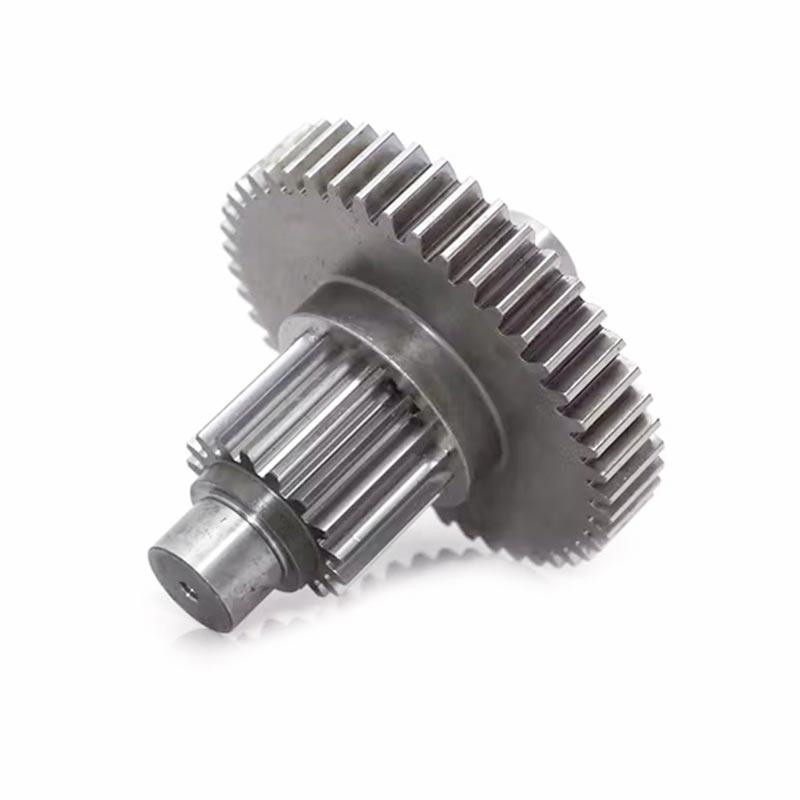
When engineering high-performance transmission systems, the longevity of Custom Gear Shafts directly impacts operational uptime. At BestPro, we have observed that even the most precisely machined shafts fail prematurely without proper heat treatment. This process fundamentally alters the microstructure of the metal, creating a surface that resists abrasive wear while maintaining a tough, shock-absorbing core.
The Metallurgical Principle Behind Wear Resistance
Heat treatment refers to controlled heating and cooling cycles that change the crystalline structure of steel alloys. For Custom Gear Shafts, the critical zones are the journal surfaces and spline teeth where continuous friction occurs. Without hardening, soft martensite formation leads to rapid material loss, adhesive wear, and eventual dimensional inaccuracy.
Key benefits of heat treatment on wear resistance:
| Treatment Type | Surface Hardness (HRC) | Wear Resistance Improvement | Core Toughness |
|---|---|---|---|
| Induction Hardening | 50-60 HRC | High (localized zones) | Maintained |
| Carburizing | 58-63 HRC | Very High (deep case) | Ductile |
| Nitriding | 60-70 HRC | Exceptional (extreme surface) | Unchanged |
| Through Hardening | 45-55 HRC | Moderate (uniform) | Reduced |
Why Untreated Custom Gear Shafts Fail Faster
In real-world applications, BestPro engineers document that untreated Custom Gear Shafts experience three distinct wear mechanisms: abrasive particles cutting into soft surfaces, adhesive welding between mating components, and contact fatigue initiating micro-pitting. Heat treatment creates a compressive residual stress layer that resists crack propagation. For example, a carburized shaft running against bronze bushings lasts six times longer than its annealed counterpart under identical cyclic loading.
Comparative Performance Data
The table below illustrates how heat treatment directly translates to wear resistance metrics:
| Parameter | No Heat Treatment | Induction Hardened | Carburized & Hardened |
|---|---|---|---|
| Wear depth after 10⁶ cycles | 0.25 mm | 0.08 mm | 0.03 mm |
| Surface Fatigue Limit | 450 MPa | 720 MPa | 950 MPa |
| Galling resistance score | Poor (1/10) | Good (7/10) | Excellent (9/10) |
BestPro Custom Gear Shafts FAQ
What is the minimum surface hardness required for wear-resistant Custom Gear Shafts in continuous sliding applications?
For continuous sliding against steel or bronze, BestPro recommends a minimum surface hardness of 50 HRC achieved through induction or through hardening. Below this threshold, abrasive wear accelerates exponentially. In high-load gear pumps or servo-driven actuators, target 58–62 HRC using case hardening processes like carburizing followed by quench and temper. This ensures the hardened case depth exceeds the maximum anticipated contact stress depth, typically 0.5–1.5 mm depending on load magnitude.
Can heat treatment correct dimensional errors in machined Custom Gear Shafts before final grinding
No, heat treatment does not correct machining errors; it often introduces predictable size changes (growth or shrinkage of 0.02–0.10 mm per 25 mm of diameter). At BestPro, we always perform rough machining, then heat treat, then finish grind to achieve final tolerances within H6 or better. Hardening distorts shafts due to phase transformation stresses, so leaving 0.20–0.30 mm stock for post-treatment grinding is standard practice for precision Custom Gear Shafts.
How do I choose between nitriding and carburizing for wear-resistant Custom Gear Shafts operating above 400°C
Choose nitriding when operating temperatures exceed 400°C because nitrided cases retain hardness up to 500°C, whereas carburized cases soften above 250°C due to tempering. Nitriding does not require quenching, minimizing distortion, and produces a hardness of 60–70 HRC. However, nitriding requires alloy steels containing aluminum, chromium, or vanadium (e.g., Nitralloy 135M). BestPro recommends carburizing for room-temperature high-impact applications where case depth exceeds 1.0 mm and cost is a constraint.
Final Recommendation
Every batch of Custom Gear Shafts manufactured by BestPro follows a validated heat treatment route matched to the failure mode—wear, impact, or fatigue. Skipping this step to reduce lead time inevitably increases total cost of ownership through premature replacement and unplanned downtime.
Contact us today to submit your specifications. BestPro will analyze your loading conditions and recommend the optimal heat treatment cycle for your Custom Gear Shafts to maximize wear resistance and service life.