Why Is Fiber Optic CNC Machining Becoming the Preferred Choice for High-Precision Optical Components?
2026-01-08
When I first started working closely with customers in the optical and communication industries, one thing became very clear to me very quickly: precision is not a “nice to have” requirement, it is everything. As our projects evolved, I gradually came into deeper contact with Zhongyilong, and through hands-on collaboration I saw how Fiber Optic CNC Machining quietly reshaped expectations around accuracy, consistency, and scalability in fiber optic component manufacturing.
In this article, I want to walk you through what I have learned from real production experience, focusing on how Fiber Optic CNC Machining solves common pain points and why more engineers and procurement teams are making it their long-term manufacturing strategy.
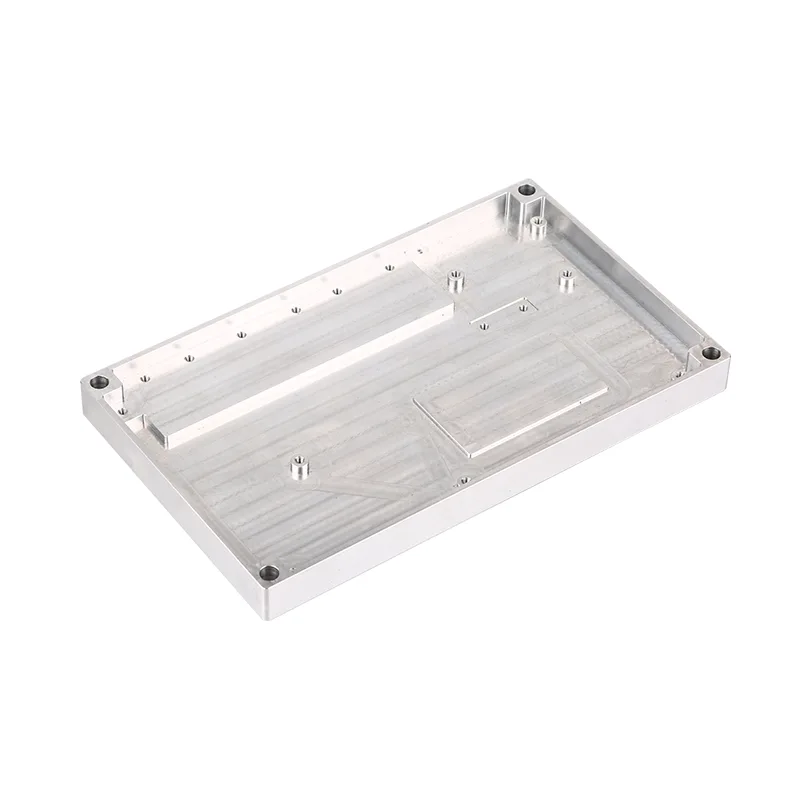
What Makes Fiber Optic CNC Machining So Critical for Optical Performance?
From my perspective, fiber optic components are unforgiving. Even the smallest deviation in a connector housing or alignment structure can lead to signal loss, reflection issues, or long-term instability. Fiber Optic CNC Machining addresses this challenge by allowing micron-level control over dimensions that directly affect optical transmission.
- Consistent concentricity between fiber channels and housings
- Stable surface finishes that reduce micro-vibrations
- Repeatability across large batch production
- Compatibility with complex internal geometries
These are not abstract advantages. They are the difference between a component that passes initial testing and one that performs reliably after years of deployment.
How Does Fiber Optic CNC Machining Improve Production Stability?
One of the most frequent concerns customers raise is long-term production stability. Manual processes or loosely controlled machining methods often lead to batch inconsistencies. In contrast, Fiber Optic CNC Machining relies on programmable precision, which means once parameters are validated, the output remains stable.
| Production Aspect | Traditional Methods | Fiber Optic CNC Machining |
|---|---|---|
| Dimensional Accuracy | Operator dependent | Program-controlled and repeatable |
| Batch Consistency | Variable across shifts | Highly uniform across batches |
| Scalability | Limited by manpower | Easily scalable with CNC programs |
This level of consistency significantly reduces inspection costs and minimizes the risk of downstream assembly issues.
Why Do Material Choices Matter So Much in Fiber Optic CNC Machining?
In my experience, the machining process is only as good as the material understanding behind it. Fiber Optic CNC Machining often involves aluminum alloys, stainless steel, or specialty engineering plastics, each with its own thermal and mechanical behavior.
By carefully selecting materials and optimizing cutting parameters, manufacturers can:
- Prevent thermal deformation during high-speed machining
- Maintain tight tolerances on thin-walled structures
- Achieve clean internal surfaces for optical alignment
This balance between material science and machining strategy is where real expertise shows.
How Does Fiber Optic CNC Machining Support Complex Custom Designs?
Another recurring pain point I hear from customers is the difficulty of translating custom optical designs into manufacturable parts. With Fiber Optic CNC Machining, complex geometries are no longer a bottleneck but a manageable design variable.
Advanced CNC systems allow for:
- Multi-axis machining of intricate internal channels
- High-precision threading and mounting features
- Design flexibility without sacrificing repeatability
This flexibility enables faster prototyping and smoother transitions from design to mass production.
What Real Business Value Does Fiber Optic CNC Machining Deliver?
Beyond technical performance, I always look at manufacturing methods from a business perspective. Fiber Optic CNC Machining offers tangible commercial advantages that directly impact project timelines and cost control.
| Business Factor | Impact on Customers |
|---|---|
| Reduced Rework | Lower hidden production costs |
| Faster Lead Times | Improved project scheduling |
| Quality Predictability | Fewer field failures and returns |
These benefits often outweigh the initial investment, especially for high-value optical systems.
Is Fiber Optic CNC Machining the Right Solution for Your Next Project?
If you are dealing with tight tolerances, complex geometries, or growing production volumes, Fiber Optic CNC Machining is not just an option, it is a strategic advantage. My experience working alongside Zhongyilong has shown me how the right machining partner can turn demanding optical designs into stable, scalable products.
If you are exploring solutions for your fiber optic components and want to understand how Fiber Optic CNC Machining can support your specific application, I strongly encourage you to contact us. Reach out today, share your requirements, and let us help you move from design challenges to reliable production results.