Why Is Fiber Optic CNC Machining Becoming the Backbone of High-Precision Optical Hardware?
2026-02-25
When I first began working closely with optical communication clients, I quickly realized that precision was not just a requirement, it was survival. Over the years, Shenzhen Zhongyilong Hardware Products Co., Ltd. gradually introduced and refined its capabilities in Fiber Optic CNC Machining, responding to growing demand for micron-level accuracy and consistent batch production. Today, I see firsthand how Fiber Optic CNC Machining directly influences signal stability, connector lifespan, and overall network performance in fiber optic systems.
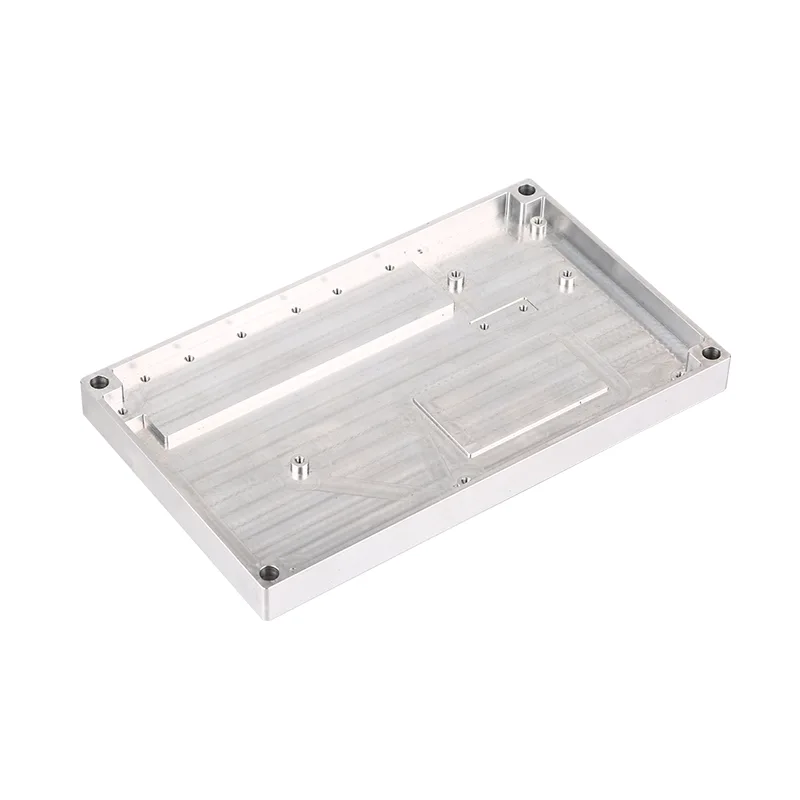
What Problems Do Manufacturers Face Without Fiber Optic CNC Machining?
Many engineers come to me with the same frustration. They struggle with dimensional inconsistencies, unstable tolerances, or poor surface finish when producing fiber optic housings and precision connectors. In fiber transmission, even minimal deviation can cause insertion loss or alignment issues.
Without reliable Fiber Optic CNC Machining, common challenges include:
- Misalignment between ferrules and connector bodies
- Surface roughness affecting signal transmission stability
- Batch variation leading to higher rejection rates
- Complex aluminum or stainless steel enclosures with inconsistent internal geometry
- Long lead times due to manual finishing or rework
I have seen how these issues increase operational costs and reduce customer trust. That is why precision-controlled machining processes are no longer optional in optical hardware manufacturing.
How Does Fiber Optic CNC Machining Improve Optical Component Performance?
From my experience, the greatest strength of Fiber Optic CNC Machining lies in its ability to maintain strict tolerance control across high-volume production runs. Fiber optic connectors, terminal boxes, and protective housings require dimensional stability that manual or semi-automatic methods cannot consistently deliver.
Key performance advantages include:
- Micron-level tolerance control for connector alignment
- Stable concentricity for optical axis precision
- High repeatability in mass production
- Smooth internal cavity finishing for thermal management
- Enhanced durability through precision-fit assembly
By applying multi-axis CNC systems combined with specialized tooling, Fiber Optic CNC Machining ensures that every housing, bracket, or optical module casing meets stringent industrial standards.
Why Does Surface Finish Matter So Much in Fiber Optic Hardware?
In optical communication, surface quality directly affects reliability. I often explain to clients that even small machining marks can interfere with component seating or compromise environmental sealing.
Through advanced Fiber Optic CNC Machining, surface roughness can be controlled precisely, which contributes to:
- Improved connector insertion stability
- Better sealing against dust and moisture
- Reduced vibration impact in telecom equipment
- Longer operational lifespan in outdoor installations
Consistent surface finishing also enhances anodizing and coating performance, especially for aluminum enclosures used in fiber optic distribution boxes.
What Materials Benefit Most from Fiber Optic CNC Machining?
Fiber optic components are often manufactured from aluminum alloys, stainless steel, brass, or engineering plastics. Each material demands a tailored machining strategy.
| Material | Application | Machining Advantage |
| Aluminum Alloy | Connector Housings, Optical Modules | Lightweight, corrosion resistant, high-speed machining capability |
| Stainless Steel | Outdoor Fiber Terminals | High strength, environmental durability |
| Brass | Precision Adapter Components | Excellent machinability, tight tolerance retention |
| Engineering Plastics | Insulating Components | Electrical insulation and lightweight structure |
I rely on optimized tooling parameters to maintain dimensional integrity across different materials. This adaptability is what makes Fiber Optic CNC Machining suitable for both telecom infrastructure and data center hardware.
How Does Fiber Optic CNC Machining Support Scalable Production?
When clients expand their projects from prototype to mass production, scalability becomes critical. In my workflow, digital modeling and CNC programming allow seamless transition from small batch validation to full production runs.
Benefits for scalable production include:
- Digital consistency between prototype and mass production
- Reduced human error through automated tool paths
- Shorter turnaround time for urgent telecom projects
- Stable quality control supported by precision inspection systems
With strict process monitoring, Fiber Optic CNC Machining minimizes deviation across thousands of units. That reliability is essential for network operators who cannot afford downtime caused by hardware defects.
Why Is Precision Machining Critical for Signal Integrity?
Signal loss and misalignment are two major risks in fiber optic systems. I have learned that even slight structural shifts in connector housings can affect optical path alignment. Precision machining directly protects signal integrity.
Through Fiber Optic CNC Machining, we maintain exact geometrical tolerances, ensuring:
- Accurate alignment of fiber cores
- Reduced insertion and return loss
- Stable mechanical coupling
- Reliable long-term field performance
This level of control builds confidence for clients in telecommunications, industrial automation, medical imaging, and high-speed data transmission sectors.
What Makes a Reliable Fiber Optic CNC Machining Partner?
From my perspective, the right partner offers more than machines. They provide engineering collaboration, manufacturability optimization, and long-term process stability. I always recommend evaluating:
- Multi-axis CNC capability
- Strict quality inspection standards
- Experience with optical communication hardware
- Flexible customization services
- Consistent delivery timelines
Working with an experienced team in Fiber Optic CNC Machining reduces development risks and accelerates product launch cycles.
Are You Ready to Upgrade Your Fiber Optic Hardware Manufacturing?
In today’s competitive optical communication market, precision defines performance. Through advanced Fiber Optic CNC Machining, manufacturers can achieve superior dimensional accuracy, consistent surface quality, and scalable production reliability.
If you are developing fiber optic connectors, enclosures, or precision components and need dependable machining support, I encourage you to take the next step. Let us discuss your project requirements, optimize your designs for manufacturability, and deliver consistent quality. Contact us today to request a quotation or technical consultation. We are ready to support your next fiber optic innovation.