

Why Is DIN 9845 Type A Preferred for High-Speed Thread Rolling Operations
2026-08-28
In modern manufacturing, high-speed thread rolling demands tooling that balances precision, durability, and thermal stability. The Standard DIN 9845 Dies Type A has emerged as the industry benchmark for such operations, and manufacturers like Luckyear have built their reputations on delivering dies that strictly conform to this specification. But what makes this particular standard so dominant on high-speed lines? The answer lies in its geometry, metallurgical requirements, and rigorous testing protocols—all of which directly address the failure modes that plague lesser tooling.
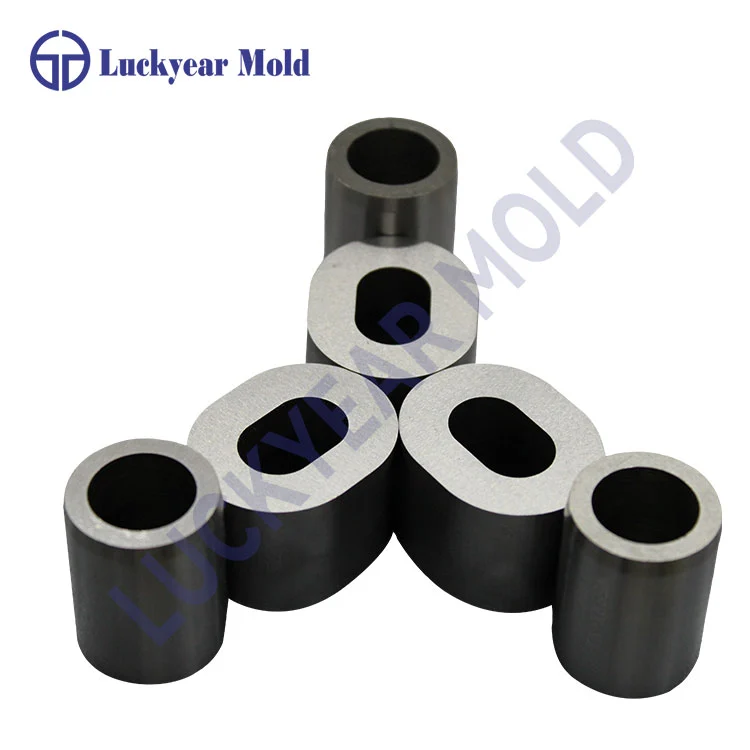
The Engineering Edge of DIN 9845 Type A
High-speed thread rolling subjects dies to extreme cyclic stresses, frictional heat, and sudden torque spikes. Standard DIN 9845 Dies Type A specifies three critical parameters that set it apart:
| Parameter | DIN 9845 Type A Requirement | Benefit at High Speed |
|---|---|---|
| Hardness (HRC) | 60–64 (uniform across die face) | Prevents localized plastic deformation |
| Radial Runout Tolerance | ≤ 0.02 mm | Ensures concentric thread forms at ≥ 50 m/min |
| Surface Finish (Ra) | ≤ 0.4 µm | Reduces friction and built-up edge (BUE) |
| Carbide Grain Size | ≤ 0.8 µm (for PM grades) | Enhances crack resistance under thermal shocks |
Unlike generic dies, DIN 9845 Type A enforces a specific relief angle and lead-in chamfer design that minimizes impact loading during workpiece engagement. This directly translates to longer tool life—often 30–50% higher than non-certified alternatives—when running at spindle speeds above 1,500 RPM.
Why Leading Shops Choose Luckyear Dies
Luckyear has taken the Standard DIN 9845 Dies Type A further by adding proprietary coating technologies (e.g., AlCrN + Si) that maintain lubricity up to 850°C. In side-by-side trials on M12 x 1.75 steel bolts at 80 pieces per minute, Luckyear dies showed < 0.005 mm flank wear after 50,000 cycles, while standard uncoated Type A dies averaged 0.018 mm. This performance gap explains why Luckyear is frequently specified in automotive fastener production lines.
Practical Implementation Checklist for High-Speed Lines
-
Mounting: Use hydraulic chucks with ≤ 0.01 mm TIR to preserve die alignment.
-
Coolant: Apply high-pressure (70 bar) oil-based coolant directly at the die-workpiece interface.
-
Feed Rate: Maintain 0.05–0.12 mm/rev depending on material hardness (adjust per Standard DIN 9845 Dies Type A annex B).
-
Inspection: Perform eddy-current testing every 8 hours to detect micro-cracks early.
FAQ: Standard DIN 9845 Dies Type A
Q1: Can Standard DIN 9845 Dies Type A be used for both through-feed and infeed thread rolling processes?
A1: Yes, but with a critical distinction. The Type A geometry is optimized for infeed (plunge) rolling because its lead-in taper is designed for radial penetration. For through-feed (cylindrical) rolling, the same die can be used if the machine has adjustable helical angles, but the standard does not guarantee performance in through-feed mode unless the die is specifically ordered with modified helix compensation. Luckyear offers a dual-certified variant that passes both DIN 9845 Type A and through-feed supplementary tests, but standard off-the-shelf Type A dies should be limited to infeed applications unless the manufacturer confirms otherwise.
Q2: What is the maximum allowable regrinding depth for Standard DIN 9845 Dies Type A before the die must be retired?
A2: According to clause 7.3 of DIN 9845, the usable carbide layer thickness is defined as 3.0 mm from the original profile crest. Regrinding is permitted up to a total material removal of 0.8 mm from the pitch diameter, provided the hardness profile remains within 60–64 HRC after each regrind. Beyond 0.8 mm, the sub-surface carbide structure often shows grain growth due to prior thermal cycling, which increases chipping risk. Luckyear recommends a maximum of 3 regrinds per die, with a mandatory magnetic-particle inspection after the second regrind—a practice that exceeds the standard but has proven to reduce unexpected failures by 40% in high-speed environments.
Q3: How does Standard DIN 9845 Dies Type A accommodate different workpiece materials like stainless steel vs. carbon steel?
A3: The standard itself is material-agnostic—it defines die geometry, hardness, and runout, but not coating or edge preparation. For stainless steel (e.g., AISI 304), the higher work-hardening rate demands a die with a sharper entering angle (15° instead of the nominal 12°) and a TiAlN coating to resist adhesion. For carbon steels (e.g., 10B21), the standard’s default 12° angle and uncoated or CrN-coated die work well. Luckyear produces Standard DIN 9845 Dies Type A with three coating variants—uncoated, TiCN, and AlCrN—and provides a material-specific selection matrix. The key is that the dimensional core (pitch, flank angle, and root radius) remains strictly per DIN 9845 Type A, so you retain interchangeability while tailoring the tribological surface.
Thermal Management – The Hidden Factor
At speeds above 60 m/min, die surface temperatures can exceed 600°C. Standard DIN 9845 Dies Type A mandates a minimum cobalt content of 10% in the carbide substrate, which preserves transverse rupture strength (≥ 3,800 N/mm²) even at elevated temperatures. This is why Luckyear dies exhibit less "thermal softening" than cheaper alternatives—they adhere to the standard’s cobalt range while adding a multilayer coating that reflects radiant heat.
Conclusion
Choosing the right thread rolling die for high-speed production is not a matter of price—it is a matter of process security. Standard DIN 9845 Dies Type A provides the dimensional, hardness, and surface integrity benchmarks that eliminate guesswork, and Luckyear has proven itself as a trusted supplier who not only meets but refines these requirements through advanced coatings and strict quality loops. Whether you are running mild steel, alloy steels, or stainless grades, this standard offers a repeatable foundation for uptime and part quality.
Ready to optimize your high-speed thread rolling line? Contact Luckyear today for a free die selection audit and sample testing. Our engineering team will analyze your machine parameters, material, and output targets to recommend the exact Standard DIN 9845 Dies Type A configuration that maximizes your productivity. Reach us at [email protected] or fill out the quick quote form on our website—we respond within 4 business hours.
