Why Is Cold-Formed Z Section Steel Preferred for Wall Girts and Purlins
2026-10-08
Cold-Formed Z Section Steel has become the default structural choice for wall girts and roof purlins in modern metal building systems. As a manufacturer with years of roll-forming experience, Rongheng supplies Cold-Formed Z Section Steel to fabricators, contractors, and distributors across commercial, industrial, and agricultural projects. This article explains the engineering and commercial reasons behind that preference, with practical data you can apply to your next project.
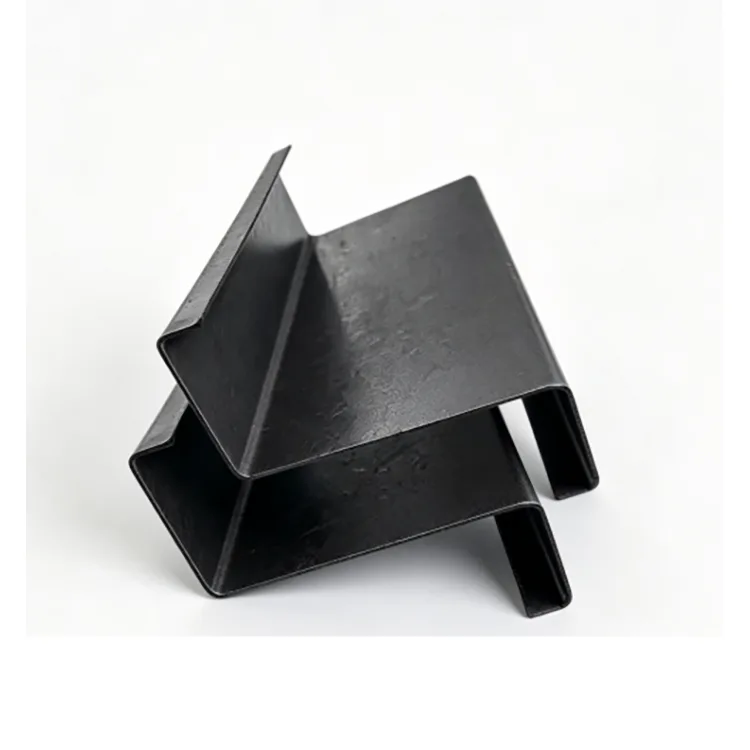
What Makes Z Sections Different from Other Cold-Formed Profiles
The Z profile is formed from galvanized or pre-painted steel strip through a continuous roll-forming process. Its defining feature is the offset flanges, which allow adjacent sections to nest and overlap at the splice. This geometry delivers two structural benefits: continuous load transfer across multiple bays and efficient material distribution away from the neutral axis. Compared with C sections, Z sections offer higher strength-to-weight ratios in spanning applications and simpler lapping details.
Key Performance Advantages
-
Continuous spanning capability – Overlapping Z sections create a semi-continuous beam effect, reducing deflection and allowing longer spans with lighter gauges.
-
Superior bending efficiency – The offset flanges increase the section modulus, so Cold-Formed Z Section Steel resists wind uplift and roof loads with less steel.
-
Nesting and stacking efficiency – Z sections nest tightly for transport and storage, lowering freight and handling costs.
-
Flexible orientation – The profile can be reversed on site to suit different purlin or girt orientations without additional fabrication.
-
Corrosion resistance – Hot-dip galvanized coatings from Z120 to Z275 (and higher on request) suit coastal, humid, and industrial environments.
Comparison Table: Cold-Formed Z Section Steel vs. C Section Steel
| Feature | Cold-Formed Z Section Steel | C Section Steel |
|---|---|---|
| Flange geometry | Offset, lappable | Parallel, non-lapping |
| Spanning behavior | Semi-continuous | Simple span |
| Section modulus | Higher for same weight | Lower |
| Splice detail | Overlap, bolted | Butt or nested |
| Typical use | Purlins, wall girts, long spans | Purlins, girts, short spans |
| Material efficiency | High | Moderate |
Why Wall Girts and Purlins Specifically Benefit
Wall girts and purlins carry distributed loads between frames. They are governed by deflection limits as much as by strength. Because Cold-Formed Z Section Steel can be lapped over supports, the effective stiffness increases without adding steel weight. This is why long-span roofs and tall wall systems increasingly specify Z sections over alternative profiles.
Rongheng produces Cold-Formed Z Section Steel in thicknesses from 1.5 mm to 4.0 mm, web depths from 100 mm to 350 mm, and custom flange widths. Every order is roll-formed to tolerance, punched to drawing, and delivered with mill certificates.
Frequently Asked Questions
Q: What is Cold-Formed Z Section Steel used for?
A: Cold-Formed Z Section Steel is used primarily for roof purlins, wall girts, and structural framing in pre-engineered metal buildings, warehouses, factories, and agricultural sheds. Its lappable flanges make it ideal for continuous spans over multiple frames, where it carries roof and wall loads, resists wind uplift, and controls deflection.
Q: How does Cold-Formed Z Section Steel compare with C section steel for purlins?
A: Cold-Formed Z Section Steel generally outperforms C section steel in spanning applications because its offset flanges allow overlapping at supports, creating a semi-continuous beam. This raises the effective section modulus and reduces deflection for the same steel weight. C sections remain suitable for shorter spans and simpler connections.
Q: What coating and thickness options are available for Cold-Formed Z Section Steel?
A: Cold-Formed Z Section Steel is commonly supplied with hot-dip galvanized coating from Z120 to Z275, with higher coating weights available for coastal or corrosive environments. Thickness typically ranges from 1.5 mm to 4.0 mm, and web depths from 100 mm to 350 mm, depending on load and span requirements.
Q: Can Cold-Formed Z Section Steel be customized for specific projects?
A: Yes. Rongheng offers custom roll-forming for Cold-Formed Z Section Steel, including non-standard web depths, flange widths, lip dimensions, hole patterns, and cut lengths. Custom profiles are produced to project drawings and shipped with inspection reports.
Conclusion and Contact
Specifying the right purlin and girt profile affects steel tonnage, erection time, and long-term performance. Cold-Formed Z Section Steel from Rongheng combines structural efficiency, corrosion protection, and fabrication flexibility for demanding building envelopes.
Contact us today for drawings, load tables, coating options, and a quotation on Cold-Formed Z Section Steel for your next project.