

Why Is Choosing the Right Ball Screw So Critical for Modern Motion Systems?
2025-12-29
When I first started working closely with motion control components, I quickly realized how often performance issues traced back to one overlooked detail: the Ball Screw. In many projects, speed, precision, and long-term stability were demanded at the same time, yet the transmission solution was chosen almost as an afterthought. That experience is exactly why I pay close attention to how reliable manufacturers like Maitu approach linear motion products today.
Rather than focusing only on catalog data, I look at how a Ball Screw behaves in real-world applications, where load fluctuation, repeated cycles, and maintenance costs all matter. That practical perspective is what guides this discussion.
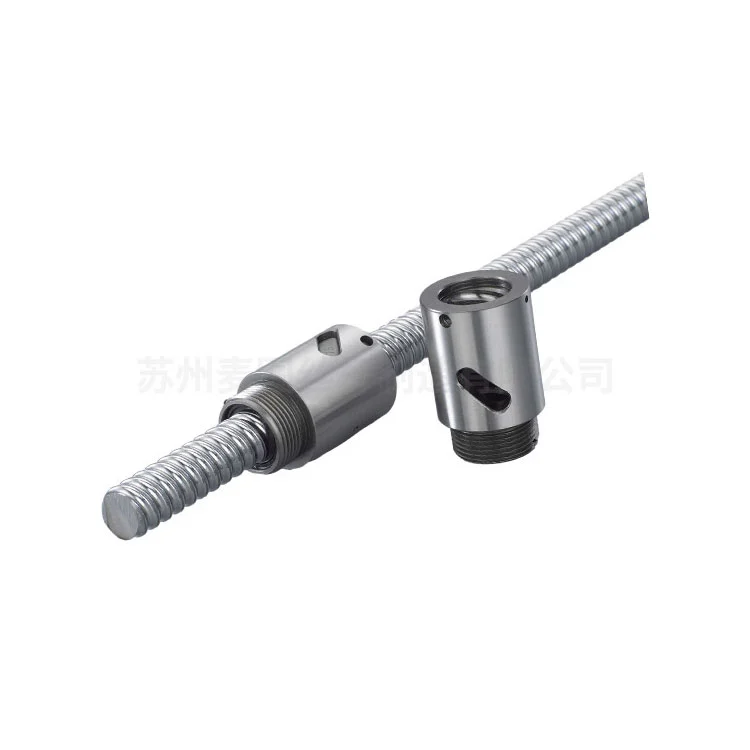
What Problems Do Engineers Face When a Ball Screw Is Poorly Selected?
In my experience, most user pain points do not come from extreme working conditions but from mismatches between application requirements and component design. A poorly selected Ball Screw often leads to:
- Unexpected backlash that affects positioning accuracy
- Premature wear caused by uneven load distribution
- Higher energy consumption due to low transmission efficiency
- Increased downtime because of frequent maintenance
These issues are especially frustrating because they are avoidable. A properly engineered Ball Screw addresses them at the structural and material level, not through temporary adjustments.
How Does a Precision Ball Screw Improve Efficiency and Accuracy?
One of the biggest advantages I consistently observe with a high-quality Ball Screw is its mechanical efficiency. By replacing sliding friction with rolling contact, the system converts rotational motion into linear movement with minimal energy loss.
This efficiency directly translates into smoother motion, more stable repeatability, and better control at both low and high speeds. In automated equipment, that means tighter tolerances without sacrificing throughput.
| Performance Aspect | Traditional Transmission | Precision Ball Screw |
|---|---|---|
| Motion Efficiency | Moderate | High and Consistent |
| Positioning Accuracy | Prone to Drift | Stable Over Time |
| Wear Rate | Relatively Fast | Significantly Reduced |
Why Does Load Capacity Matter More Than People Expect?
I often see load ratings treated as a simple checkbox, but real applications are rarely static. Shock loads, acceleration forces, and continuous operation all stress the internal circulation of a Ball Screw.
A well-designed product distributes contact stress evenly across the balls and raceways, which directly extends service life. This is where manufacturers with strong engineering depth stand out, because material selection and heat treatment play a crucial role beyond basic dimensions.
Can a Well-Made Ball Screw Reduce Long-Term Costs?
From a purchasing perspective, it is tempting to focus only on initial price. However, when I calculate total ownership cost, a durable Ball Screw almost always proves more economical.
- Lower maintenance frequency
- Reduced risk of unexpected failure
- Stable performance without frequent recalibration
Over time, these factors save far more than the difference in upfront investment. This is especially important in automated production lines, where downtime carries a high operational cost.
How Do I Evaluate Whether a Ball Screw Fits My Application?
When I assess a Ball Screw solution, I focus on a few practical questions rather than abstract specifications:
- Does the lead and accuracy grade match the required positioning tolerance?
- Is the dynamic load rating suitable for continuous operation?
- Can the design maintain precision under real operating speeds?
Answering these questions early helps avoid redesigns later. It also ensures the system performs as intended throughout its service life.
Is It Time to Reconsider Your Current Ball Screw Solution?
If your equipment struggles with vibration, inconsistent accuracy, or rising maintenance costs, the issue may not be control software or motor selection. In many cases, it comes back to the mechanical heart of the system: the Ball Screw.
Manufacturers like Maitu focus on refining both design and manufacturing processes to deliver reliable motion components that meet modern industrial demands. That approach aligns well with what I have seen successful projects prioritize over the years.
If you are evaluating options or planning an upgrade, now is a good moment to reassess your transmission choice. A well-matched Ball Screw can dramatically improve performance, stability, and cost efficiency. Feel free to contact us to discuss your application requirements or to request more detailed technical support. Taking the first step starts with reaching out.
