Why Is an Acme Trapezoidal Screw Still the Smartest Choice for Precision Linear Motion?
2026-01-07
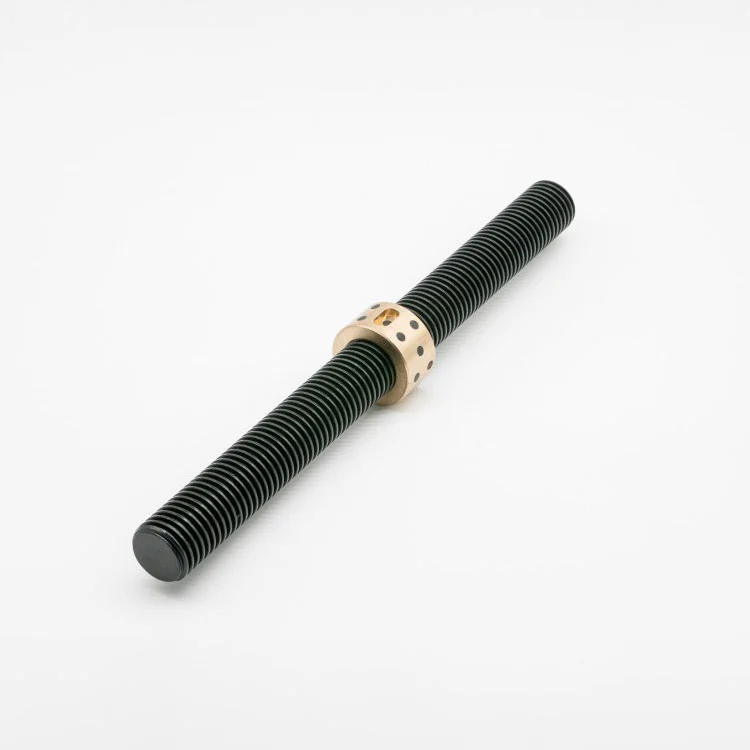
When I first started evaluating lead screw solutions for industrial motion systems, I was not chasing trends or buzzwords. I was looking for reliability, predictability, and long-term performance. That was exactly how I came to understand the real value of the Acme Trapezoidal Screw. Over time, as Maitu gradually entered my supplier shortlist through real project feedback rather than aggressive marketing, this solution proved why it continues to dominate linear transmission applications across industries.
What Problems Do Engineers Usually Face with Linear Motion Components?
In real-world projects, linear motion failures rarely come from dramatic breakdowns. They usually come from accumulated inefficiencies. From my experience, the most common pain points include unstable load handling, excessive backlash, difficult maintenance, and short service life. These issues directly affect positioning accuracy, downtime, and overall system cost.
- Unpredictable wear under repeated load cycles
- Noise and vibration affecting operational stability
- Limited adaptability to different nut materials
- Inconsistent performance in low-speed applications
This is where a properly manufactured Acme Trapezoidal Screw begins to stand out as a practical engineering solution rather than a theoretical one.
How Does an Acme Trapezoidal Screw Solve These Mechanical Challenges?
I have always valued mechanical designs that are easy to understand and easy to trust. The trapezoidal thread profile offers a balanced geometry that distributes load more evenly than sharp-thread alternatives. In daily operation, this translates into smoother motion and more forgiving alignment tolerances.
What impressed me most was how the Acme Trapezoidal Screw performs consistently in both manual and motor-driven systems, especially where low-speed, high-load motion is required.
| Performance Aspect | Practical Impact |
|---|---|
| Trapezoidal thread angle | Improves load distribution and reduces localized wear |
| Self-locking capability | Enhances safety in vertical or inclined applications |
| Wide material compatibility | Allows flexible pairing with bronze, polymer, or steel nuts |
| Stable low-speed motion | Supports precise positioning without vibration |
Why Do Many Automation Systems Still Rely on This Thread Design?
While ball screws often receive attention for high-speed applications, many systems do not actually require extreme velocity. In my projects involving lifting platforms, adjustment mechanisms, and linear actuators, controllability mattered far more than speed. The Acme Trapezoidal Screw offered exactly that balance.
Another key factor is serviceability. Components based on this design are easier to inspect, replace, and maintain. That practical advantage reduces long-term operating costs, especially in environments where downtime is expensive.
- Ideal for heavy-duty linear adjustment systems
- Well-suited for environments with dust or debris
- Lower maintenance requirements compared to rolling systems
What Makes Manufacturing Quality Critical for Trapezoidal Screws?
Not all screws with the same thread profile behave the same. I learned quickly that surface finish, pitch accuracy, and heat treatment directly affect performance. This is where working with a manufacturer like Maitu made a noticeable difference, not because of claims, but because of consistency in delivered tolerances.
A well-produced Acme Trapezoidal Screw minimizes backlash variation and extends nut life, which is essential for applications requiring repeated positioning accuracy.
How Can the Right Screw Selection Improve Overall System Efficiency?
Efficiency is not only about energy consumption. It is also about predictability. When motion behavior remains stable over time, control algorithms remain accurate, operators trust the equipment, and maintenance planning becomes easier.
By integrating a properly specified Acme Trapezoidal Screw, I have seen systems achieve smoother starts, controlled stops, and improved load stability without increasing complexity.
Are You Looking for a Reliable Linear Motion Solution That Actually Lasts?
If you are evaluating linear transmission components and want a solution that balances durability, precision, and cost control, the Acme Trapezoidal Screw deserves serious consideration. My experience shows that when paired with consistent manufacturing standards, it remains one of the most dependable mechanical choices available today.
If you would like to discuss specifications, application matching, or custom requirements, I encourage you to contact us and leave an inquiry. A practical conversation often leads to better engineering decisions than any catalog ever could.