Why Is a Light Duty Anchor the Smart Choice for Everyday Fixing Tasks?
2026-01-29
When I first started working closely with fastening solutions for interior and light structural projects, I quickly realized how often people overengineer simple installations. Through years of hands-on experience and collaboration with manufacturers like Ningbo Fixingmore Precision Machinery Co., Ltd., I have learned that choosing the right Light Duty Anchor is often the key to achieving secure fixation without unnecessary cost or complexity.
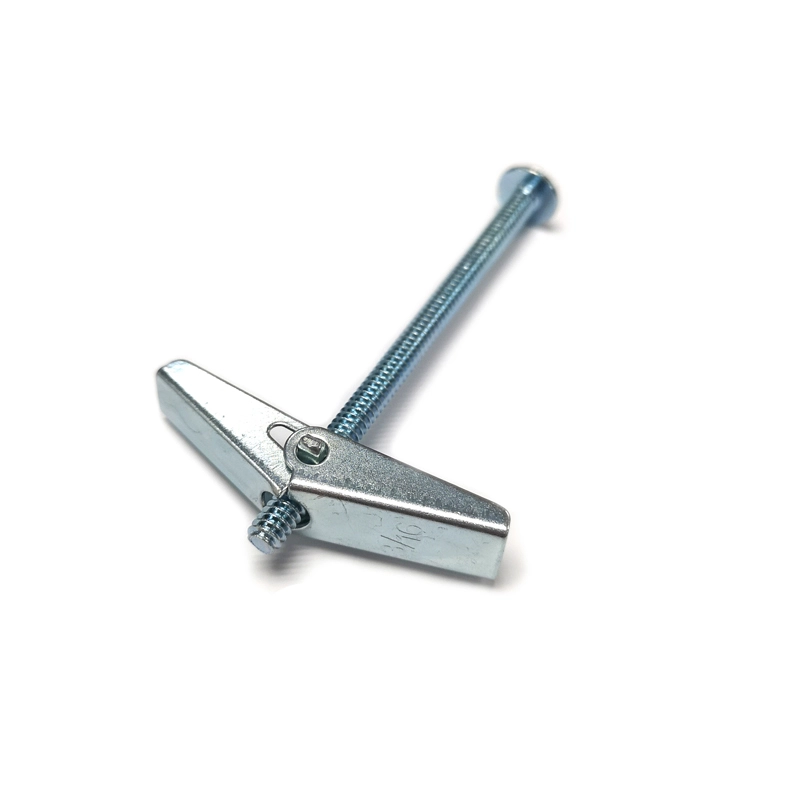
What Problems Do Light Installation Projects Usually Face?
In residential, commercial, and light industrial environments, most fixing challenges share similar pain points. I often hear complaints from installers and buyers who struggle with anchors that are either too weak or unnecessarily heavy-duty.
- Overloading walls with anchors designed for heavy structural use
- Difficulty achieving clean installation in concrete or masonry
- Unstable fixation for shelves, cable trays, or lightweight brackets
- Higher costs due to excessive material specifications
This is exactly where a well-designed Light Duty Anchor becomes practical. It focuses on balance rather than brute strength, offering just enough load capacity for everyday applications.
How Does a Light Duty Anchor Improve Installation Efficiency?
From my experience on site, efficiency matters as much as strength. A properly engineered Light Duty Anchor reduces installation time while maintaining dependable holding power.
| Installation Factor | Common Issues | Light Duty Anchor Advantage |
|---|---|---|
| Drilling Depth | Too deep for thin substrates | Optimized embedment depth |
| Tool Requirements | Special tools needed | Standard tools are sufficient |
| Alignment Accuracy | Misalignment causes failure | Forgiving tolerance design |
| Installation Speed | Time-consuming setup | Fast and repeatable installation |
In practice, this means fewer mistakes, less fatigue, and more predictable results for installers working on ceilings, walls, or partition systems.
Why Is Load Control More Important Than Maximum Strength?
Many buyers assume stronger is always better, but that assumption often leads to wasted resources. A Light Duty Anchor is engineered for controlled loads, which protects both the fixture and the base material.
By matching anchor performance to real-world loads, I have seen fewer cracked substrates, reduced rework, and longer service life for mounted components. This approach is especially valuable in applications such as:
- Electrical and mechanical accessories
- Light shelving systems
- Signage and decorative fixtures
- Cable management and conduits
How Does Material and Design Affect Long-Term Reliability?
Not all anchors perform equally over time. What stands out to me when evaluating a Light Duty Anchor is the attention to material consistency and precision manufacturing.
Anchors produced with tight dimensional control and stable materials tend to maintain holding force even under vibration or minor load changes. This reliability is critical in environments where frequent adjustments or maintenance occur.
What Makes a Light Duty Anchor Cost-Effective for Buyers?
From a procurement perspective, cost-effectiveness is not just about unit price. I always look at total project cost, and this is where a Light Duty Anchor consistently proves its value.
| Cost Factor | Impact on Project |
|---|---|
| Lower material usage | Reduced overall fastening expenses |
| Faster installation | Lower labor costs |
| Fewer failures | Minimal rework and maintenance |
| Versatile applications | Simplified inventory management |
This combination makes the Light Duty Anchor a practical choice for distributors, contractors, and project managers aiming to control budgets without compromising quality.
How Can You Choose the Right Light Duty Anchor for Your Project?
Selection always starts with understanding the base material, load requirements, and installation environment. I recommend focusing on realistic load data rather than theoretical maximum values.
By working with experienced manufacturers and reviewing technical parameters carefully, you can ensure that your Light Duty Anchor performs exactly as expected in real conditions.
Ready to Optimize Your Fixing Solutions?
If you are looking to simplify installations, improve reliability, and reduce unnecessary costs, choosing the right Light Duty Anchor is a logical step forward. I encourage you to evaluate your current fastening approach and consider a solution that truly matches your application needs.
For more details, technical support, or to discuss your specific requirements, please contact us today. Leave your inquiry and let our team help you find a fastening solution that works efficiently and reliably for your next project.