Why Is a 100W Portable LED Work Light a Smart Investment for Professional Lighting Needs?
2026-11-27
Article Summary
Reliable lighting is an essential part of productive work, especially when employees operate in temporary workspaces, remote locations, or areas with limited access to fixed lighting systems. A 100W Portable LED Work Light provides a flexible solution for illuminating demanding environments where mobility and practical performance are important.
However, selecting suitable work lighting involves more than choosing a particular wattage. Light distribution, portability, structural design, operating power, and environmental protection all influence the final user experience. This guide examines how portable LED lighting can address common workplace challenges and what commercial buyers should consider before investing in a lighting solution.
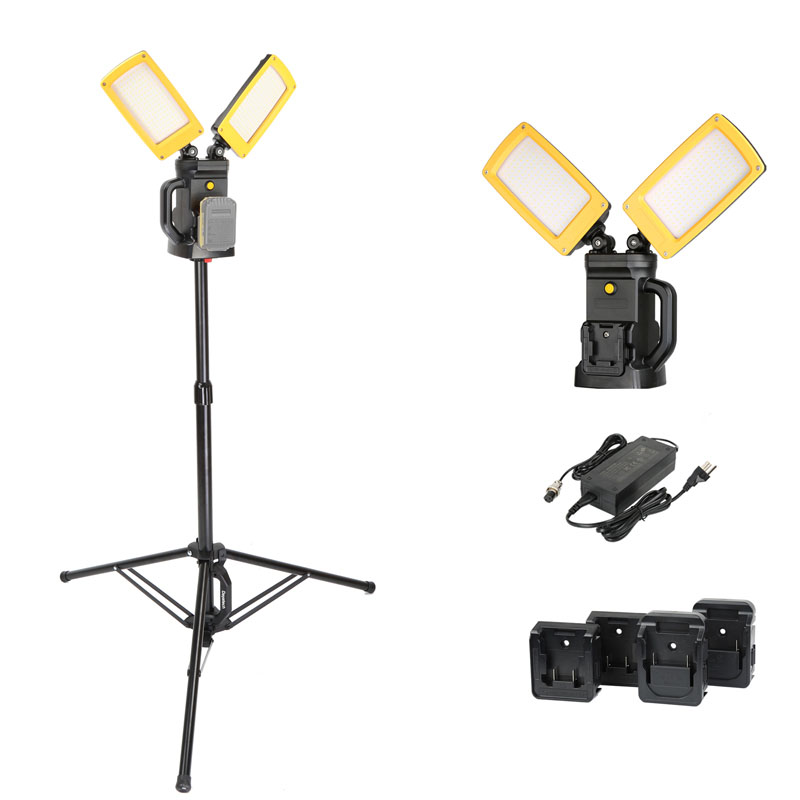
- Workplace lighting challenges and practical solutions.
- Important design characteristics of portable LED equipment.
- Lighting distribution and industrial application requirements.
- Product quality, durability, and operating cost considerations.
- Purchasing recommendations for professional buyers.
1. Why Do Professional Workplaces Need Flexible Lighting?
Work environments are rarely as predictable as they appear on a floor plan. Equipment may be relocated, temporary maintenance areas may be established, and workers may need to complete tasks in corners or enclosed spaces that receive limited illumination.
Traditional fixed lighting systems are useful for providing general illumination, but they cannot always address every temporary requirement. Installing additional fixtures may involve electrical work, extra costs, and unnecessary delays.
Changing Work Locations Create Lighting Challenges
Maintenance professionals frequently move between different machines and production areas. Construction teams may work on several floors or outdoor sections during a single project. Automotive technicians also encounter different lighting conditions depending on vehicle size and repair position.
These situations create a demand for lighting equipment that can be relocated without complicated installation procedures.
Visibility Matters During Detailed Operations
Tasks such as component assembly, equipment inspection, surface preparation, and mechanical repairs require sufficient visibility. Poor illumination can make small details difficult to recognize and increase the time needed to complete visual checks.
Appropriately positioned supplementary lighting helps workers see the target area more clearly. The lighting arrangement should also minimize excessive glare and distracting shadows.
Temporary Projects Need Practical Equipment
Temporary workshops, construction projects, and emergency repair locations may not have permanent lighting infrastructure. Portable equipment can help provide additional illumination without requiring permanent changes to the workspace.
2. How Does a 100W Work Light Address Common Lighting Problems?
A 100W rating makes this category relevant to buyers looking for a relatively powerful lighting solution. Nevertheless, the real performance of a work light depends on the complete lighting system rather than electrical power consumption alone.
Providing Supplementary Illumination
A portable LED work light can help address dark areas that are not adequately covered by existing fixtures. Workers can position the equipment closer to the task and direct the beam toward the required surface.
This is particularly useful when inspecting machinery, working beneath vehicles, or carrying out temporary installation procedures.
Supporting Different Lighting Arrangements
Some applications require broad illumination across a large area, while others require concentrated light for a specific working position. The optical design of a portable light influences how effectively it can serve these purposes.
Flood-style illumination is generally useful for wider coverage, whereas a narrower beam can concentrate light on a smaller target. Some products may offer adjustable lighting angles or interchangeable optical configurations.
Making Better Use of Electrical Energy
LED technology offers an efficient approach to converting electrical power into visible illumination. A properly engineered LED system can provide substantial light output while keeping energy consumption relatively controlled.
For buyers comparing different products, luminous efficacy is an important measurement. It is calculated by dividing the light output in lumens by electrical power consumption in watts.
Offering a Practical Alternative to Temporary Fixtures
Portable work lights can reduce the need to install temporary lighting equipment at every new workstation. This makes them useful for teams that frequently change their working positions.
However, the correct solution still depends on the availability of power, the required operating duration, and the conditions in which the light will be used.
3. Which Design Details Influence Lighting Performance?
Two products with the same nominal wattage can deliver noticeably different experiences. Their structural design, electronic components, and optical arrangements all contribute to overall performance.
LED Chip Configuration
The LED chips are responsible for generating light. Their efficiency, operating current, thermal characteristics, and arrangement influence the final output.
Buyers should request actual lumen specifications instead of assuming that products with identical wattage necessarily provide equivalent brightness.
Optical Lens and Reflector Design
The optical system determines how light is distributed. A suitable reflector or lens helps direct illumination toward the intended area and can improve the usefulness of the available output.
For example, a wide beam may be more suitable for general workshop illumination, while a more concentrated beam may be preferred for localized maintenance tasks.
Housing and Structural Stability
A work light needs a housing that protects its internal components and supports regular handling. Materials such as aluminum alloys can provide structural strength while helping dissipate heat.
Additional design features may include protective corners, reinforced brackets, stable bases, and convenient carrying handles.
Thermal Protection
Heat management is important because prolonged exposure to excessive temperatures can affect LED performance and electronic component reliability.
Well-designed thermal structures help transfer heat away from critical components. The design may include heat-dissipating fins, aluminum housings, and suitable internal arrangements.
Power System Compatibility
The power system determines how the work light can be used. AC-powered products are suitable for locations with an appropriate electrical supply, while rechargeable models can provide greater mobility.
Check verified lumens, beam angle, and color temperature.
Evaluate housing strength, mounting flexibility, and handling convenience.
Review the heat sink structure and operating temperature requirements.
Confirm AC or battery operation, charging arrangements, and compatibility.
4. Why Is Light Distribution Important in Different Work Areas?
Brightness is only one part of effective lighting. The way light reaches the working surface can be equally important. Poor distribution may create intense bright spots while leaving other areas insufficiently illuminated.
Wide-Area Illumination
Large working environments generally benefit from broader light distribution. This approach can help illuminate multiple nearby work surfaces and reduce the need to reposition equipment repeatedly.
Warehouses, assembly areas, and construction spaces may require this type of lighting arrangement.
Focused Lighting for Detailed Tasks
Detailed repair and inspection procedures often require illumination directed toward a particular component. A more focused beam can help concentrate light where workers need it most.
However, the appropriate beam angle should be selected according to working distance and target size.
Reducing Shadows and Glare
Shadows can make certain surfaces difficult to inspect, particularly when workers operate around large machinery. Moving the light source to another position may help improve visibility.
Glare is another consideration. Excessive brightness directed toward the eyes or reflective surfaces can reduce visual comfort. Suitable positioning and optical design help address this issue.
| Work Requirement | Preferred Lighting Characteristic | Typical Application |
|---|---|---|
| Large Area Coverage | Wide beam distribution | Warehouses and construction areas |
| Close Inspection | Controlled, focused illumination | Equipment and component inspection |
| Temporary Workstations | Adjustable positioning | Maintenance operations |
| Outdoor Tasks | Suitable environmental protection | Field repairs and installation |
5. How Can Portable Lighting Support Different Industries?
The versatility of a portable work light makes it useful in industries with changing lighting requirements. Its effectiveness depends on selecting the appropriate product configuration for each environment.
Manufacturing and Production
Manufacturing facilities require lighting for equipment inspection, machine servicing, assembly, and production-line maintenance.
Portable work lights can provide additional illumination around machinery, control cabinets, and production equipment. Their mobility is particularly useful when maintenance teams need to access different sections of a facility.
Automotive and Transportation Services
Vehicle maintenance frequently involves working in areas that are difficult to illuminate with overhead fixtures. Engine compartments, wheel assemblies, and underbody components may require supplementary lighting.
A portable light can be positioned near the repair area to help technicians inspect components and perform maintenance operations.
Construction and Engineering
Construction projects involve multiple working stages, including installation, finishing, inspection, and repair. Lighting requirements can change as workers move between rooms, floors, and outdoor sections.
Portable LED equipment offers a flexible option for temporary illumination during these activities.
Agriculture and Outdoor Equipment Maintenance
Agricultural machinery may require maintenance in barns, equipment sheds, fields, or remote working areas. Portable lighting can support inspections and repairs where permanent illumination is unavailable.
Property Maintenance and Facility Management
Building maintenance teams regularly inspect electrical installations, plumbing systems, mechanical equipment, and storage spaces. A portable work light can help illuminate restricted-access areas and temporary maintenance locations.
6. What Factors Affect the Long-Term Value of a Work Light?
The purchase price of a work light is only one part of its overall cost. For professional users, operating expenses, maintenance requirements, replacement frequency, and product reliability also influence long-term value.
Energy Consumption
LED efficiency can contribute to lower electricity consumption when compared with less efficient lighting technologies delivering similar illumination.
For a 100W model operating continuously for 8 hours, nominal energy consumption would be approximately 0.8 kWh, assuming a constant 100W input. Actual consumption may vary according to the product's operating configuration.
Maintenance Requirements
Products with accessible components, suitable protective structures, and effective thermal management may be easier to maintain over time.
Regular cleaning, electrical inspection, and appropriate storage can help preserve product performance.
Product Service Life
LED service life depends on operating temperature, component quality, driver reliability, and usage conditions. Buyers should review the manufacturer's stated lifetime information and understand the testing conditions behind it.
Total Cost of Ownership
When purchasing lighting equipment in volume, the total cost of ownership provides a more complete comparison than the initial unit price alone.
| Cost Element | Evaluation Consideration |
|---|---|
| Initial Purchase | Unit price, order quantity, and packaging. |
| Energy Usage | Rated input power and operating hours. |
| Maintenance | Cleaning, inspection, and replacement requirements. |
| Product Reliability | Component quality, testing, and warranty coverage. |
| Supplier Support | Technical assistance and spare-part availability. |
7. How Should Businesses Evaluate Product Quality?
For B2B purchasers, product quality needs to be evaluated through clear specifications and practical verification. This is particularly important for wholesalers, distributors, contractors, and companies purchasing equipment for multiple projects.
Request Complete Technical Documentation
Product documentation should explain the main specifications and operating requirements. Depending on the product, useful information includes:
- Rated power and operating voltage.
- Luminous flux and color temperature.
- Beam angle and lighting configuration.
- Housing material and product dimensions.
- IP protection rating and operating temperature.
- Battery specifications, if applicable.
- Applicable safety and conformity documentation.
Evaluate Samples Before Bulk Orders
Product samples allow purchasing teams to inspect workmanship, handling convenience, lighting distribution, and operating performance.
Where possible, evaluate samples under conditions similar to the intended application. This provides more useful information than relying entirely on product photographs or descriptions.
Understand Manufacturing Consistency
For repeat purchases, consistent specifications and quality control are important. Buyers should ask about production inspection procedures, incoming component checks, and finished-product testing.
Confirm Commercial Terms
Before placing an order, clarify minimum order quantities, lead times, packaging specifications, shipping arrangements, warranty conditions, and payment terms.
Clear communication helps reduce purchasing misunderstandings and supports smoother cooperation between suppliers and international buyers.
8. What Are the Common Mistakes When Buying Work Lights?
Even experienced purchasing teams can overlook important details when comparing industrial lighting products. Avoiding the following mistakes can help improve product selection.
Choosing Products Based Only on Wattage
Wattage does not directly represent brightness. A 100W product with a more efficient LED system may deliver a different light output from another product with the same rating.
Always compare verified lumen specifications and beam distribution.
Ignoring the Working Environment
A light designed for indoor workshops may not be appropriate for outdoor locations exposed to rain and dust. Environmental protection should match the intended conditions.
Overlooking Heat Dissipation
Thermal management influences the operating conditions of LED components and electronic drivers. Buyers should examine the structural design rather than focusing exclusively on external appearance.
Not Checking Power Compatibility
Voltage, plug type, charging requirements, and battery arrangements should be confirmed before ordering, particularly when importing equipment for different international markets.
Ignoring Supplier Communication
Unclear specifications and incomplete commercial information can create problems during production and delivery. Requesting written confirmation of important requirements helps establish a clearer purchasing agreement.
9. Frequently Asked Questions
Q1: What does 100W mean on a portable LED work light?
100W refers to the nominal electrical power consumption of the lighting equipment. It does not directly indicate the total light output, which is measured in lumens.
Q2: Is 100W sufficient for industrial maintenance?
A 100W LED work light may be suitable for many supplementary industrial lighting tasks. Whether it is sufficient depends on the required illumination level, working distance, beam distribution, and size of the work area.
Q3: Can portable work lights replace fixed lighting systems?
They can supplement existing lighting and provide temporary illumination, but they are not necessarily a complete replacement for professionally designed permanent lighting systems.
Q4: Does a portable LED work light generate heat?
Yes. LED components and their electronic drivers generate heat during operation. Appropriate heat-dissipation design helps maintain suitable operating temperatures.
Q5: What color temperature is suitable for work lighting?
The appropriate color temperature depends on the application and user preference. Many industrial work environments use neutral white or cool white illumination, but buyers should evaluate actual working conditions before selecting a specification.
Q6: How do I know whether a work light is waterproof?
Check the product's IP rating and manufacturer documentation. Different IP ratings indicate different levels of protection against solid particles and water exposure.
Q7: Are rechargeable work lights better than corded models?
Neither configuration is universally better. Rechargeable products offer greater mobility, while corded products can provide continuous operation when a suitable electrical supply is available.
Q8: What should distributors consider when purchasing in bulk?
Distributors should evaluate product consistency, technical documentation, sample quality, packaging, order quantities, lead times, warranty conditions, and supplier communication.
Q9: Can a portable LED work light be used in emergency maintenance?
Yes, if its power configuration and operating conditions are suitable. Battery-powered products can be especially useful when electrical outlets are unavailable.
Q10: How can I extend the service life of an LED work light?
Keep the lens and ventilation areas clean, avoid unnecessary impacts, follow electrical safety instructions, and operate the product within the manufacturer's specified environmental limits.
10. Choose Lighting That Works as Hard as Your Team
Professional work environments demand lighting equipment that can adapt to changing tasks, operating conditions, and workspace requirements. A 100W Portable LED Work Light offers a practical option for businesses seeking flexible supplementary illumination across construction, manufacturing, automotive maintenance, and outdoor projects.
Its real value comes from the combination of light output, optical performance, structural durability, thermal management, and power configuration. By evaluating these characteristics carefully, purchasing teams can make better-informed decisions and select equipment that supports their operational needs.
Ningbo Dayatech Technology Co., Ltd. welcomes inquiries from international customers, distributors, and business partners interested in professional lighting solutions.
Have specific requirements for your next lighting project? Contact us to discuss your purchasing needs, explore suitable product options, and learn more about potential business cooperation.