

Why Is 5 Axis CNC Machining Becoming the Smarter Choice for Complex Precision Parts?
2026-01-09
When I first started working closely with manufacturers who struggled to balance accuracy, lead time, and cost, one solution kept coming up in real conversations rather than marketing slides. That solution was 5 Axis CNC Machining. Over time, my collaboration with Honmor naturally grew out of these discussions, not because of branding, but because the machining results consistently answered the same customer concerns I heard again and again.
What Makes 5 Axis CNC Machining Different from Traditional CNC Methods?
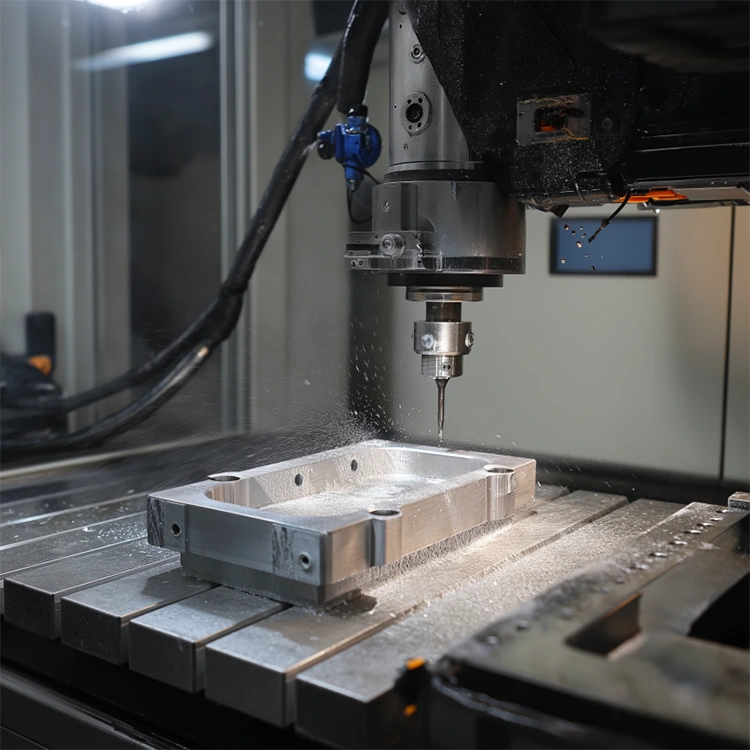
Many engineers ask me whether 5 Axis CNC Machining is simply an upgraded version of 3-axis machining. From my experience, the difference is not incremental, it is structural. By allowing simultaneous movement along five axes, the cutting tool can approach the part from nearly any direction, which directly reduces setup changes and cumulative errors.
- Fewer part repositionings mean tighter overall tolerances
- Complex geometries can be machined in a single setup
- Tool access improves surface consistency on deep or angled features
How Does 5 Axis CNC Machining Solve Common Manufacturing Pain Points?
Clients often come to me after experiencing delays caused by repeated setups or quality issues from manual repositioning. 5 Axis CNC Machining addresses these pain points in a very practical way, especially for aerospace, medical, and high-end industrial components.
| Customer Challenge | How 5 Axis CNC Machining Helps |
|---|---|
| Inconsistent accuracy across multiple features | Single-setup machining reduces alignment errors |
| Long production cycles for complex parts | Simultaneous axis movement shortens machining time |
| High tooling and fixturing costs | Fewer fixtures required due to flexible tool angles |
Why Do Engineers Rely on 5 Axis CNC Machining for Complex Designs?
From an engineering perspective, design freedom is often limited by manufacturing constraints. I have seen how 5 Axis CNC Machining changes that conversation. Designers no longer need to simplify geometries just to make them machinable.
- Undercuts and compound angles become feasible
- Surface transitions remain smooth and uniform
- Structural integrity is preserved without redesign
How Does 5 Axis CNC Machining Improve Surface Finish and Part Quality?
Surface quality is not just about aesthetics. In industries like medical or aerospace, it directly affects performance. With 5 Axis CNC Machining, I have observed that shorter tools and optimized cutting angles lead to better finishes and reduced vibration during machining.
This means less post-processing, fewer rejected parts, and more predictable quality across production batches.
When Does Choosing 5 Axis CNC Machining Make Economic Sense?
Some buyers assume that 5 Axis CNC Machining is only suitable for high-budget projects. In reality, when total production cost is considered, including labor, setup time, and rework, it often proves to be the more economical option.
- Reduced setup time lowers labor costs
- Higher first-pass yield minimizes scrap
- Shorter lead times improve overall supply chain efficiency
How Do I See 5 Axis CNC Machining Supporting Future Manufacturing Needs?
As product designs continue to evolve toward lighter, stronger, and more integrated structures, 5 Axis CNC Machining is no longer a niche capability. It has become a practical requirement for manufacturers who want to stay competitive without compromising precision.
Working with Honmor, I have seen how this machining approach supports both prototyping and scalable production, offering consistency that engineers can trust from the first part to the last.
Are You Ready to Explore 5 Axis CNC Machining for Your Next Project?
If your current manufacturing process is limiting your design or slowing down delivery, it may be time to rethink your approach. I encourage you to reach out, discuss your application, and see how 5 Axis CNC Machining can work for your specific requirements. Feel free to contact us today to request a quote or start a technical discussion with our team.
