Why Is 0Cr13Ni8Mo2Al Maraging Steel Challenging for Internal Gear Manufacturing with Precision Wire EDM
2026-10-26
Manufacturing internal gears from 0Cr13Ni8Mo2Al maraging steel places extraordinary demands on any machining process, and Precision Wire EDM Internal Gear Manufacturing of 0Cr13Ni8Mo2Al Maraging Steel sits at the center of that challenge. At Xincheng, we have supported aerospace, defense, and high-performance transmission programs where this grade is specified for its combination of ultra-high strength, toughness, and dimensional stability after aging. The difficulty is not a single obstacle but the interaction of metallurgy, geometry, and thermal physics during the wire EDM process.
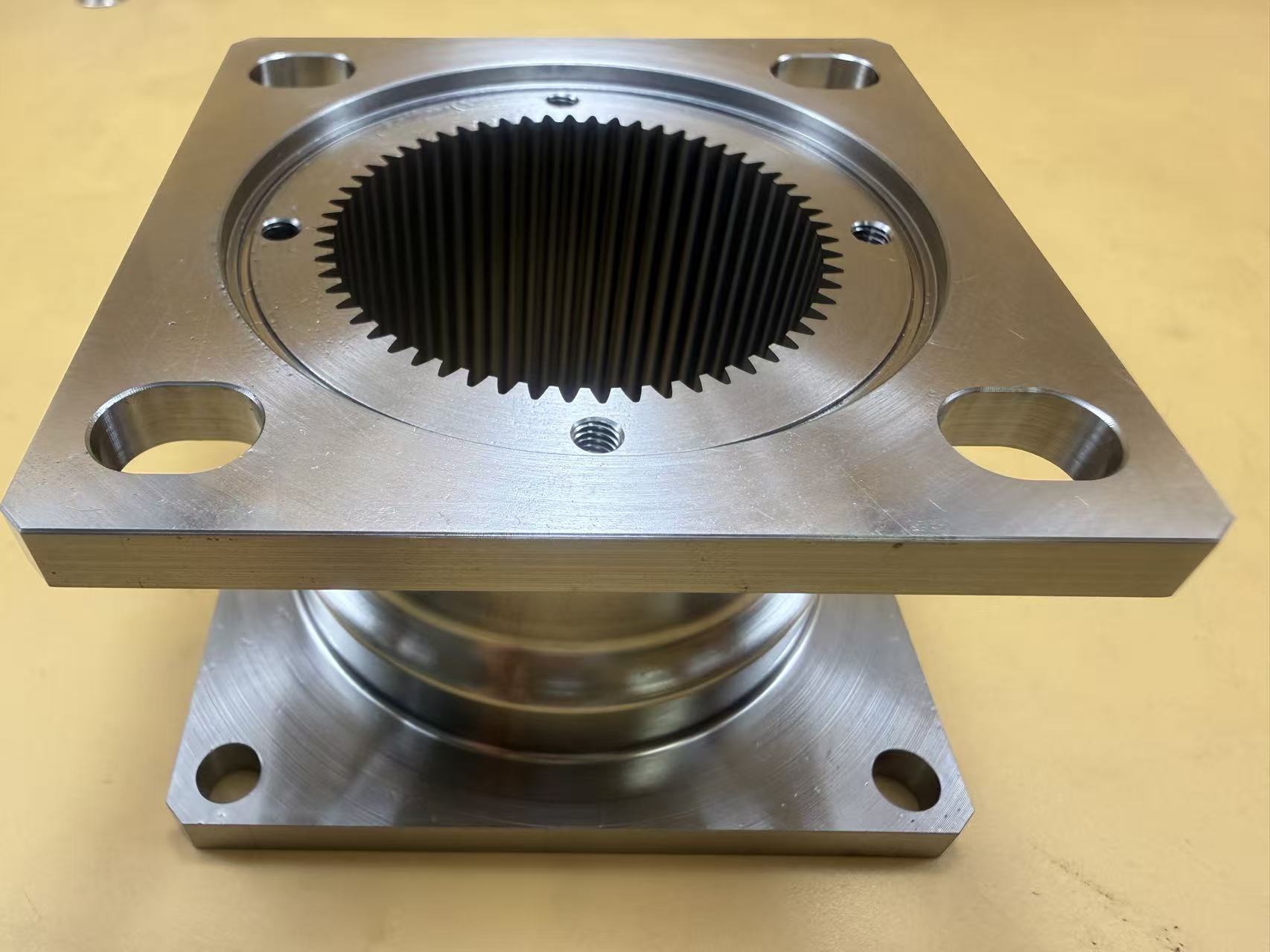
Why This Material Resists Conventional Thinking
0Cr13Ni8Mo2Al is a 13Cr-8Ni-2Mo-1Al maraging-type stainless steel. Its strengthening mechanism depends on the precipitation of intermetallic phases during aging, not on carbon content. That gives it excellent strength and corrosion resistance, but it also creates conditions that complicate wire EDM:
-
High alloy content and tough matrix increase resistance to material removal and promote wire wear.
-
Low thermal conductivity concentrates heat in the cut zone, raising the risk of recast and micro-cracking.
-
Residual stress sensitivity means poorly controlled energy input can distort thin internal gear webs.
-
Aging response requires careful sequencing so EDM damage does not compromise final properties.
Key Process Challenges in Internal Gear Geometry
Internal gears add flushing difficulty, limited wire access, and tight radius requirements. The table below summarizes how the material and geometry interact.
| Challenge Factor | Effect on Precision Wire EDM Internal Gear Manufacturing of 0Cr13Ni8Mo2Al Maraging Steel | Practical Countermeasure |
|---|---|---|
| Low thermal conductivity | Heat accumulation, thicker recast layer | Multi-pass trimming, reduced discharge energy |
| High toughness | Slower cutting, wire breakage risk | Coated wire, optimized flush pressure |
| Internal tooth access | Poor debris evacuation | Through-spindle flushing, rotation fixtures |
| Residual stress | Distortion of thin sections | Stress-relief before EDM, symmetric cutting |
| Surface integrity needs | Fatigue life risk at tooth roots | Skim passes, surface integrity verification |
What Good Practice Looks Like
Successful production depends on disciplined parameter control rather than aggressive removal rates. At Xincheng, our process route for Precision Wire EDM Internal Gear Manufacturing of 0Cr13Ni8Mo2Al Maraging Steel emphasizes:
-
Material verification — confirm condition and heat treatment before setup.
-
Rough-to-finish strategy — separate roughing from multiple trim passes.
-
Wire and flush optimization — match wire grade and flushing to internal tooth depth.
-
In-process inspection — monitor tooth profile, lead, and surface roughness.
-
Post-EDM integrity checks — verify recast thickness and micro-crack absence.
Frequently Asked Questions
Q: Why does 0Cr13Ni8Mo2Al maraging steel cause wire breakage during internal gear EDM?
A: Its high toughness and low thermal conductivity concentrate heat and load the wire, so breakage usually comes from excessive discharge energy, poor flushing in internal tooth spaces, or insufficient wire tension; reducing energy per discharge and improving through-flushing resolve most cases.
Q: Can Precision Wire EDM Internal Gear Manufacturing of 0Cr13Ni8Mo2Al Maraging Steel meet aerospace tolerance requirements?
A: Yes, when roughing is separated from multiple trim passes and thermal stability is maintained, Precision Wire EDM Internal Gear Manufacturing of 0Cr13Ni8Mo2Al Maraging Steel can hold tight profile and lead tolerances, but success depends on fixture rigidity and in-process measurement.
Q: Does wire EDM damage the aged properties of 0Cr13Ni8Mo2Al maraging steel?
A: The risk is a recast layer and heat-affected zone at the cut surface, not bulk property loss; controlling discharge energy, using skim passes, and verifying surface integrity ensure the aged core properties remain intact.
Q: How should internal gear flushing be arranged for this material?
A: Use through-spindle or directed flushing with adequate pressure and fixture rotation so debris exits the tooth space consistently, because poor evacuation in internal geometries is a leading cause of wire failure and surface defects.
Q: What inspection steps confirm a reliable Precision Wire EDM Internal Gear Manufacturing of 0Cr13Ni8Mo2Al Maraging Steel process?
A: Confirm tooth profile, lead, and index accuracy; measure surface roughness and recast thickness; check for micro-cracks; and document parameter repeatability so the process remains stable across batches.
Partner With Xincheng
If your program requires dependable Precision Wire EDM Internal Gear Manufacturing of 0Cr13Ni8Mo2Al Maraging Steel, Xincheng combines material expertise, controlled process parameters, and rigorous inspection to deliver consistent results. Contact us today to discuss your internal gear requirements, share your drawings, and receive a tailored manufacturing assessment from our engineering team.