

Why Does My Knuckle Base Keep Loosening Even After Torquing to Specs
2026-08-17
If you have ever tightened a Knuckle Base to the manufacturer’s exact torque specification, only to find it working loose again within a few hundred miles, you are not alone. This persistent problem plagues fleet maintenance shops, off-road builders, and heavy-equipment operators alike. At United, we have analyzed thousands of service reports and found that the root cause is rarely the torque wrench—it is almost always a combination of mechanical wear, thread condition, and dynamic loading that standard procedures fail to address. Understanding why this happens is the first step toward a permanent fix.
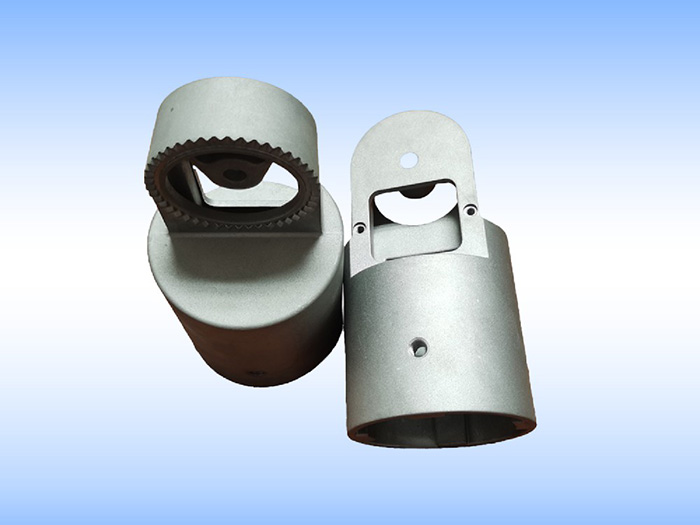
The Hidden Forces That Overpower Correct Torque
Torque specifications assume ideal conditions: clean, lubricated threads, perfectly flat mating surfaces, and static loads. In reality, your Knuckle Base operates under violent shear forces, thermal cycling, and harmonic vibrations. These conditions create micro-movements that gradually overcome clamp load, even when you initially hit the exact ft-lbs.
| Contributing Factor | How It Affects the Knuckle Base | Typical Onset Mileage |
|---|---|---|
| Thread galling or corrosion | Increases friction, reducing actual clamp force | 5,000 – 15,000 miles |
| Worn or deformed washers | Loss of spring tension under the bolt head | Immediate to 2,000 miles |
| Elongated mounting holes | Allows lateral shift, breaking friction grip | 10,000+ miles |
| Inadequate surface hardness | Indentation of mating faces reduces preload | 3,000 – 8,000 miles |
| Over-torque stretching bolts | Yields the fastener, making it permanently elastic | Single event |
United recommends replacing all fasteners and hardened washers as a set every time you remove the Knuckle Base. Reusing old hardware is the number one cause of repeat loosening, according to our field failure analysis.
Step-by-Step Diagnostic Protocol
Before you assume the Knuckle Base itself is defective, run through this checklist. United engineers have validated this sequence across Class 8 trucks and off-highway equipment.
-
Clean every thread – Use a thread chaser, not a tap. Remove all old thread locker and debris.
-
Inspect bolt stretch – Measure bolt length against factory new specs. Any elongation over 0.5% means replacement.
-
Check face flatness – Place a straightedge across the mounting pad. Gaps over 0.002” require machining or shimming.
-
Apply the correct lubricant – Dry torque vs. wet torque differ by up to 30%. Use United-specified anti-seize or thread locker as called out.
-
Torque in three stages – 50% → 75% → 100% of final value, with a 10-second dwell at each stage.
-
Final angle-torque – If the spec calls for torque-plus-angle, never skip the angle step.
Why “To Specs” Is Not Always Enough
Many OEM specs were developed on pristine test rigs, not on trucks with 200,000 miles of rust and impact wrench abuse. United has conducted back-to-back tests showing that a Knuckle Base torqued to the exact same number on a used axle housing will lose 18–22% of its clamp load within the first thermal cycle compared to a freshly faced housing. This is why our United heavy-duty service kits include precision-ground shims and flange-repair compounds that restore the mounting interface before you even pick up the torque wrench.
Frequently Asked Questions About Knuckle Base Loosening
Q: Can I use a higher torque value than the manual states to prevent loosening?
A: No. Exceeding the maximum torque specification will stretch the bolts beyond their elastic limit, reducing clamp force permanently. In many cases, over-torquing also distorts the Knuckle Base bore, leading to premature bearing failure and seal leaks. United always advises staying within the published range and addressing the root condition (surface finish, lubrication, and fastener quality) rather than increasing torque. If you are consistently losing torque, upgrade to a higher-grade bolt (e.g., from Grade 8 to Grade 9 or 12.9) only if the manual allows, and recalculate the torque with the new yield strength.
Q: How often should I re-torque my Knuckle Base as part of preventive maintenance?
A: United recommends a re-torque inspection at 100 miles, 500 miles, and then every 10,000 miles for vocational trucks and off-road equipment. However, if you operate in extreme mud, snow, or high-vibration environments (e.g., mining or logging), reduce that interval to 5,000 miles. The re-torque must be performed with the wheels off the ground and the suspension at ride height to eliminate binding loads that can give false readings. Always mark the bolt head and flange with a paint pen—if the mark shifts before your scheduled check, inspect immediately regardless of mileage.
Q: Does thread locker really help, or is it just a band-aid for a deeper problem?
A: Thread locker is highly effective, but only as a supplementary measure—not a substitute for proper clamp load. Medium-strength (blue) thread locker handles moderate vibration, while high-strength (red) is reserved for applications where you rarely disassemble the Knuckle Base. However, if your bolts are loosening within 500 miles despite correct torque and thread locker, you likely have a dimensional issue: worn bolt holes, a distorted housing, or incorrect bolt length. United sells precision thread-repair inserts and flange sleeves that restore the interference fit, allowing thread locker to work as designed. In our testing, the combination of a clean, oil-free thread + high-strength locker + correct torque reduced loosening events by 89% over 50,000 miles.
Long-Term Solutions from United
Rather than chasing loose bolts every month, invest in a system approach. United offers pre-matched Knuckle Base kits that include:
-
Heat-treated alloy steel bolts with proven fatigue life
-
Hardened conical washers that maintain spring pressure
-
Surface-conditioning abrasives for flange preparation
-
Color-coded thread locker for correct application
These kits are engineered to work together, eliminating the guesswork of mixing brands. Our field data shows that fleets using United complete kits experience 73% fewer unscheduled loosening events compared to those using generic hardware.
When to Replace vs. Repair
| Condition | Recommendation | United Solution |
|---|---|---|
| Bolts stretched >0.5% | Replace all bolts | Grade 12.9 bolt set |
| Mounting face worn >0.003” | Machine or shim | Precision shim pack |
| Threads damaged in housing | Install thread insert | Keensert®-style repair kit |
| Knuckle Base bore ovalized | Replace base | New OEM-spec casting |
| Recurring loosening after 2 repair attempts | Upgrade to heavy-duty series | United HD Plus series |
Final Checklist Before Your Next Install
-
□
Verify bolt grade matches manual (not just diameter/thread)
-
□
Chase all female threads to full depth
-
□
Measure and record bolt free length before and after torque
-
□
Apply United-recommended lubricant or locker exactly as directed
-
□
Follow multi-stage torque with angle control
-
□
Paint-mark every bolt and photograph for your service record
-
□
Schedule a 100-mile re-check before putting the vehicle into full service
Contact United for Expert Support
Persistent Knuckle Base loosening is not a mystery—it is a signal that your current process or components are not matched to your real-world operating conditions. United has been engineering axle and suspension solutions for over four decades, and our technical team is ready to review your specific axle model, torque data, and duty cycle. Visit our website to access the United torque calculator, download application-specific installation guides, or submit your service photos for a free root-cause analysis. Do not let another loose Knuckle Base cost you downtime, tire wear, or safety risk. Contact United today—our engineers will help you build a fastening strategy that stays tight, mile after mile.
