Why Does Ferrite Magnet Matter in Modern Industry?
2025-10-10
Magnets are integral to modern technology, playing a vital role in industries ranging from electronics and energy to automotive manufacturing. Among the various types of magnets available today, ferrite magnets—also known as ceramic magnets—stand out for their affordability, durability, and wide applicability.
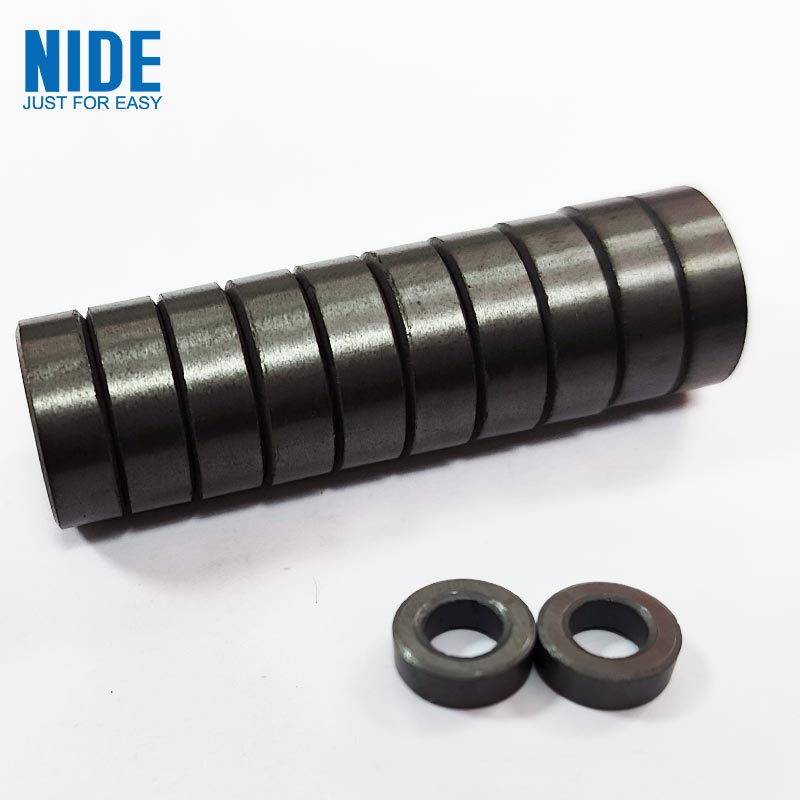
Ferrite magnets are a type of permanent magnet made primarily from iron oxide (Fe₂O₃) combined with other metallic elements such as barium (Ba) or strontium (Sr). The resulting compound, known as ferrite, is a ceramic material that exhibits magnetic properties. The process of producing ferrite magnets involves several precise steps that determine their strength, stability, and performance.
The Manufacturing Process of Ferrite Magnets
-
Raw Material Preparation – Iron oxide and either barium or strontium carbonate are mixed in specific proportions to achieve the desired magnetic properties.
-
Calcination – The mixture is heated at high temperatures (about 1000°C) to form a homogeneous ferrite compound.
-
Milling – The calcined material is finely ground into powder to achieve uniform particle size.
-
Forming – The powder is pressed into a mold under high pressure, sometimes in the presence of a magnetic field to create anisotropic magnets (magnets with a preferred orientation).
-
Sintering – The pressed magnets are heated at around 1200°C to harden them and enhance their magnetic performance.
-
Finishing – The final step involves machining, grinding, or coating the magnets as required for their end-use applications.
Ferrite magnets are typically black or dark gray in color, extremely hard and brittle, and resistant to corrosion. Unlike rare earth magnets (such as neodymium), ferrite magnets are less prone to oxidation and can perform effectively without additional surface treatment.
What Are the Key Properties and Technical Parameters of Ferrite Magnets?
Ferrite magnets possess a balance of performance and affordability that makes them a practical choice for mass-market applications. They offer strong resistance to demagnetization and perform reliably under a range of environmental conditions.
Core Characteristics
-
Magnetic Strength: Moderate, typically weaker than rare earth magnets but sufficient for most industrial and consumer uses.
-
Temperature Stability: Excellent thermal resistance, with working temperatures up to 250°C.
-
Corrosion Resistance: Naturally resistant to oxidation and moisture, suitable for outdoor or humid environments.
-
Durability: Hard and brittle, making them ideal for fixed applications but less suited for mechanical impact.
-
Cost-Effectiveness: Made from abundant raw materials, ensuring low production and purchase costs.
Technical Parameters of Ferrite Magnets
| Parameter | Typical Value | Description |
|---|---|---|
| Material Composition | SrFe₁₂O₁₉ / BaFe₁₂O₁₉ | Strontium or barium ferrite compounds |
| Magnetic Energy Product (BHmax) | 1.1–4.6 MGOe | Indicates energy density |
| Remanence (Br) | 200–440 mT | Measures retained magnetic flux density |
| Coercivity (Hc) | 160–400 kA/m | Resistance to demagnetization |
| Operating Temperature | -40°C to 250°C | Range suitable for most environments |
| Density | 4.8–5.1 g/cm³ | Material density |
| Shape Options | Block, ring, disc, segment, arc | Customizable for different applications |
These properties make ferrite magnets a preferred choice for industries that need stable magnetism under high temperature, excellent corrosion resistance, and low cost per unit.
What Are Ferrite Magnets Used for and Why Are They So Popular?
Ferrite magnets are among the most widely used permanent magnets globally. Their unique combination of performance and affordability allows them to function in both industrial and consumer applications.
Common Applications of Ferrite Magnets
-
Motors and Generators
-
Used in small electric motors, such as those found in fans, pumps, and household appliances.
-
Their resistance to demagnetization ensures long-term stability in motor operation.
-
-
Loudspeakers and Audio Devices
-
Ferrite magnets are commonly used in speaker assemblies to convert electrical signals into sound.
-
Their ability to maintain consistent magnetic fields contributes to sound clarity and quality.
-
-
Magnetic Separators
-
Employed in mining, recycling, and food processing industries to remove ferrous contaminants.
-
Reliable performance in harsh industrial environments due to corrosion resistance.
-
-
Magnetic Holding Systems
-
Found in magnetic clamps, tool holders, and door catches, where consistent holding force is essential.
-
-
Sensors and Measuring Instruments
-
Utilized in automotive sensors, tachometers, and electronic meters for their stable magnetic behavior.
-
-
Microwave Devices and Telecommunications
-
Ferrite materials are also used in microwave components like circulators and isolators due to their magnetic permeability.
-
-
Educational and Household Applications
-
Cost-effective magnets for teaching demonstrations, toys, and home improvement tools.
-
Advantages of Ferrite Magnets Across Industries
-
High Volume Efficiency: Suitable for mass production and large-scale industrial use.
-
Thermal Reliability: Perform steadily in both hot and cold environments.
-
Low Maintenance: Require minimal protective coating or care.
-
Eco-Friendly Manufacturing: Produced using non-toxic and recyclable materials.
-
Design Flexibility: Available in multiple shapes and customizable dimensions.
These advantages explain why ferrite magnets are still dominant in markets where long-term reliability and low cost are more critical than ultra-high magnetic strength.
What Should You Know Before Buying or Using Ferrite Magnets?
Before purchasing ferrite magnets for industrial or commercial use, it’s important to consider both their strengths and limitations. Selecting the right magnet type, shape, and grade ensures optimal performance in your specific application.
Factors to Consider When Selecting Ferrite Magnets
-
Magnetic Orientation
-
Isotropic magnets can be magnetized in any direction but have lower strength.
-
Anisotropic magnets are magnetized in one specific direction and provide stronger magnetic fields.
-
-
Shape and Size
-
Choose between block, ring, disc, or arc shapes depending on assembly requirements.
-
Custom dimensions are available for specialized equipment.
-
-
Temperature Resistance
-
Ideal for environments up to 250°C; beyond this, magnetism may weaken.
-
-
Mechanical Brittleness
-
Handle with care; ferrite magnets can chip or crack under mechanical stress.
-
-
Field Strength Requirements
-
For applications requiring maximum strength in compact spaces, neodymium magnets might be preferable.
-
For cost-sensitive, durable solutions, ferrite magnets are ideal.
-
Common FAQs About Ferrite Magnets
Q1: What are the differences between ferrite magnets and neodymium magnets?
A: Ferrite magnets are made from ceramic compounds and are less powerful but more cost-effective and corrosion-resistant. Neodymium magnets, on the other hand, are rare earth magnets with higher magnetic strength but are more prone to rust and temperature sensitivity. The choice depends on application needs—ferrite magnets are best for cost-efficiency and stability, while neodymium is suited for compact, high-performance devices.
Q2: What is the lifespan of a ferrite magnet?
A: Ferrite magnets can maintain their magnetic properties for several decades under normal conditions. They are resistant to demagnetization, oxidation, and temperature changes, ensuring long-term performance. However, extreme mechanical impact or exposure to very high temperatures (above 250°C) can reduce their magnetic strength over time.
Future Outlook for Ferrite Magnet Technology
As industries increasingly demand sustainable and cost-effective magnetic materials, ferrite magnets are undergoing steady innovation. Advanced sintering methods, improved grain alignment, and hybrid materials are helping manufacturers achieve higher magnetic performance without sacrificing durability. The global push toward green technology, electric vehicles, and renewable energy systems ensures that ferrite magnets will continue to play an essential role in energy-efficient designs.
At NIDE, we are dedicated to delivering high-quality ferrite magnets engineered for precision, performance, and longevity. Our magnets are designed to meet the rigorous demands of industries such as automotive, home appliances, and electronics manufacturing. By combining advanced production techniques with strict quality control, NIDE ensures consistent magnetic performance across every product line.
To learn more about our ferrite magnets or request a customized solution for your business, contact us today. Our technical team will help you select the ideal magnet configuration to enhance efficiency, reliability, and productivity in your operations.