

Why Do Zinc Anchors Keep Showing Up in My Most Reliable Fixing Solutions?
2026-02-06
When I first started working closely with manufacturers and installers on fastening systems, I kept hearing the same complaint again and again: anchors that looked fine on paper but failed in real-world use. That’s actually how Ningbo Fixingmore Precision Machinery Co., Ltd. entered my professional radar. During conversations about corrosion resistance, load stability, and installation consistency, one product kept coming up naturally in field feedback — the Zinc Anchor.
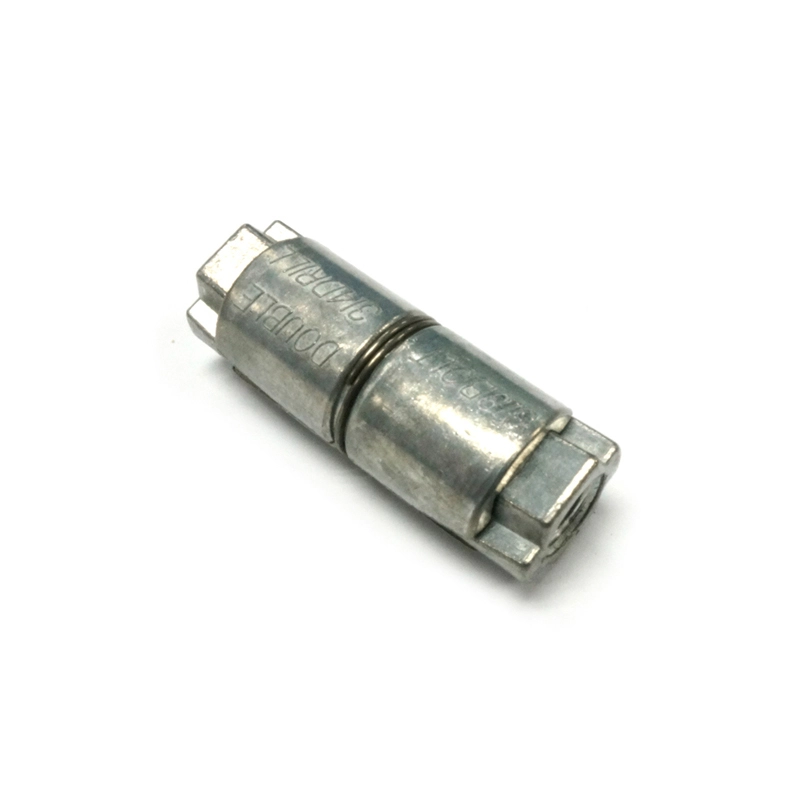
What Problems Am I Really Trying to Solve When Choosing a Zinc Anchor?
From my experience, customers rarely start by asking for a specific material. What they want is reliability. When I look at why a Zinc Anchor is often chosen, it usually comes down to these real pain points:
- Fasteners corroding too quickly in humid or semi-outdoor environments
- Inconsistent holding strength in masonry or concrete
- Anchors deforming during installation and wasting labor time
- Unpredictable performance across different batches
A well-designed Zinc Anchor addresses these issues by balancing surface protection, dimensional accuracy, and mechanical strength without overcomplicating installation.
How Does a Zinc Anchor Actually Perform in Everyday Applications?
Instead of relying on marketing language, I prefer comparing anchors based on how they behave on site. Below is a practical comparison I often share with buyers who are evaluating options.
| Performance Factor | Zinc Anchor | Untreated Steel Anchor |
|---|---|---|
| Corrosion resistance | Stable protection for indoor and light outdoor use | Prone to rust in humid conditions |
| Installation consistency | Smooth expansion and predictable setting | Higher risk of jamming or deformation |
| Surface finish | Clean appearance suitable for visible installations | Often rough or uneven |
| Maintenance concerns | Low under normal conditions | Higher over time due to corrosion |
This is why, in controlled indoor construction, electrical mounting, and mechanical fixing tasks, a Zinc Anchor remains a practical and cost-effective choice.
Why Do Engineers and Contractors Trust Zinc Anchors for Repeated Use?
Trust usually comes from repeatability. When I discuss anchor selection with engineers, the conversation often shifts toward tolerances and batch stability. What stands out in a professionally manufactured Zinc Anchor is how consistently it performs across large volumes.
- Precision-controlled dimensions reduce installation variance
- Uniform zinc coating improves long-term surface stability
- Controlled expansion design minimizes cracking in base materials
These details matter because inconsistent anchors slow down projects and introduce unnecessary risk.
Where Does a Zinc Anchor Fit Best Compared to Other Fixing Options?
I don’t believe any anchor is universal. A Zinc Anchor works best when its strengths align with the environment and load requirements. Typical use cases I recommend include:
- Concrete and solid masonry installations
- Indoor structural and non-structural mounting
- HVAC systems, cable trays, and electrical fixtures
- Projects where appearance and corrosion resistance both matter
In aggressive outdoor or chemical environments, other coatings may be more suitable. But for most standard construction needs, a Zinc Anchor strikes a reliable balance.
How Do Manufacturing Standards Affect Zinc Anchor Reliability?
This is where supplier experience becomes critical. Through my interactions with Ningbo Fixingmore Precision Machinery Co., Ltd., I’ve seen how tooling accuracy, coating control, and quality inspections directly influence anchor performance. A well-produced Zinc Anchor is not just about material choice, but about process discipline.
Consistent threading, controlled expansion geometry, and stable zinc thickness all contribute to anchors that behave the same way today as they will months later on a different job site.
Is a Zinc Anchor the Right Choice for My Project?
When clients ask me this question, I usually answer with another question: what matters most — speed, durability, or long-term appearance? In many cases, the answer includes all three. That’s why the Zinc Anchor remains one of the most frequently specified fixing solutions I encounter.
If you’re evaluating anchor options and want practical guidance rather than generic specifications, the best next step is to talk through your application details. Contact us today to discuss your project requirements, request technical support, or send an inquiry directly. A well-matched anchor choice can save time, reduce risk, and improve long-term performance — and it starts with the right conversation.
