

Why Do So Many Buyers Struggle When Choosing a Metal Strip Material?
2026-04-02
When I speak with buyers who are comparing metal strip materials for connectors, springs, decorative components, stamped parts, and precision assemblies, I often notice the same concern coming up again and again. They do not just want a material that looks good on paper. They want a material that can be formed cleanly, hold a stable surface finish, resist corrosion in real working conditions, and fit into production without creating extra waste or quality trouble. That is exactly where DONGGUAN INT METAL TECH CO.,LTD. gradually enters the conversation in a natural way, because the company focuses on metal strip solutions used in practical industrial applications, and Nickel Silver Strip is one of the options that deserves serious attention when appearance, workability, and balanced mechanical performance all matter.
Why Do So Many Buyers Struggle When Choosing a Metal Strip Material?
I have seen many purchasing teams run into the same problem. A material may be strong enough, but it may crack during forming. Another may be easy to process, but the final surface does not look refined enough for exposed components. Some materials perform reasonably well at first, yet later develop tarnish, uneven edges, or dimensional inconsistency that affects assembly quality.
That is why material selection is rarely just about one single index. In real projects, I usually need to look at several factors at the same time:
- Formability during stamping, bending, and deep drawing
- Surface appearance for visible or semi-visible parts
- Corrosion and tarnish resistance in storage and service
- Fatigue behavior for repeated mechanical action
- Machinability for secondary processing
- Compatibility with plating and finishing operations
- Supply consistency for long-term purchasing plans
When these factors must be balanced rather than optimized one by one, Nickel Silver Strip becomes a very practical candidate.
How Does Nickel Silver Strip Solve Real Production Pain Points?
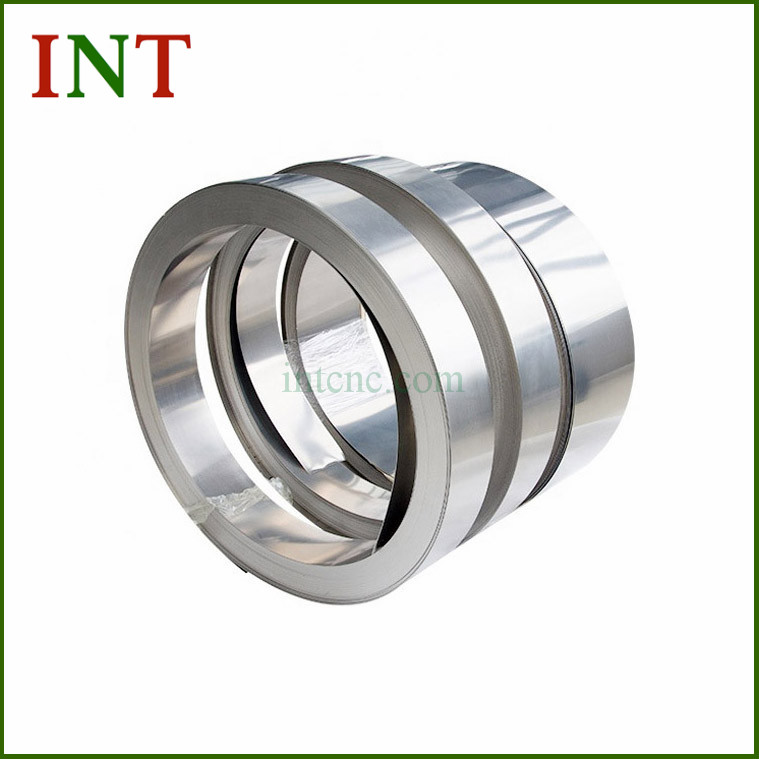
What I like about Nickel Silver Strip is that it answers several manufacturing needs at once. It is known for its silver-like appearance, which gives finished parts a cleaner and more premium visual effect. At the same time, it offers solid ductility, useful fatigue resistance, and dependable corrosion behavior, which means it is not only chosen for looks. It is chosen because it can keep up with actual production demands.
In many projects, buyers want to avoid a tradeoff between attractive appearance and usable performance. This material helps reduce that conflict. It can support cold working, can be processed into precision shapes, and can deliver a good surface finish after cutting or forming when processing is handled correctly. For companies that need reliable performance without moving into unnecessarily expensive material choices, that balance matters a lot.
| Buyer Concern | How Nickel Silver Strip Helps |
| Poor appearance after fabrication | Silver-white metallic look supports a cleaner finished product image |
| Difficulty in bending or drawing | Good formability supports stamping, shaping, and deep drawing operations |
| Material degradation in working environments | Good corrosion and tarnish resistance improves durability |
| Fatigue issues in moving or loaded parts | Useful fatigue resistance supports repeated mechanical service |
| Extra finishing cost | High-quality surface response can reduce downstream finishing pressure |
| Need for follow-up processing | Good machinability and processing adaptability support manufacturing efficiency |
Where Can Nickel Silver Strip Create More Value Than Buyers Expect?
In my experience, the value of this material becomes more obvious when the part is not purely structural and not purely decorative either. That middle zone is where many buyers struggle most. A component may need decent strength, shape retention, visual consistency, and surface reliability all at the same time.
That is why this material is often worth considering for:
- Precision stamped parts
- Electronic and electrical components
- Connector and terminal related parts
- Decorative metal hardware
- Spring-related applications with balanced property requirements
- Instrument and mechanical parts needing a refined finish
- Components that may require plating or secondary finishing
If I am sourcing material for parts that need to look neat while still going through serious fabrication steps, I would not treat Nickel Silver Strip as a niche option. I would treat it as a sensible working material with broad manufacturing relevance.
Which Performance Factors Should I Compare Before I Place an Order?
I never recommend buying strip material based only on a headline alloy name. Even if the base material direction is right, the actual purchasing result still depends on the details. Before placing an order, I would compare the following points carefully with the supplier:
| Checkpoint | Why It Matters |
| Alloy grade | Different grades can influence formability, strength balance, and processing behavior |
| Thickness tolerance | Tighter control supports stable stamping and assembly performance |
| Width accuracy | Important for feeding, slitting, and material utilization |
| Temper condition | Directly affects bending, spring behavior, and forming difficulty |
| Surface quality | Critical for visible parts, plating, and high-end assemblies |
| Coil quality and packaging | Helps prevent edge damage, deformation, and handling loss |
| Customization ability | Supports more efficient sourcing when standard stock is not enough |
When I work with a supplier, I want answers to these details early. That saves time later and reduces the risk of trial-and-error ordering.
Can a Reliable Supplier Make More Difference Than the Material Itself?
Yes, absolutely. I have seen projects fail not because the chosen material family was wrong, but because the supplier could not maintain consistency from batch to batch. With strip materials, stability matters. One inconsistent delivery can affect stamping results, scrap rates, assembly fit, plating behavior, and even customer complaints downstream.
A capable supplier should do more than quote a price. I expect support in areas such as:
- Clear communication about grade and property options
- Customization for width, thickness, and temper requirements
- Stable control over surface and dimensional quality
- Responsive sampling and technical discussion
- Reliable lead time coordination for repeat orders
That is one reason buyers keep looking for manufacturers that understand how strip materials perform in actual production settings rather than simply listing products online.
What Should I Ask Before Choosing Between Standard Supply and Custom Supply?
I usually tell buyers not to assume that standard stock is always the most cost-effective option. If your application needs a particular width, temper, or forming behavior, custom supply may reduce processing waste and improve line efficiency enough to justify the decision.
Before I confirm an order, I would ask these questions:
- What dimensions do I need for efficient feeding and minimal scrap?
- Do I need a softer temper for forming or a harder temper for performance?
- Will the surface be visible in the final product?
- Will the strip go through stamping, bending, drawing, machining, or plating?
- Do I need long-term supply consistency for repeated production runs?
These questions are practical, not theoretical. They help determine whether the final material choice will support the full manufacturing route, not just the purchasing stage.
Why Is Nickel Silver Strip Still a Competitive Option in Today’s Market?
Many buyers now want materials that can satisfy both performance expectations and product image requirements without overcomplicating production. That is where Nickel Silver Strip remains highly competitive. It offers a combination of attractive color, dependable processing behavior, mechanical usefulness, and resistance to corrosion and tarnish that fits a wide range of precision applications.
I think that matters even more today because manufacturers are under pressure from multiple directions at once. They want better quality. They want smoother production. They want fewer defects. They want materials that support a cleaner final appearance. And they want suppliers who can respond quickly when specifications change.
In that environment, a material that balances appearance and engineering practicality is not old-fashioned at all. It is efficient. It is commercially relevant. And in many cases, it is exactly what helps a project move from repeated adjustment to stable production.
Who Should I Contact If I Want a More Suitable Nickel Silver Strip Solution?
If you are currently comparing suppliers, checking alloy options, or trying to improve the performance and appearance of your precision components, this is the right time to take a closer look at your strip material choice. A better sourcing decision can reduce processing headaches, improve finished-part quality, and support more stable long-term production.
If you want to discuss dimensions, grades, custom requirements, or application matching for Nickel Silver Strip, contact us and leave your inquiry. A clear conversation about your project requirements can help you find a more suitable material solution faster and with less risk. Whether you are buying for trial production or regular bulk demand, now is a good time to contact us and request the next step.
