Why Do So Many Buyers Struggle to Find Reliable Gear Reducers That Actually Last?
2026-03-20
When I speak with equipment buyers, maintenance teams, and project engineers, I hear the same concern again and again: it is not difficult to find a gearbox on the market, but it is much harder to find Gear Reducers that match the working condition, hold torque steadily, and stay dependable after long hours of use. That is exactly why companies such as Ningbo Xinhong Hydraulic Co.,Ltd. have gradually earned attention in this field. In real projects, I do not just look at price tags. I look at transmission stability, torque output, sealing reliability, machining accuracy, and whether the supplier truly understands how Gear Reducers perform inside winch drives, rotary systems, and other heavy-duty machinery.
If I choose the wrong reducer, the consequences are immediate. Output speed may not match the equipment design. Noise may rise after continuous operation. Maintenance intervals may become shorter than expected. In some cases, the whole drive system can lose efficiency because the reducer was never properly matched to the motor and application. That is why I believe a professional purchasing decision should begin with performance needs, not with the lowest quotation.
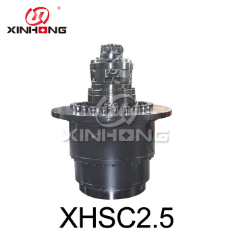
What Problems Do Buyers Usually Face When Choosing Gear Reducers?
Before I compare different options, I first identify the practical problems that usually create trouble in real applications. In my experience, most buyers are not dealing with one single issue. They are dealing with a combination of technical mismatch, uncertain quality, and after-sales risk.
- I often see reducers selected with the wrong reduction ratio, which leads to unstable output speed or insufficient torque.
- I also notice that some buyers underestimate the importance of gear machining precision, which can increase backlash and reduce efficiency.
- In harsh environments, poor sealing performance becomes a hidden cost because leakage and contamination shorten service life.
- Some products look acceptable on paper, but their internal components are inconsistent, so long-term reliability becomes unpredictable.
- Another common issue is slow technical response from suppliers when customers need customized matching for a specific machine.
These are not small details. They directly affect equipment uptime, maintenance budgets, and customer satisfaction after delivery. If I want the drive system to work smoothly, I need Gear Reducers that are designed for real industrial loads rather than for catalog presentation alone.
Why Does Reducer Design Matter More Than Many Buyers Expect?
I have found that reducer performance is not determined by one feature alone. It is the result of how the internal structure, material control, gear tooth design, shaft balance, and manufacturing precision work together. A well-designed reducer does more than reduce speed. It helps the motor deliver torque more effectively while keeping the whole drive system stable.
When I evaluate a reducer, I usually pay attention to several core design factors:
- Helical gear precision that supports smoother meshing and lower vibration
- Balanced shaft structure that helps maintain transmission stability
- Reasonable stage configuration for the target reduction ratio
- Reliable seals and fastening components for demanding operating environments
- Compatibility with hydraulic motors, winch systems, or rotary drive assemblies
If these details are handled properly, I usually get better mechanical efficiency, lower backlash, and more predictable performance. That is why design quality has a direct impact on whether Gear Reducers feel trustworthy in actual field use.
How Do Better Gear Reducers Help Me Reduce Operating Costs?
Some buyers still focus only on purchase cost, but I prefer to calculate the total cost of ownership. A reducer that performs well over time can save far more than it costs at the moment of purchase. In other words, the real value appears after installation.
| Cost Factor | What Happens with a Poorly Matched Reducer | What I Gain from a Well-Designed Reducer |
|---|---|---|
| Energy efficiency | Higher transmission loss and less efficient output | Better power transfer and more stable system efficiency |
| Maintenance frequency | Frequent checks, repairs, and part replacement | Longer service intervals and fewer unexpected shutdowns |
| Equipment downtime | Interrupted production and delayed project schedules | More consistent operation and improved uptime |
| Spare parts expense | Faster wear on seals, gears, and associated drive parts | More controlled wear and reduced replacement pressure |
| System matching | Output mismatch that affects overall machine performance | Smoother integration with the motor and driven equipment |
From my point of view, this is where dependable Gear Reducers make a measurable difference. They do not simply solve a speed reduction task. They help protect the entire drive chain, which makes every downstream cost easier to control.
Which Features Should I Check Before I Place an Order?
I never want to rely on a product name alone. Before making a purchasing decision, I compare a series of technical and commercial points to avoid costly mistakes later. The checklist below is one that I find especially useful.
| What I Check | Why It Matters to Me |
|---|---|
| Reduction ratio options | I need to confirm whether the supplier can provide standard or customized matching for my equipment. |
| Torque capacity | I want to be sure the reducer can carry real operating loads without overstrain. |
| Gear machining quality | I care about smooth transmission, lower backlash, and long-term durability. |
| Seal reliability | I need protection against leakage, contamination, and unstable field performance. |
| Application experience | I trust suppliers more when they understand winch drives, rotation drives, track drives, and similar uses. |
| Delivery and technical response | I need practical support, especially when a project requires fast confirmation or special configuration. |
If a supplier can answer these points clearly, I already know the conversation is moving in the right direction. Technical clarity builds trust faster than generic selling language ever can.
Where Can the Right Gear Reducers Make the Biggest Difference?
One reason I take reducer selection seriously is that these units are used in many demanding transmission environments. A reducer may look like a single component, but its influence reaches the full working behavior of the machine.
In many industrial systems, I see reducers used in applications such as the following:
- Winch drives that require strong torque and controlled output speed
- Rotary drive systems that depend on smooth and steady motion
- Wheel drives where transmission efficiency affects machine response
- Track drives that operate under repeated heavy loads
- Cutter head systems where output force and stability both matter
Because the working conditions vary so much, I do not believe in one-size-fits-all selection. I prefer to discuss the application clearly, compare load demands, and confirm whether the internal structure of the reducer can support the actual duty cycle. That is how Gear Reducers become part of a reliable solution rather than a future service problem.
Why Do I Care So Much About Supplier Experience and Manufacturing Control?
I have learned that even a good design can lose value if manufacturing control is weak. Consistency matters. A reducer should not perform well in one batch and become unpredictable in the next. That is why I pay close attention to the supplier’s production background, machining capability, quality control habits, and ability to keep component standards stable over time.
When a supplier has accumulated real production experience, I usually see the difference in these areas:
- Better understanding of how to balance precision, strength, and efficiency
- More mature control of internal gear components and assembly fit
- Stronger judgment when recommending standard or customized solutions
- More practical support when customers need matching advice for motors or drive systems
- Greater confidence in delivery consistency for repeat orders
For me, that kind of experience is not just a background story. It is part of the product value. When the supplier understands the real use of Gear Reducers, the buying process becomes clearer and the project risk becomes lower.
Can a Customized Solution Be Better Than a Standard Model?
Yes, and in many cases I think it should be considered early. Standard models are efficient when the application is straightforward, but some projects require more precise matching. If the motor speed, output requirement, installation space, or load condition is unusual, a customized ratio or configuration may save a lot of trouble later.
I usually consider customization when:
- The machine requires a specific reduction ratio that is not ideal in a standard catalog range
- The installation structure has limited space or special layout requirements
- The application load is irregular, repeated, or especially demanding
- The reducer needs to work with a particular motor or system interface
- The buyer wants to improve efficiency or torque performance for a defined project target
This is why I value suppliers who can provide both standard choices and technical flexibility. It gives me more room to balance budget, lead time, and performance expectations without forcing the project into an unsuitable specification.
What Makes Buyers Stay with One Reducer Supplier for the Long Term?
In my experience, long-term cooperation does not come from promises alone. It comes from repeated proof. Buyers stay when the product performs consistently, communication remains efficient, and technical support actually solves problems.
If I had to summarize what encourages repeat business, I would put it this way:
| What Buyers Want | Why It Leads to Long-Term Cooperation |
|---|---|
| Stable product quality | It reduces purchasing risk and improves confidence in repeat orders. |
| Clear technical communication | It helps avoid mismatched specifications and saves project time. |
| Responsive service | It supports urgent schedules and builds trust during problem-solving. |
| Application understanding | It shows that the supplier is offering solutions, not only products. |
| Reliable delivery | It helps buyers manage inventory, project deadlines, and customer commitments. |
To me, that is the real difference between a short-term transaction and a lasting supplier relationship. A reducer supplier becomes much more valuable when they help me make fewer mistakes and run equipment more confidently.
So How Do I Choose the Right Gear Reducers for My Project?
If I want to make a smart decision, I do not begin with appearance, and I do not stop at the quotation sheet. I begin with my application requirements, then I compare ratio range, torque demand, gear precision, seal quality, and supplier capability. After that, I look at whether the supplier can communicate clearly and support either standard or customized solutions based on the actual project.
For buyers who need dependable transmission performance in winch drives, rotary mechanisms, and other heavy-duty equipment, choosing the right Gear Reducers can protect efficiency, reduce downtime, and improve the overall value of the machine. If you are looking for a supplier that takes product performance and application matching seriously, now is the time to take the next step. Please contact us to discuss your project, send your specifications, or request a quotation. A clear inquiry today can help you avoid expensive reducer problems tomorrow.