Why Do Sleeve Anchors Matter for High-Strength Fixings Today?
2025-12-03
Sleeve anchors have become one of the most widely used mechanical fasteners for medium-to-heavy-duty applications in concrete, brick, and block. Their expanding sleeve structure allows secure installation in a wide range of base materials, making them an essential component in construction, industrial assembly, equipment mounting, and infrastructure reinforcement.
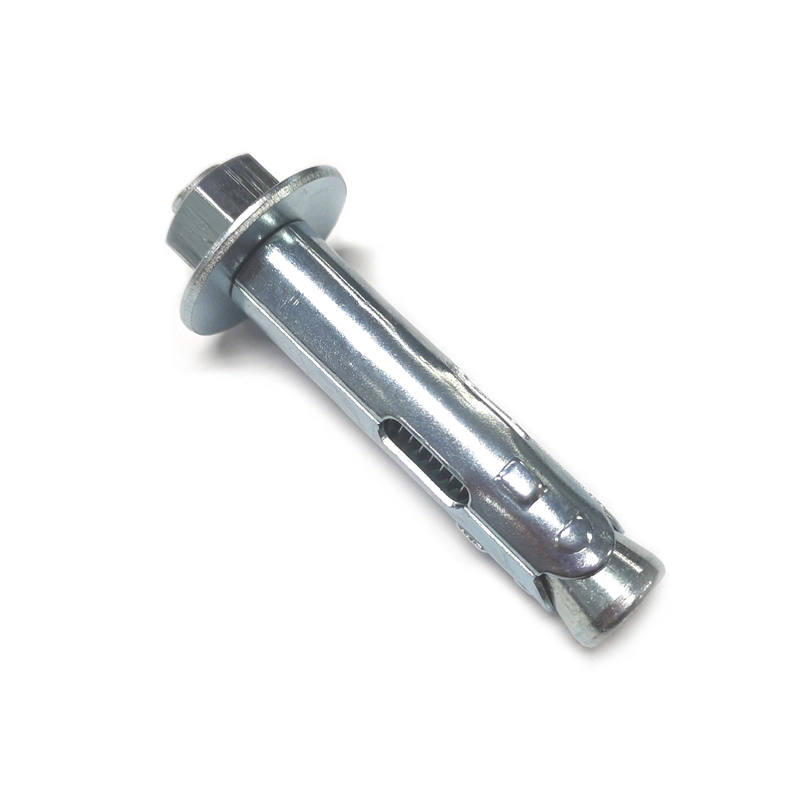
How Does a Sleeve Anchor Achieve Reliable Expansion and Stability?
The mechanical principle behind a sleeve anchor centers on controlled expansion. When the anchor is inserted into a pre-drilled hole and the nut or screw is tightened, the internal cone is drawn upward, forcing the surrounding metal sleeve to flare outward. This expansion generates frictional holding power between the sleeve and the substrate, securing the fastener even under dynamic loads.
To support stronger anchoring performance, manufacturers have refined elements such as thread precision, sleeve length, expansion cone hardness, and uniform plating. These refinements contribute to consistent installation quality, corrosion resistance, and safer load-bearing capacity across various project conditions.
Product Parameter Overview
| Parameter Category | Specification Details |
|---|---|
| Available Diameters | 6mm, 8mm, 10mm, 12mm, 16mm, 20mm, customized sizes |
| Lengths | 40mm–200mm depending on diameter |
| Material Options | Carbon steel, stainless steel 304/316, zinc-plated steel, hot-dip galvanized steel |
| Sleeve Thickness | Standard or reinforced thick-wall sleeve for heavy loads |
| Thread Standard | Metric thread (ISO) or inch thread (UNC) |
| Pull-Out Strength | Varies by substrate; typically 2.0–7.5kN depending on diameter |
| Shear Strength | 1.5–6.0kN depending on material grade |
| Installation Method | Pre-drill → clean hole → insert anchor → tighten nut/bolt to specified torque |
| Substrate Compatibility | Solid concrete, hollow concrete block, clay brick, stone, lightweight aggregate block |
These parameters allow engineers, builders, and project managers to select the appropriate anchor based on structural requirements, environmental factors, and performance expectations.
How Do the Structural Features of a Sleeve Anchor Enhance Its Functionality?
Each part of a sleeve anchor plays a specific role in delivering dependable performance. Understanding these components helps explain why the system is preferred for so many applications.
Key Functional Features
1. Expansion Sleeve Design
The sleeve is precision-formed to expand evenly, avoiding stress concentration that could weaken the substrate. Reinforced sleeves support greater frictional surface area and higher load ratings.
2. Expansion Cone Geometry
A hardened internal cone provides reliable mechanical resistance during pull-through, ensuring consistent flare and secure locking.
3. External Thread Compatibility
The threaded bolt or stud allows easy installation using standard tools, enabling rapid fastening for industrial or commercial settings.
4. Nut and Washer Assembly
The nut compresses the anchor, pulling the cone upward to produce expansion. The washer distributes torque force, reducing surface damage.
5. Plating and Corrosion Resistance
Zinc plating, yellow passivation, or stainless steel materials extend service life, especially in outdoor, chemical, or humid environments.
Common Uses of Sleeve Anchors
-
HVAC system installation
-
Pipe brackets and cable trays
-
Guardrails and handrails
-
Facade fixtures
-
Machinery mounting
-
Steel structure attachments
-
Storage racks and heavy shelving
-
Electrical equipment fastening
In addition to versatility, sleeve anchors offer consistent installation performance even in environments where substrate density varies. This reliability contributes to their continued relevance in construction and industrial fastenings.
How Is the Market for Sleeve Anchors Evolving and What Trends Shape the Future?
Advances in construction materials, seismic safety requirements, and long-term maintenance expectations are driving innovation in sleeve anchor design. Several major trends are set to influence future development:
1. Higher Corrosion-Resistance Standards
Industries are moving toward longer service-life fasteners, especially in coastal, industrial, and high-humidity environments. Stainless steel 316 and high-grade coatings will continue gaining popularity.
2. Precision Manufacturing and Automated Inspection
To maintain consistent expansion performance, manufacturers are adopting CNC machining, automated threading, and optical-inspection systems. This ensures uniformity in cone hardness, sleeve thickness, and thread accuracy.
3. Improved Load-Testing Certification
More projects require anchors that meet international standards such as CE, ETA, and ISO testing protocols. Load-rating transparency boosts engineering confidence and safety margins.
4. Smart Construction Integration
Digital construction management is accelerating the integration of detailed product data sheets, 3D models, and traceability information. Anchors with QR-coded batch information may soon be common.
5. Customizable Anchoring Solutions
Custom dimensions, reinforced sleeves, and specialized materials are increasingly requested for high-precision or high-load applications.
The future of sleeve anchors will emphasize reliability, sustainability, and data-driven performance verification. As building safety requirements rise, fasteners will be expected to deliver greater traceability and durability across a wide range of use environments.
How Can Common Sleeve Anchor Problems Be Solved?
Below are two frequently asked questions that appear in construction and installation environments.
Q1: Why does a sleeve anchor sometimes fail to grip firmly in the hole?
A sleeve anchor may not grip firmly if the hole is oversized, if dust is not cleaned from the hole, or if the substrate is too weak for the selected anchor size. Ensuring correct drilling diameter, proper cleaning, and choosing an anchor rated for the specific substrate density will significantly improve performance. Using reinforced-sleeve types is advisable for porous materials.
Q2: How can the load capacity of a sleeve anchor be maximized?
Load capacity can be optimized by selecting the correct diameter, ensuring proper embedment depth, tightening the nut to the specified torque, and using corrosion-resistant materials appropriate for the environment. Engineers should also avoid edge and spacing violations, which may reduce the anchor’s holding strength.
These questions illustrate practical considerations that installers encounter on-site, reinforcing the importance of proper selection and technique.
Sleeve anchors continue to play a crucial role in modern construction and industrial fastening due to their reliable expansion mechanism, compatibility with diverse substrates, and strong performance under varied conditions. With ongoing advancements in corrosion protection, manufacturing precision, and load-testing certification, they are expected to remain a dependable choice for medium-to-heavy-duty anchoring in the years ahead. As industries place greater emphasis on safety, engineers and builders will increasingly rely on anchoring solutions that deliver predictable, traceable, and long-lasting strength.
For high-quality, precision-engineered sleeve anchors, Ningbo Fixingmore Precision Machinery Factory offers expertise rooted in advanced manufacturing capabilities and strict quality standards. For technical consultation, customized specifications, or project-specific support, please contact us to discuss how our fastening solutions can meet your performance requirements.