Why Do High-stakes Projects Trust Special Forged Parts More Than Standard Stock?
2025-12-12
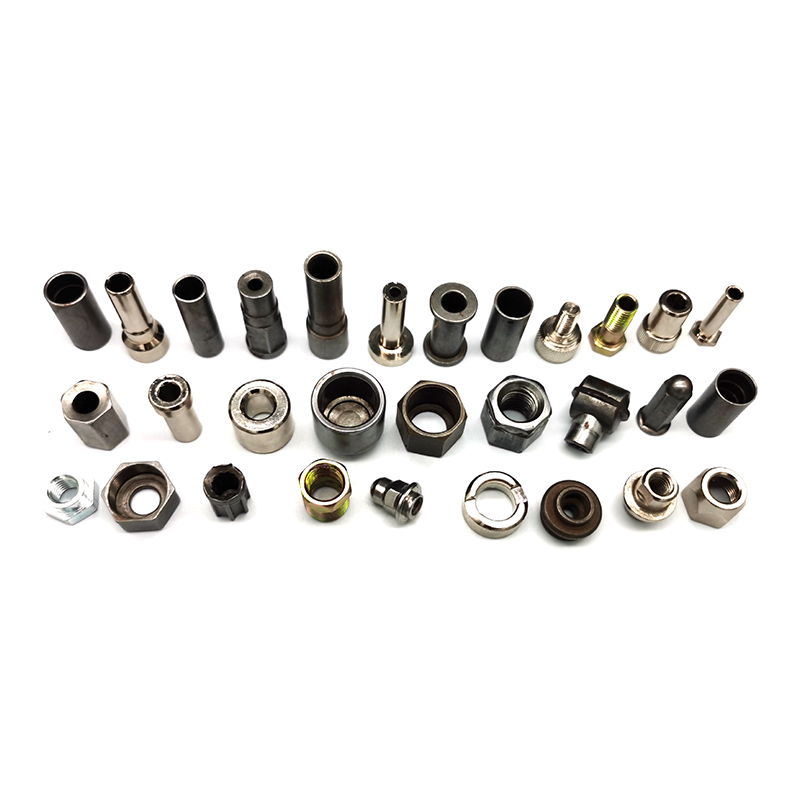
I build components for equipment that cannot afford surprises, and over the years I have learned a simple rule of survival in tough applications: tailor the metal to the job, not the job to the metal. That is exactly why my team at Wisdom keeps turning to Special Forged Parts. Instead of trimming a standard blank and hoping it holds, I specify geometry, grain flow, and alloy to match the load path and the environment. With Special Forged Parts, I see fewer field failures, cleaner installs, and a clearer ROI. When the torque spikes, when thermal cycles stack up, or when corrosion eats at everything else, Special Forged Parts keep their shape and strength. This article breaks down how I choose them, what I check before approving drawings, and why the lifecycle math favors customization. You will notice I mention Special Forged Parts repeatedly because that is the real differentiator in mission-critical assemblies.
What Performance Gaps Do Custom Forgings Close That Machined Bar Stock Cannot?
- Directional strength where I need it thanks to controlled grain flow mapped along load paths.
- Higher fatigue life because forging reduces porosity and eliminates stress-riser transitions common in hog-outs.
- Better impact behavior in low-temperature or shock environments compared with castings of similar chemistry.
- Tighter dimensional repeatability across batches, which simplifies my downstream SPC and PPAP documentation.
- Material savings on large shapes where machining from plate wastes both time and alloy.
In practice, these gains show up as higher uptime and fewer NCRs. On a recent actuator yoke, the forged version passed accelerated fatigue while a machined version from bar cracked at the radius after half the cycles. The forged yoke’s consistency made my assembly torque window predictable and that saved hours per build.
How Do I Decide Whether A Part Truly Needs A Forging Route?
My quick triage is simple and honest about risk:
- If the part sees alternating loads, I default to a forging unless weight and cost make another process clearly superior.
- If the geometry concentrates stress at shoulders, fillets, or threads, I ask for grain flow control or an upset-forged preform.
- If corrosion or temperature is hostile, I pair alloy selection with a forging route to avoid internal defects that coatings cannot fix.
- If cost per life hour matters more than cost per piece, Special Forged Parts usually win the math.
Which Specifications Help Me Lock Down Quality Without Over-engineering?
- Mechanical targets: YS, UTS, elongation, and reduction of area at the final heat-treated condition, not just raw stock.
- Process controls: forging temperature ranges, number of blows, and draft angles to protect fiber flow through critical sections.
- NDT scope: UT for core soundness on thick sections, MT or PT for surface, with acceptance tied to service class.
- Dimensional plan: datum scheme aligned to functional surfaces so CMM reports actually reflect how the part fits.
- Traceability: heat-lot to serial correlation so I can close the loop on any field report within hours.
Why Does Alloy Selection Matter More Than People Think?
I pick the alloy after I write the failure story I want to avoid. If I fear brittle fracture, I choose a tougher grade with controlled cleanliness. If I fear creep, I bias toward high-temperature steels or nickel alloys. For marine work, I prefer stainless or duplex with forging practice that limits sigma-phase risk. The point is not to chase exotic material—it is to marry the alloy with a forging plan that keeps properties uniform across the section. That is where Special Forged Parts show their value.
What Does My RFQ Include To Get Accurate Quotes And Fewer Clarifications?
- 2D with all critical-to-function dimensions and a lightweight 3D file for clarification.
- Target annual volume and lot sizes so die amortization can be priced fairly.
- Heat-treat callouts with quench media or vacuum guidance if distortion is sensitive.
- NDT class and sampling plan tied to risk, not blanket 100 percent unless justified.
- Packaging rules that protect edges and threads and still keep freight efficient.
How Do Lead Times And MOQs Typically Play Out For Custom Forgings?
I see two phases: tool launch and steady production. Tooling and first article approval usually define the calendar. Once the dies are proven, repeat orders move faster than skeptics expect. The table below reflects what I plan into my schedules when I buy Special Forged Parts for industrial equipment, heavy vehicles, energy systems, and motion assemblies.
| Alloy Family | Forging Route | Typical Tolerance After Forging | Example Part | Indicative MOQ | Launch Lead Time | Repeat Lead Time |
|---|---|---|---|---|---|---|
| Carbon steel 1045–1050 | Open-die preform then closed-die finish | ±0.8–1.5 mm before machining | Crank arm, clevis | 300–800 pcs | 4–6 weeks for dies plus FA | 2–3 weeks typical |
| Alloy steel 4140/4340 | Closed-die with controlled grain flow | ±0.6–1.2 mm before machining | Shaft flange, yoke | 200–600 pcs | 5–7 weeks for PPAP | 3–4 weeks typical |
| Stainless 304/316 | Closed-die with solution anneal | ±0.8–1.6 mm before machining | Valve body, clamp | 300–1000 pcs | 6–8 weeks including NDT | 3–5 weeks typical |
| Duplex and super duplex | Open-die breakdown then impression die | ±1.0–1.8 mm before machining | Manifold connector | 150–400 pcs | 7–9 weeks with corrosion testing | 4–6 weeks typical |
| Aluminum 6xxx/7xxx | Precision closed-die forging | ±0.5–1.0 mm before machining | Lightweight bracket | 800–3000 pcs | 3–5 weeks for die tryout | 1–2 weeks typical |
Where Do The Biggest Cost Levers Hide And How Do I Pull Them Without Risk?
I reduce cost by letting the forging do the heavy lifting. If I ask the die to place stock only where strength demands it, I cut machining minutes and scrap rate. I also standardize fillet radii across families so tools swap faster. Another lever is surface allowance: too little invites clean-up failures, too much burns time. For most Special Forged Parts, my sweet spot is a machining allowance that respects distortion from heat treat and leaves the final cut crisp.
What Inspection Plan Keeps Me Safe Without Slowing Everything Down?
- Incoming: dimensional check on functional datums, hardness verification, and grain-flow macroetch on first lots.
- In-process: SPC on bores and threads that control stack-up, with tool wear triggers not just time-based checks.
- Final: NDT per risk class, marking and full traceability review, plus a cosmetic scan on sealing surfaces.
When the part is safety-critical, I add fracture-toughness or Charpy testing at service temperature. The cost uplifts are modest compared with the peace of mind.
How Do I Translate Field Conditions Into Forging Requirements Without Guesswork?
I start with the failure mode I fear most, then translate it into a drawing note. If fretting at a clamp interface hurt us last year, I specify a forged fillet with a larger radius and a shot-peened surface pre-machine. If thermal shock bit a turbine linkage, I define heat-treat uniformity and quench agitation. This discipline, paired with partners who understand Special Forged Parts, keeps prototypes from becoming expensive lessons.
What Makes Wisdom A Practical Partner Instead Of Just Another Supplier?
I value responsiveness, die-making expertise, and honest DFM feedback more than a low first quote. With Wisdom, I can iterate preforms quickly, adjust parting lines to protect sealing surfaces, and align inspection with real risk. That is how my projects stay on schedule. When I am scaling a platform, I need a forging partner who treats every ECN as a collaboration, not a charge code. That approach is why I continue to source Special Forged Parts from a team that behaves like an extension of my own engineering group.
Will Custom Forgings Still Help If My Volumes Are Modest?
Often yes. If the geometry is compact or family tooling can serve multiple SKUs, the economics work even at medium runs. I have launched service-critical Special Forged Parts with MOQs that fit pilot builds, then ramped volumes once the platform matured. The early premium paid for itself through scrap reduction and field reliability.
How Should We Move Forward If My CAD Is Not Final Yet?
Send the envelope, the duty cycle, and your risk list. I will help convert that into a forging-friendly preform and a drawing that protects what matters. From there, we can lock the die split, set inspection gates, and align the PPAP plan. If you want the same low drama I want, this is the fastest way to get there with Special Forged Parts.
What Is The Next Step If I Need Samples This Quarter?
If your timeline is tight, we can prioritize a fast-track die and a focused test plan. I will recommend alloys already on hand, shave unnecessary inspection for non-critical zones, and keep machining fixtures simple for the pilot run. The goal is to get you validated hardware without compromising the attributes that make Special Forged Parts worth choosing in the first place.
Ready To Cut Downtime And Strengthen Your Build?
If you are evaluating Special Forged Parts for a critical assembly and want straight answers on feasibility, cost, and timing, reach out now. Tell me your application, share the guardrails, and let us turn that into a practical plan. Use the form to contact us and request a quote or a quick DFM review. I will get back with a clear path, sample timing, and a checklist you can take to your internal review—no fluff, just what you need to move.