Why Are Stamping Parts Still the Backbone of Modern Manufacturing?
2026-02-04
When I first started sourcing metal components for industrial projects, I quickly realized that not all Stamping Parts are created equal. What looks simple on the surface often hides major differences in precision, durability, and long-term cost. This understanding is exactly why I gradually came to work with Nuote Metals Technology Co.,Ltd., not because of marketing language, but because of stable performance in real production scenarios.
In today’s manufacturing environment, buyers are no longer just purchasing metal components. They are looking for reliability, repeatability, and predictable quality. Well-made Stamping Parts quietly support these goals across countless industries.
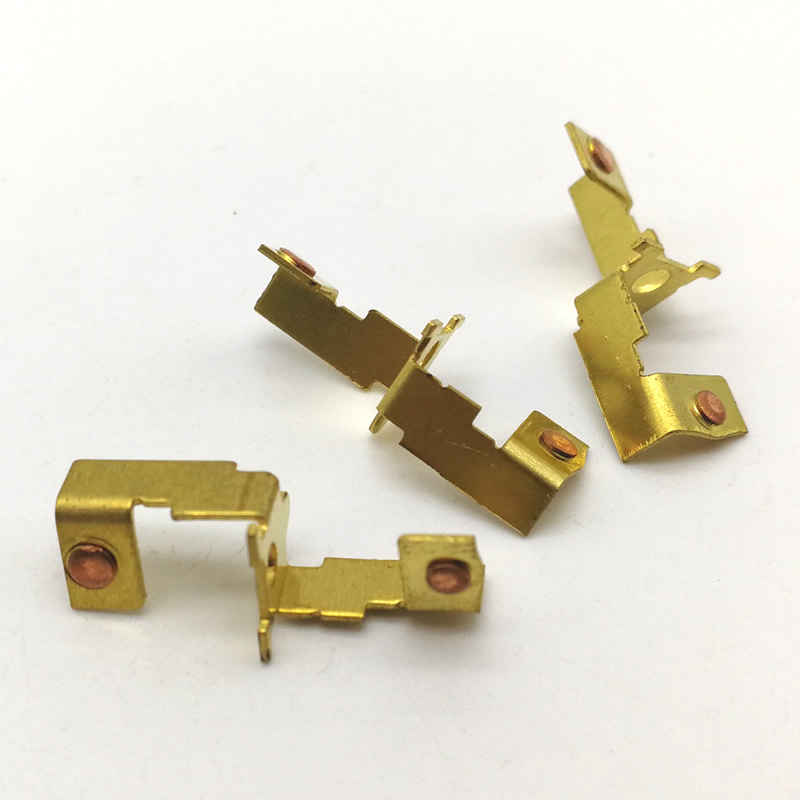
How Do Stamping Parts Help Control Cost Without Sacrificing Quality?
One of the most common frustrations I hear from procurement teams is inconsistency. Parts that pass early samples often fail to maintain the same quality during mass production. High-quality Stamping Parts solve this issue by relying on optimized tooling and controlled forming processes.
- Stable dies help maintain uniform dimensions across large batches
- Efficient material utilization lowers overall production waste
- High-speed stamping improves output without raising labor cost
- Consistent tolerances reduce downstream assembly issues
From my experience, these benefits directly translate into fewer delays, lower inspection pressure, and more predictable project timelines.
Which Materials Make Stamping Parts Suitable for Multiple Industries?
Another reason Stamping Parts remain widely used is their flexibility in material selection. Different applications require different balances between strength, corrosion resistance, conductivity, and weight.
| Material Type | Typical Application | Primary Advantage |
|---|---|---|
| Carbon Steel | Structural and mechanical parts | High strength and cost efficiency |
| Stainless Steel | Medical and food-grade equipment | Excellent corrosion resistance |
| Aluminum | Automotive and electronics | Lightweight and easy to form |
| Copper and Brass | Electrical connectors | Superior electrical conductivity |
This range of materials allows Stamping Parts to integrate smoothly into automotive, electronics, machinery, and energy-related products without forcing design compromises.
Why Does Precision Play Such a Critical Role in Stamping Parts?
Precision is not only about tight tolerances. For me, it is about predictability in real-world use. When Stamping Parts are produced with controlled processes and consistent inspection standards, engineers can trust their performance under load, vibration, and long-term operation.
Accurate Stamping Parts also reduce the need for secondary machining and help maintain smooth assembly flow, which ultimately improves overall product reliability.
How Can the Right Stamping Parts Supplier Reduce Project Risk?
Selecting a supplier is often about risk control. A capable Stamping Parts manufacturer supports more than just production volume. They help review designs, confirm manufacturable tolerances, and identify potential issues before tooling investment begins.
This collaborative approach shortens development cycles and prevents costly revisions later in the project lifecycle.
Are You Searching for Stamping Parts That Match Your Real Production Needs?
If you are evaluating Stamping Parts for a new project or trying to improve the stability of your current supply chain, focusing on long-term performance often delivers better value than short-term pricing alone.
You can review detailed product information or leave an inquiry to discuss your specific requirements. Clear drawings and application details always help move the conversation forward efficiently.