Why Are Solid Rivets Still the First Choice for Permanent Mechanical Fastening?
2026-01-23
When I first started evaluating fastening solutions for heavy-duty assemblies, I quickly realized that not all fasteners are created equal. In projects where vibration resistance, shear strength, and long-term reliability truly matter, Solid Rivets kept appearing as the most dependable option. That realization eventually led me to work closely with Nuote Metals Technology Co.,Ltd., a manufacturer whose engineering mindset aligns well with real-world industrial demands rather than marketing buzzwords.
What Problems Do Engineers Actually Face When Choosing Solid Rivets?
In real applications, engineers are rarely looking for “the cheapest” fastener. Instead, the challenges usually sound like this:
- How can I ensure joints stay tight under constant vibration?
- Will the fastener deform or loosen over years of service?
- Can the fastening method handle high shear loads without failure?
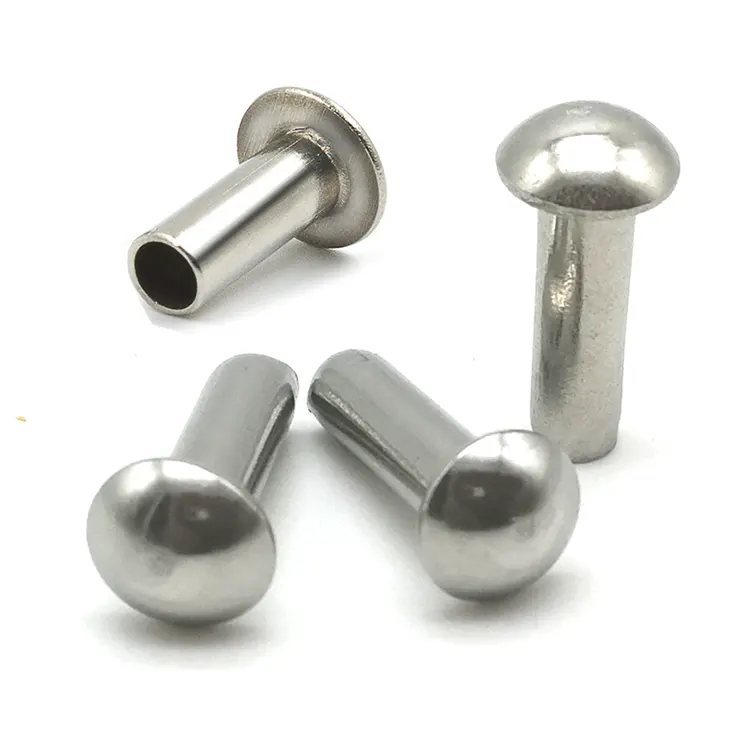
This is where Solid Rivets show their value. Unlike hollow or semi-tubular alternatives, they rely on full-body deformation during installation, creating an interference fit that resists loosening even in harsh environments.
Why Do Solid Rivets Perform Better in High-Stress Applications?
From my experience, performance comes down to structure. Because Solid Rivets are manufactured from a single, solid piece of metal, they distribute stress more evenly across the joint. This structural integrity makes them especially suitable for aerospace components, structural steel connections, and heavy machinery.
| Performance Factor | Solid Rivets | Hollow Rivets |
|---|---|---|
| Shear Strength | Excellent for load-bearing joints | Limited under heavy loads |
| Vibration Resistance | Highly stable after setting | More prone to loosening |
| Service Life | Designed for long-term use | Better for light-duty assemblies |
How Does Material Choice Affect Solid Rivet Performance?
One mistake I often see is treating all rivets as interchangeable, regardless of material. In practice, material selection directly affects corrosion resistance, conductivity, and overall durability. High-quality Solid Rivets are commonly produced in aluminum, stainless steel, copper, and carbon steel, each suited to different operating conditions.
- Aluminum rivets for lightweight structures and corrosion resistance
- Stainless steel rivets for harsh or outdoor environments
- Copper rivets for electrical conductivity and aesthetic finishes
Manufacturers like Nuote Metals Technology Co.,Ltd. understand these nuances and focus on consistent material control rather than mass production shortcuts.
Are Solid Rivets Still Relevant in Modern Manufacturing?
It is fair to ask whether traditional fastening methods still belong in modern production lines. From what I see on factory floors today, Solid Rivets remain irreplaceable in applications where safety margins are non-negotiable. Automated riveting equipment has also made installation more efficient, reducing labor concerns that once favored alternative fasteners.
Instead of becoming obsolete, Solid Rivets have evolved alongside manufacturing technology, maintaining their role in critical assemblies.
How Can You Choose the Right Solid Rivets for Your Project?
Choosing the right rivet starts with understanding your application rather than browsing a catalog. I usually recommend considering load requirements, environmental exposure, and installation methods first. Working with a supplier that offers technical guidance, not just products, makes the selection process far smoother.
If you are currently evaluating fastening solutions and need reliable, application-focused advice, this is the right time to contact us. Reach out to discuss your project requirements, request samples, or explore custom Solid Rivets designed specifically for your assembly challenges.