Why Are Single Direction Thrust Ball Bearings Essential for High-Speed Machinery
2026-03-02
In the realm of precision engineering, the demand for components that can withstand extreme operational conditions is non-negotiable. For high-speed machinery, managing axial loads while maintaining rotational accuracy is a critical challenge. This is where Single Direction Thrust Ball Bearings become indispensable. Specifically designed to accommodate axial loads in one direction, these components ensure that spindles, pumps, and gearboxes operate without friction-related failures. At BMT, we specialize in manufacturing these precision elements to ensure that your machinery runs at peak efficiency, even under the most demanding high-speed scenarios.
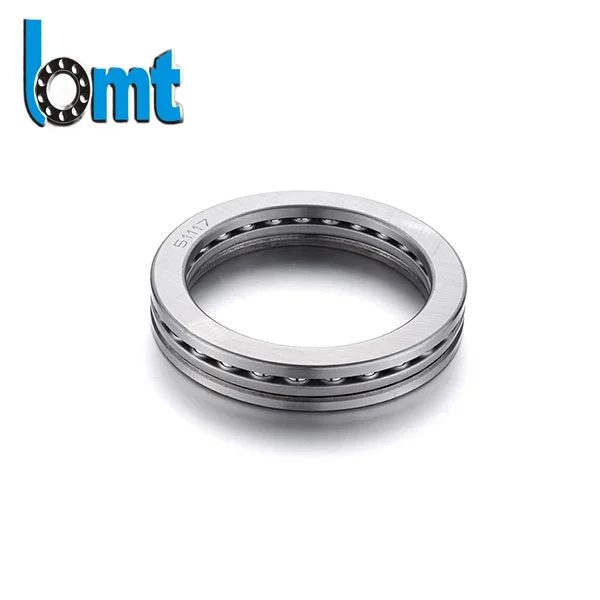
The Mechanical Advantage in High-Speed Environments
Single Direction Thrust Ball Bearings are engineered with a unique configuration consisting of a shaft washer, a housing washer, and a ball cage assembly. This design allows them to handle thrust loads exclusively while permitting high rotational speeds. Unlike radial bearings, they prevent axial shaft displacement, which is crucial for maintaining tight tolerances in applications like automotive transmission systems and machine tool spindles.
Key Performance Characteristics
To understand their necessity, consider how they perform under stress. The following table outlines the primary benefits they offer in high-speed contexts:
| Feature | Functional Benefit in High-Speed Machinery |
|---|---|
| Precision Ground Raceways | Reduces friction, allowing for higher RPMs without overheating. |
| Optimized Cage Design | Ensures even ball spacing, minimizing vibration and noise at speed. |
| High-Grade Steel Construction | Maintains structural integrity under centrifugal forces. |
| Separable Design | Facilitates easy installation and inspection, reducing downtime. |
Why Standard Bearings Fail at High Speeds
Standard bearings often succumb to heat generation and skidding when axial loads are combined with high velocity. Single Direction Thrust Ball Bearings solve this by providing a dedicated path for load transmission. By utilizing BMT's advanced lubrication grooves and hardened steel races, these bearings dissipate heat effectively, ensuring that the lubricant film remains intact to separate the rolling elements from the raceways.
Common Industrial Applications
-
Machine Tool Spindles: Maintaining axial rigidity during cutting operations.
-
Automotive Transmissions: Supporting helical gears that generate thrust.
-
Industrial Pumps: Handling propeller thrust in high-flow applications.
-
Marine Propulsion: Managing axial forces from propellers on drive shafts.
FAQ: Single Direction Thrust Ball Bearings
To further clarify their role in industry, here are answers to frequently asked questions regarding Single Direction Thrust Ball Bearings.
Question: How do Single Direction Thrust Ball Bearings differ from radial bearings in high-speed applications?
Answer: Radial bearings are designed to support loads perpendicular to the shaft (radial loads), whereas Single Direction Thrust Ball Bearings are specifically engineered to handle loads parallel to the shaft axis (axial loads) in one direction. In high-speed machinery, such as turbines or compressors, axial forces can be immense. Using a radial bearing for these forces would lead to rapid wear and seizure. The Single Direction Thrust Ball Bearing features a distinct groove geometry that allows balls to roll freely under thrust loads, minimizing friction and heat generation, which is vital for sustained high-speed operation.
Question: What happens if a Single Direction Thrust Ball Bearing is installed backwards?
Answer: Installation orientation is critical. A Single Direction Thrust Ball Bearing is designed with asymmetric raceways. If installed backwards, the load is not distributed correctly across the balls. Instead of rolling, the balls may slide or skid against the raceways. This immediately generates excessive friction and heat, leading to rapid lubricant breakdown, material fatigue, and catastrophic bearing failure within minutes of high-speed operation. Always ensure the shaft washer (the tighter fit) is securely mounted against the rotating component.
Question: Can a Single Direction Thrust Ball Bearing handle combined loads at high speeds?
Answer: No, Single Direction Thrust Ball Bearings are designed to handle pure axial loads exclusively. They are not suitable for combined loads (axial plus radial). At high speeds, any radial load present would cause the balls to move in an uncontrolled manner within the raceway, leading to unstable motion and premature failure. For applications requiring support in both directions or combined loads, engineers typically pair a Single Direction Thrust Ball Bearing with a separate radial bearing, or opt for a different bearing type like angular contact bearings.
Optimize Your Machinery with BMT
Ensuring the longevity of your high-speed equipment requires components that you can trust. Whether you are designing a new system or maintaining an existing one, the precision of Single Direction Thrust Ball Bearings directly impacts your operational success.
Do not compromise on quality or performance. Contact us today to discuss your specific requirements and discover how BMT can provide the robust solutions your machinery demands.