Why Are Screw Cup Washers Important for Finishing Projects
2026-10-22
When a finishing project demands clean lines, protected surfaces, and long-lasting fastening performance, Screw Cup Washers are one of the most overlooked yet most valuable components in the assembly. At Zhenhua, we manufacture Screw Cup Washers engineered to sit neatly under countersunk screw heads, spread load evenly, and preserve the appearance of the finished surface. This guide explains why these washers matter, how to specify them correctly, and how to avoid common installation mistakes.
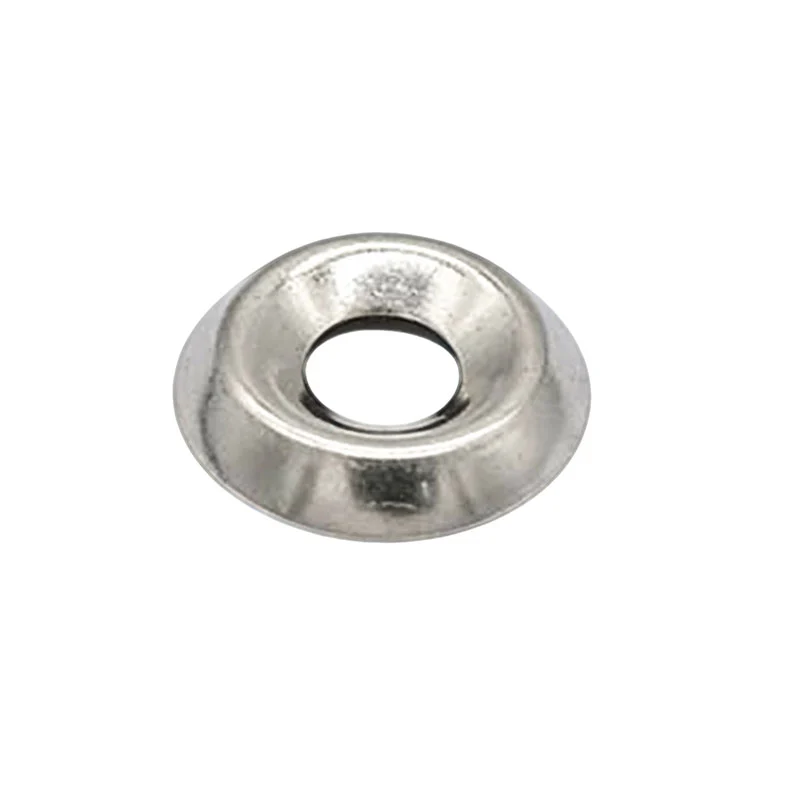
What Screw Cup Washers Actually Do
A Screw Cup Washer is a concave washer with a countersunk profile. It accepts a flat-head or countersunk screw and creates a smooth, flush seating surface. In finishing work, this matters for three reasons:
-
Surface protection — the washer absorbs pressure and prevents the screw head from gouging or cracking the material.
-
Load distribution — the cup shape spreads clamping force across a wider area, reducing the risk of pull-through.
-
Aesthetic consistency — a uniform, flush finish across every fastener point.
Key Selection Criteria for Finishing Projects
| Criterion | What to Check | Why It Matters |
|---|---|---|
| Material | Stainless steel, carbon steel, brass | Corrosion resistance and visual match |
| Finish | Polished, zinc-plated, black oxide | Appearance and durability |
| Inner diameter | Matches screw size (M3, M4, M5, etc.) | Prevents wobble and poor seating |
| Outer diameter | Compatible with hole and surface area | Ensures flush fit and load spread |
| Thickness | Adequate for clamping force | Avoids deformation under torque |
| Hardness | Suitable for the screw and substrate | Prevents crushing or cracking |
Common Finishing Applications
-
Furniture assembly and cabinetry
-
Architectural cladding and panel fixing
-
Signage and display fixtures
-
Electronics enclosures
-
Marine and outdoor fittings
Installation Best Practices
-
Confirm the Screw Cup Washer inner diameter matches the screw shank.
-
Drill a pilot hole sized to the screw and washer outer diameter.
-
Seat the washer flush before driving the screw.
-
Tighten to the recommended torque to avoid over-compression.
-
Inspect for uniform flushness across all fastening points.
FAQ: Screw Cup Washers Explained
Q: What is the difference between a Screw Cup Washer and a standard flat washer?
A: A Screw Cup Washer has a concave, countersunk seat designed to accept a flat-head screw and create a flush finish, while a standard flat washer is flat on both faces and does not provide the same countersunk seating or aesthetic consistency.
Q: Which material should I choose for Screw Cup Washers in outdoor finishing projects?
A: Stainless steel Screw Cup Washers, particularly 304 or 316 grades, are the preferred choice for outdoor and marine finishing projects because they resist corrosion and maintain appearance under moisture and salt exposure.
Q: Can Screw Cup Washers be used with wood screws in furniture finishing?
A: Yes. Screw Cup Washers work well with wood screws when the washer size matches the screw head and the pilot hole is correctly sized; they protect the wood surface, reduce splitting risk, and deliver a clean, professional finish.
**Why Choose Zhenhua for Screw Cup Washers
Zhenhua supplies Screw Cup Washers in multiple materials, finishes, and metric sizes, with consistent tolerances and dependable delivery for finishing projects of any scale. Our team supports specification review, sample validation, and volume production so every batch meets your finishing standards.
For specification sheets, samples, or a quotation on Screw Cup Washers for your next finishing project, contact us today and our team will respond with the right solution for your requirements.