

Why Are Precision Stamping Parts Redefining Modern Manufacturing?
2025-11-17
Precision stamping parts refer to metal components produced through high-accuracy stamping processes using dies, presses, and automated feeding systems. These parts play a vital role across industries such as automotive, consumer electronics, aerospace, medical equipment, home appliances, and industrial machinery. As manufacturing continues to shift toward miniaturization, structural optimization, and long-term reliability, precision-formed metal components are becoming indispensable.
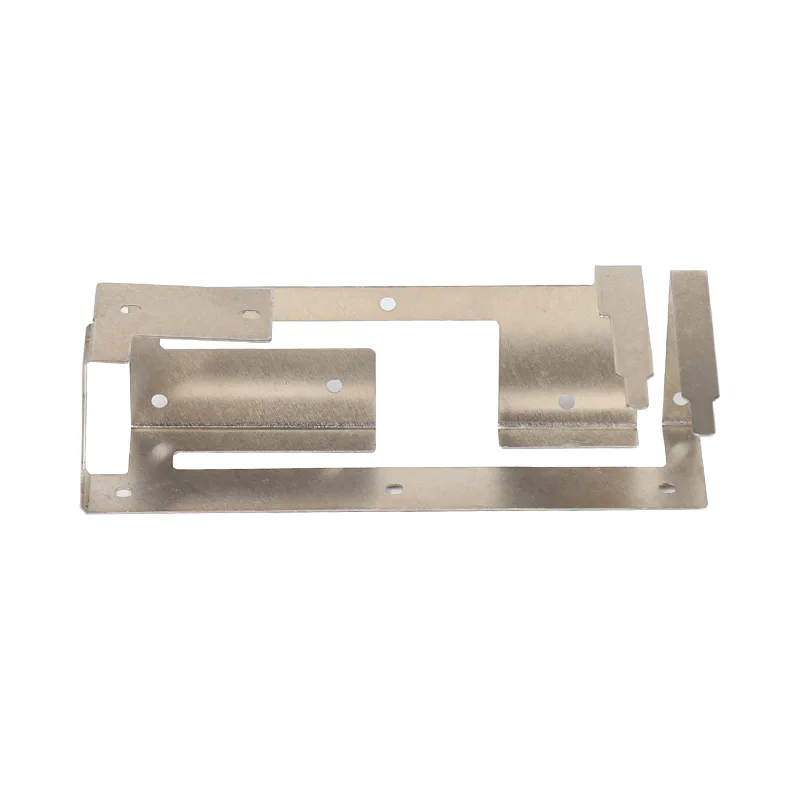
Product Parameters Overview
Below is a representative specification list that reflects the professional standards commonly associated with high-precision stamped components:
| Parameter Category | Specification Details |
|---|---|
| Materials | Stainless steel (304/316), carbon steel, brass, copper, aluminum alloys, phosphor bronze, high-strength steel |
| Thickness Range | 0.05 mm – 6 mm depending on part design and press capacity |
| Tolerance Control | ±0.01 mm – ±0.05 mm depending on geometry and die performance |
| Surface Finishes | Deburring, anodizing, electroplating, passivation, powder coating, brushing, polishing |
| Production Capability | Progressive die stamping, deep drawing, bending, forming, coining, blanking |
| Application Industries | Automotive components, battery connectors, medical brackets, electronic terminals, shielding covers, appliance hardware |
| Hardness Range | Customizable to meet product requirements, typically HV100–HV280 depending on material |
| Batch Capacity | Small-batch prototyping to mass-production runs exceeding one million pieces |
These parameters reveal the precision, repeatability, and material diversity that define modern stamping technology. With production scalability and cost efficiency, these components support manufacturers seeking durability and reliable fit-and-function performance.
Why Are Precision Stamping Parts Essential for High-Performance Applications?
Understanding the importance of precision stamping parts requires analyzing the core reasons behind their widespread adoption. Engineers and product designers rely on these components for structural integrity, functional performance, and cost control. Several factors explain their indispensable value in competitive manufacturing landscapes.
Why Do Industries Depend on These Parts?
1. High Dimensional Accuracy
Precision-crafted dies and advanced stamping machines ensure highly consistent component geometry. When tolerance deviations are minimal, product reliability increases and assembly efficiency improves. In sectors such as automotive safety systems, communication devices, and medical devices, even microscopic discrepancies can compromise performance, making precision an absolute requirement.
2. High Efficiency and Lower Unit Cost
Once the dies are manufactured, stamping becomes exceptionally efficient. High-speed presses operate thousands of cycles per hour, enabling large-scale production with minimal variation. This reduces overall manufacturing cost and supports stable supply chains.
3. Material Versatility for Different Working Conditions
Because stamping accommodates multiple metals and alloys, engineers can specify materials based on tensile strength, corrosion resistance, thermal stability, or conductivity. For instance, copper alloys suit electrical terminals, while stainless steel fits medical and automotive components due to its corrosion-resistant properties.
4. Strong Structural Stability
Stamped components offer high rigidity and mechanical strength. Their uniformity enhances load-bearing capacity and deformation resistance, ensuring long service life. This is especially relevant in heavy machinery, precision electronics, and engine systems.
5. Excellent Repeatability for Mass Production
The ability to replicate each piece to extremely tight tolerances ensures smooth assembly, reduces rejection rates, and improves final product quality. For companies with annual production requirements in the millions, repeatability is essential.
Why Do Precision Stamping Parts Perform Better Than Other Manufacturing Methods?
Alternative technologies like CNC machining, casting, and additive manufacturing have their advantages, but stamping often excels in specific areas:
-
Compared with CNC machining, stamping is significantly faster for high-volume production and more cost-efficient.
-
Compared with casting, stamping provides higher precision, better material consistency, and improved surface quality.
-
Compared with 3D printing, stamping offers better structural strength, lower unit cost, and superior surface finish for metal industrial parts.
These performance benefits explain why precision stamping continues to dominate the production of terminals, brackets, clips, shells, connectors, and mechanical support components across global markets.
How Do Precision Stamping Parts Function and What Production Techniques Ensure Reliability?
To understand how these components achieve high performance, it is crucial to examine the manufacturing process. Each step influences tolerances, structural reliability, and surface quality.
How Are Precision Stamping Parts Manufactured?
1. Product Design and Engineering Assessment
Manufacturers analyze part geometry, stress points, bend angles, and tolerance requirements. Material feasibility studies ensure that forming and production capabilities meet the application’s functional profile.
2. Die Design and Fabrication
Die making is central to stamping quality. Progressive dies, compound dies, and simple dies convert raw material into precise shapes. High-quality dies reduce burrs, deformation, and dimensional inconsistencies.
3. Material Preparation and Sheet Feeding
Metal coils or sheets are inspected, cleaned, and fed into automatic systems. Consistent sheet quality ensures stable stamping performance.
4. Progressive Stamping and Forming
Using high-speed presses, metal sheets pass through sequential die steps—blanking, bending, coining, punching, forming—until the final shape emerges. Automated operations enhance accuracy and reduce manual handling.
5. Surface Treatment and Deburring
Processes such as electroplating, anodizing, and passivation improve corrosion resistance and surface stability. Deburring ensures the part is safe for assembly and achieves a professional, functional finish.
6. Final Inspection and Quality Control
Precision measuring systems verify dimensional accuracy and appearance. Advanced CMM machines, optical scanners, and digital micrometers ensure every batch meets the required standards.
How Do These Features Translate Into Performance Benefits?
-
Reliable Conductivity for electronic hardware
-
High fatigue strength for mechanically stressed components
-
Lightweight yet durable structure due to optimal material usage
-
Stable assembly performance thanks to consistent dimensions
-
Excellent corrosion protection when paired with proper surface treatments
These functional attributes allow products to withstand extreme temperatures, repeated mechanical impact, and long-term operational cycles.
What Future Trends Are Shaping the Development of Precision Stamping Parts?
Global manufacturing trends reveal a rapid shift toward advanced materials, automation, and complex geometries. Precision stamping is evolving to meet the increasingly demanding requirements of next-generation industries.
Future Trend 1: Ultra-High Precision and Micro-Stamping
Emerging consumer electronics, wearable devices, and compact medical instruments require extremely small components with tolerances tighter than ever. Micro-stamping enables the creation of parts as thin as 0.03 mm with complex curves and intricate details.
Future Trend 2: Intelligent Automation and Real-Time Monitoring
Smart factories are incorporating:
-
Real-time sensors on stamping presses
-
Automated defect detection systems
-
AI-assisted predictive maintenance
-
Robotic material handling systems
These advancements increase efficiency, reduce production downtime, and ensure stable quality in mass production.
Future Trend 3: Flexible Production for Rapid Customization
Markets now demand customized parts with shorter product cycles. Manufacturers are developing quick-change die systems and modular tooling to support small-batch and prototype production without sacrificing precision.
Future Trend 4: Adoption of High-Performance Alloy Materials
As industries pursue lightweighting, corrosion resistance, and thermal stability, stamping companies are increasingly working with:
-
Advanced high-strength steels
-
Lightweight aluminum alloys
-
Conductive copper materials
-
High-performance stainless steels
These materials enhance durability and reliability across automotive, EV, aerospace, and industrial applications.
Future Trend 5: Sustainability and Metal Recycling
Environmental regulations are pushing manufacturers toward eco-friendly processes. Precision stamping supports sustainability because it minimizes material waste, optimizes energy consumption, and enables efficient recycling of scrap metal.
Common FAQs About Precision Stamping Parts
Q1: What factors determine the quality of precision stamping parts?
A1: Quality is influenced by die accuracy, material selection, press stability, surface treatment, and final inspection procedures. Dies must maintain dimensional consistency across long production cycles. Material quality affects deformation resistance and corrosion stability. High-precision presses ensure consistent shaping, while advanced inspection methods verify tolerances across every batch.
Q2: How should engineers choose the right material for stamped components?
A2: Material selection depends on mechanical load, electrical conductivity needs, corrosion environment, and required surface finish. For example, stainless steel suits structural brackets due to strength and oxidation resistance. Copper or brass is ideal for electrical terminals due to conductivity. Aluminum is preferred for lightweight assemblies. Understanding end-use conditions ensures optimal performance and longevity.
Conclusion: How Do Precision Stamping Parts Support Long-Term Manufacturing Success?
Precision stamping parts strengthen the foundation of modern manufacturing through accuracy, efficiency, and material flexibility. Their high-speed mass-production capabilities reduce cost while ensuring stable quality. Advanced dies, material science improvements, and intelligent factory automation continue driving the evolution of stamping technology. As industries shift toward lightweight structures, miniaturized designs, and highly reliable components, precision stamping remains a core process that ensures long-term product performance.
For companies seeking reliable and high-quality stamping solutions, Zhenhe Xing is committed to providing precise engineering, stable production capabilities, and dependable service to support global manufacturing growth.
To learn more about customized stamping solutions, contact us for professional assistance.
