Why Are PEEK CNC Products Becoming the Industry Standard for High-Performance Engineering?
2025-12-08
Polyetheretherketone (PEEK) CNC-machined products have rapidly become a preferred choice in aerospace, medical, semiconductor, automotive, and energy applications due to their exceptional mechanical strength, thermal resistance, chemical stability, and machining precision.
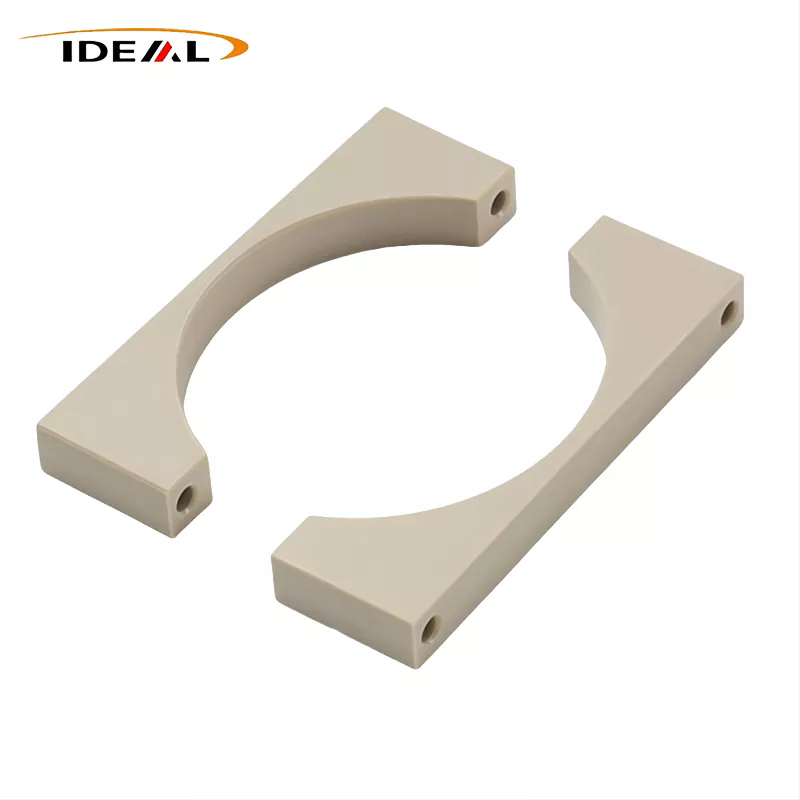
How Do PEEK CNC Products Deliver High-Precision Performance Across Critical Industries?
What Makes PEEK Suitable for CNC Machining?
The machining behavior of PEEK is one of the key reasons it surpasses many engineering polymers. The material has stable rigidity at high temperatures, maintains dimensional accuracy, and balances toughness with stiffness, making it ideal for tight-tolerance CNC applications where even micro-deviation is unacceptable.
PEEK provides a unique combination of:
-
High tensile and flexural strength
-
Excellent fatigue resistance
-
Outstanding heat stability up to 260°C
-
Low moisture absorption
-
Strong chemical and hydrolysis resistance
-
High wear performance suitable for dynamic environments
-
Electrical insulation properties that remain stable under load
These traits position PEEK CNC parts as premium material solutions in environments where metals are too heavy or prone to corrosion, and standard plastics fail under stress or temperature.
Detailed Performance Parameters of PEEK CNC Products
The following table highlights key technical parameters commonly demanded in aerospace, medical, semiconductor, and industrial engineering:
| Parameter Category | PEEK CNC Product Data |
|---|---|
| Density | 1.30 – 1.32 g/cm³ |
| Tensile Strength | 90 – 100 MPa |
| Flexural Strength | 150 – 170 MPa |
| Compressive Strength | Up to 118 MPa |
| Heat Deflection Temp | Approx. 260°C |
| Continuous Service Temp | Up to 240°C |
| Melting Temperature | 343°C |
| Coefficient of Friction | 0.25 – 0.35 (grade dependent) |
| Dielectric Strength | 17–25 kV/mm |
| Moisture Absorption (24h) | Less than 0.1% |
| Chemical Resistance | Excellent against oils, fuels, acids, solvents |
| Biocompatibility | Available in medical-grade versions |
| Common Tolerances | ±0.01 mm to ±0.02 mm depending on geometry |
These parameters allow PEEK CNC components to function in harsh environments where extreme temperature swings, chemical exposure, electrical insulation demands, and mechanical stress converge.
How Does CNC Machining Enhance the Value of PEEK?
While PEEK can be injection-molded or extruded, CNC machining enables:
-
Micro-tolerance accuracy for semiconductor and medical assemblies
-
Complex geometries not achievable via molding
-
Consistency across custom or low-volume production
-
Smooth surface finishes critical for fluid-handling or sealing components
-
Enhanced structural stability through stress-optimized machining strategies
Industries requiring mechanical, dimensional, or thermal reliability rely heavily on CNC processing to unlock the full performance potential of PEEK.
Applications include:
-
Semiconductor wafer handling tools
-
Medical implant components and surgical guides
-
Aerospace structural brackets
-
Oil and gas sealing parts and valve components
-
Automotive friction-reducing bushings
-
Electrical insulators and high-voltage connector parts
-
Precision gears, bearings, and pump components
These sectors represent some of the highest standards in performance materials. PEEK CNC components consistently meet these standards, making them a trusted solution for mission-critical engineering.
How Do the Functional Advantages of PEEK CNC Products Improve Operational Reliability?
Thermal Stability: How Does PEEK Maintain Performance in Extreme Temperature Environments?
PEEK retains mechanical properties even when exposed to continuous temperatures up to 240°C and short-term bursts up to 300°C. This stability ensures that parts do not warp, degrade, or lose precision—an essential requirement for semiconductor processing, aerospace systems, and high-temperature automotive assemblies.
Structural Strength: Why Is PEEK Preferred Over Many Metals and Plastics?
PEEK balances strength and weight in a way that often outperforms traditional materials:
-
Stronger than most engineering plastics
-
Lighter than metals such as steel or aluminum
-
Resistant to stress cracking and fatigue
This combination significantly reduces component failure rates while lowering system weight—improving efficiency, longevity, and energy consumption.
Chemical & Hydrolysis Resistance: How Do PEEK CNC Components Outlast in Corrosive Environments?
PEEK remains stable in the presence of:
-
Strong acids
-
Solvents
-
Hydrocarbons
-
Steam and high-pressure water
-
Salts and oxidizing agents
Its chemical durability translates into fewer replacements, lower maintenance costs, and reliable performance in oil and gas processing, chemical handling systems, and sterilization-intensive medical environments.
Wear Resistance: How Do PEEK CNC Products Support Dynamic Applications?
By offering low friction and excellent abrasion resistance, PEEK excels in moving assemblies such as:
-
Bearings
-
Pulleys
-
Gears
-
Sliding bushings
-
Pump rotors
These components benefit from long-term dimensional stability, reduced wear particle generation, and quieter operation.
Electrical Insulation: What Makes PEEK CNC Parts Ideal for Electronic & High-Voltage Systems?
PEEK’s dielectric strength and stable insulating behavior support applications such as:
-
Connectors
-
High-voltage insulation components
-
Semiconductor wafer tooling
-
Electrical housings
Its ability to maintain insulation properties under thermal, mechanical, and chemical stress sets it apart from conventional electrical-grade plastics.
How Will Future Trends Shape the Evolution of PEEK CNC Products?
Rising Demand for Lightweight, High-Strength Materials
Industries are transitioning away from metals to advanced polymers that provide equivalent strength at significantly reduced weight. PEEK’s lightweight performance is becoming increasingly attractive for robotics, aerospace efficiency initiatives, and electric vehicle platforms.
Precision Manufacturing & Micro-Machining Development
As CNC technology incorporates:
-
Adaptive machining
-
AI-assisted path optimization
-
Nano-scale cutting tools
-
Real-time quality control
PEEK CNC components will achieve even tighter tolerances and more complex geometries, expanding their functionality across semiconductor and micro-medical applications.
Sustainability Awareness in High-Tech Manufacturing
PEEK’s long service life reduces replacement cycles, lowering waste in sectors where sustainability policies are becoming mandatory. Its recyclability also complements evolving environmental regulations.
Medical & Biotechnological Expansion
Biocompatible PEEK grades are finding new use in:
-
Implantable devices
-
Orthopedic trials
-
Dental prosthetics
-
Sterile surgical tools
The material’s organic safety profile positions it as a future standard in advanced medical engineering.
Integration with Additive Manufacturing
Hybrid manufacturing methods—CNC machining combined with PEEK 3D printing—allow engineers to:
-
Rapidly prototype
-
Reduce lead times
-
Create complex internal geometries
-
Minimize material waste
This synergy is forecast to become a core part of high-precision manufacturing workflows.
Consolidated Knowledge: Common Questions About PEEK CNC Products
FAQ 1 — How does PEEK compare to PTFE, PEI, and PPS for CNC machining?
PEEK provides superior mechanical strength, thermal resistance, and structural rigidity compared with PTFE or PPS. PTFE offers excellent friction performance but lacks strength and dimensional stability for tight-tolerance machining. PEI is stable but cannot withstand the same continuous temperatures as PEEK. PEEK’s balanced combination of rigidity, precision, machining stability, and chemical resistance makes it a higher-performance option for demanding engineering applications.
FAQ 2 — How long do PEEK CNC components typically last in high-stress environments?
PEEK components often outlast metal and standard plastic alternatives by several years due to their fatigue resistance, thermal stability, and ability to withstand chemical and mechanical wear. In aerospace, semiconductor, or oil and gas systems, PEEK components frequently demonstrate lifespans exceeding five to ten years depending on load, friction, and environmental conditions. Their longevity significantly reduces downtime and maintenance cycles.
How Will PEEK CNC Products Continue to Redefine High-Performance Engineering?
PEEK CNC products represent a breakthrough in modern manufacturing by combining dimensional accuracy, extreme heat resistance, mechanical strength, and broad chemical durability. These qualities enable industries to achieve higher reliability, longer component life, and greater design flexibility. As manufacturing continues advancing toward high-precision, lightweight, and high-efficiency systems, PEEK CNC machining will play an increasingly central role.
Manufacturers committed to quality and advanced processing, such as Ideal, continue to refine machining techniques, improve tolerance capabilities, and expand PEEK applications across aerospace, medical, semiconductor, automotive, and energy sectors. For organizations seeking dependable, high-performance engineered components, Ideal offers tailored PEEK CNC solutions and professional guidance.
For customized machining support, engineering consultation, or specific product inquiries, contact us to explore how PEEK CNC products can strengthen your next high-performance project.