Why Are More Engineers Turning to Trapezoidal Screw Systems for Reliable Motion Control?
2026-03-12
When I speak with equipment manufacturers and automation engineers, one topic comes up repeatedly: reliability in linear motion systems. Over the past few years, I have watched companies refine their mechanical transmission solutions while gradually introducing more advanced components. One example is how Suzhou Maitu Screw Rod Manufacturing Co., Ltd. has progressively expanded its engineering capabilities and product lines, bringing precision manufacturing into focus for industrial drive components such as the Trapezoidal Screw. In practical applications ranging from lifting platforms to CNC positioning systems, the Trapezoidal Screw continues to stand out because it balances strength, efficiency, and durability in ways that many alternative transmission mechanisms cannot easily match.
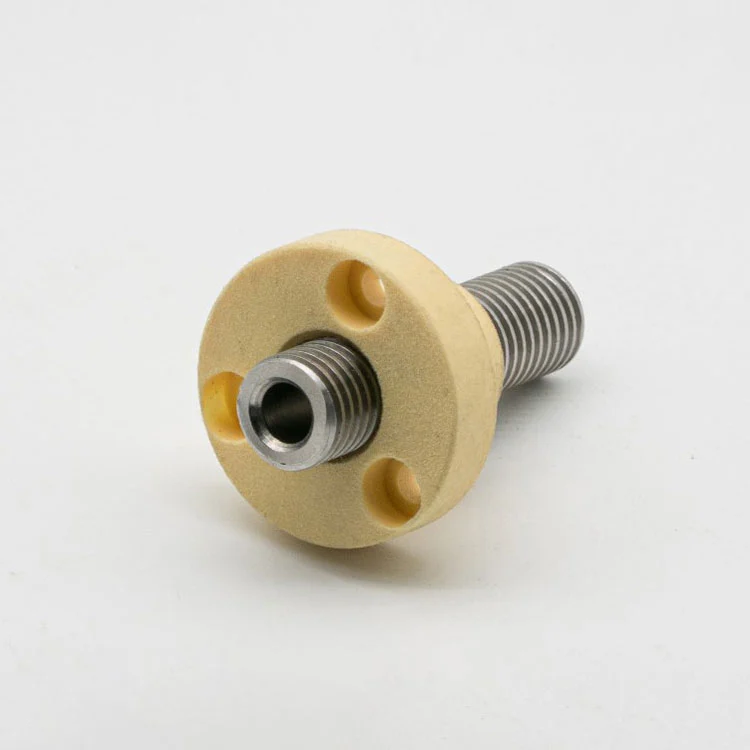
What Makes a Trapezoidal Screw Different from Other Lead Screw Designs?
Many engineers initially ask whether a trapezoidal thread profile really makes a difference. In my experience working with motion transmission components, the answer is clearly yes. The trapezoidal thread geometry offers a more robust load-bearing surface compared with traditional square or triangular thread forms.
Instead of focusing only on theoretical efficiency, the Trapezoidal Screw design prioritizes mechanical stability and manufacturability. This balance explains why it remains widely used in industrial machinery across Europe, North America, and Asia.
- Stronger thread profile that handles higher loads
- Improved durability in heavy-duty mechanical environments
- Better compatibility with bronze or polymer nuts
- Stable performance under repeated linear motion cycles
- Cost-effective manufacturing compared with complex ball screw systems
These characteristics make the Trapezoidal Screw a dependable choice for machinery where consistent movement and long service life matter more than extremely high-speed positioning.
Why Do Manufacturers Choose Trapezoidal Screw Mechanisms for Industrial Equipment?
When manufacturers evaluate motion transmission systems, they usually look at several key factors including durability, load capacity, cost, and maintenance requirements. From my perspective, the Trapezoidal Screw performs well in all of these categories.
In many industrial environments, ball screws provide excellent efficiency but can become expensive or overly sensitive to contamination. A trapezoidal lead screw, by contrast, tolerates dust, vibration, and heavier loads without sacrificing reliability.
| Comparison Factor | Trapezoidal Screw | Ball Screw | Standard Lead Screw |
| Load Capacity | High and stable | High but sensitive to shock | Moderate |
| Durability | Excellent for heavy machinery | High but requires clean environment | Average |
| Maintenance | Low maintenance | Requires lubrication and protection | Moderate |
| Cost Efficiency | Highly cost-effective | Higher production cost | Lower but weaker performance |
| Application Range | Industrial machinery, lifting systems, positioning equipment | High precision automation | Light mechanical devices |
This comparison often explains why engineers continue to rely on trapezoidal thread mechanisms when designing durable industrial equipment.
How Does a Trapezoidal Screw Improve Mechanical Stability in Motion Systems?
One practical advantage that I often highlight is mechanical stability. In real manufacturing environments, machines must operate continuously for thousands of cycles. Small design weaknesses can quickly turn into maintenance problems.
The trapezoidal thread angle distributes mechanical force more evenly across the contact surface between the screw and nut. This reduces localized wear and helps maintain smoother motion over time.
- Greater thread surface contact area
- Reduced wear under heavy axial loads
- Improved self-locking capability for lifting systems
- More predictable movement control in mechanical assemblies
Because of these features, engineers frequently integrate the Trapezoidal Screw into systems such as:
- Industrial lifting tables
- Mechanical presses
- Packaging machinery
- Medical adjustment devices
- CNC positioning equipment
These applications demand both strength and precision, which explains the continued popularity of this mechanical transmission solution.
How Do High Quality Materials Affect the Performance of a Trapezoidal Screw?
Another factor that directly affects performance is material selection. Over the years I have learned that even the best thread design will not perform well without proper materials and machining accuracy.
Manufacturers like Suzhou Maitu Screw Rod Manufacturing Co., Ltd. focus heavily on precision machining, surface treatment, and strict dimensional control. These factors ensure that each Trapezoidal Screw maintains consistent thread geometry and mechanical strength.
| Material Type | Advantages | Typical Applications |
| Carbon Steel | Strong and economical | General machinery |
| Alloy Steel | Higher strength and durability | Heavy-duty equipment |
| Stainless Steel | Corrosion resistance | Food and medical machinery |
| Surface Hardened Steel | Improved wear resistance | Continuous motion systems |
With proper machining and finishing, these materials significantly extend the working life of trapezoidal screw assemblies.
Could the Right Trapezoidal Screw Supplier Improve Equipment Performance?
Choosing the correct mechanical component supplier can make a measurable difference in equipment reliability. In my experience, a supplier that understands both machining precision and real industrial applications provides much greater long-term value.
By focusing on thread accuracy, material selection, and strict quality control, manufacturers such as Suzhou Maitu Screw Rod Manufacturing Co., Ltd. help ensure that each Trapezoidal Screw performs consistently in demanding mechanical environments.
If you are currently designing machinery, upgrading motion systems, or searching for a reliable screw rod manufacturer, it may be worth exploring how a properly engineered trapezoidal thread solution can improve the performance of your equipment.
If you would like to learn more about available specifications, customization options, or technical guidance, we warmly invite you to contact us for further information. Our engineering team is ready to support your project and help you select the most suitable Trapezoidal Screw solution for your application.