Why Are Material Composition and Braiding Quality Important in PTFE Packing Procurement?
2026-11-20
When sourcing PTFE Packing for pumps, valves and other process equipment, buyers often begin with size and price. Those details matter, but they do not tell the whole story. The yarn formulation and the way the yarn is braided influence PTFE Packing chemical compatibility, gland behaviour, dimensional stability, friction, leakage control and maintenance intervals. A packing that looks similar on a sample card can perform quite differently once it is compressed inside a stuffing box.
For procurement teams, the practical question is not simply whether a product contains polytetrafluoroethylene. It is whether the specified fibre, any additives, braid construction and finished density suit the actual service conditions. The manufacturer supplies braided sealing products made from different fibres and combinations for pump and valve applications. Evaluating the construction at grade level helps buyers avoid comparing unlike products on price alone.
What Does Material Composition Tell Buyers About Sealing Performance?
PTFE is valued for its broad chemical resistance and naturally low coefficient of friction. These properties make it useful where conventional fibre packing may be attacked by process media or create excessive friction against a shaft or valve stem. However, the term PTFE packing can describe more than one construction. A product may use pure PTFE yarn, PTFE blended with another fibre, or a PTFE-based yarn with a lubricant or filler. These formulations should not be treated as interchangeable.
Pure PTFE yarn is generally selected when chemical cleanliness, low friction and resistance to corrosive media are priorities. It is used in chemical processing and, where the grade and applicable regulations permit, food, pharmaceutical and other contamination-sensitive services. A pure-yarn construction without added lubricant or graphite may be preferable when the process specification restricts extractables or foreign substances. Buyers should still request the relevant compliance declarations and test documentation rather than assuming that the word pure automatically means food-contact approved.
Filled or blended constructions serve different purposes. Graphite can improve heat transfer and running characteristics, while carbon or aramid reinforcement can increase mechanical strength and resistance to extrusion or abrasion in suitable designs. These benefits come with trade-offs. A filler may change electrical properties, colour, purity, chemical compatibility or suitability for a clean process. Aramid and carbon fibres also have their own chemical and temperature limitations. The correct choice depends on the medium, movement, pressure, shaft speed and equipment design.
| Construction type | Typical reason for selection | Procurement point to verify |
| Pure PTFE yarn | Broad chemical resistance, low friction and clean service | Confirm yarn purity, lubricant status and process approvals |
| PTFE with lubricant | Improved handling or running-in characteristics in a specified grade | Identify lubricant chemistry, amount and media compatibility |
| PTFE with graphite or other filler | Potential improvement in heat transfer, wear or friction behaviour | Check filler percentage, contamination limits and chemical suitability |
| Hybrid fibre braid | Added strength or abrasion resistance for selected duties | Confirm the role and proportion of each fibre in the braid |
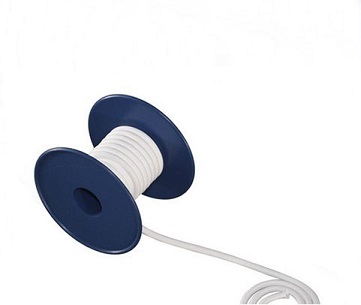
For example, the KXT P101 pure PTFE grade published by Ningbo Kaxite Sealing Materials Co., Ltd. is described as braided from pure PTFE yarn. Its product information identifies corrosive media, valve sealing, and applications in medicine, steam, food and oil among its intended uses. The same page lists a density of 1.4 g/cm3 and a pH range of 0 to 14. These are model-specific published values, not universal limits for every PTFE-based packing or every operating condition.
How Does Braiding Quality Affect Density, Compression and Leakage?
Even a suitable yarn can produce an inconsistent seal if the braid is poorly controlled. Braiding determines how the yarns cross, support one another and distribute load when the gland follower is tightened. A uniform braid helps the packing deform in a more predictable way, fill the stuffing-box clearance and maintain contact around the shaft or stem. Irregular crossings, loose picks, broken yarns or local changes in section can create weak points where the packing compresses unevenly.
Finished density is one useful quality indicator, but it should not be assessed in isolation. A dense braid may resist deformation and provide a stable sealing structure, yet excessive density or an unsuitable construction can make installation difficult and increase friction. A loose braid may be easier to cut and fit, but it can compress excessively, lose section or require frequent gland adjustment. Our buyers should ask how density is measured and whether the stated value applies to the finished braid, the yarn or a specific test specimen.
Cross-sectional consistency also matters. If the packing varies in width or height along a coil, installers may find that some rings sit tightly while others leave gaps or require uneven gland compression. The result can be local leakage, uneven wear and repeated maintenance. Check our stated cross-section and tolerance, inspect samples from different points in the coil, and confirm whether the product is supplied in continuous coil, spool or pre-cut rings.
For pump service, the braid must accommodate continuous shaft rotation without excessive friction or heat generation. For valve stems, the packing must respond to intermittent linear movement while maintaining sealing contact as the gland is adjusted. A construction that works well in a slow-moving valve may not be the best choice for a higher-speed rotary pump. Braiding quality therefore needs to be assessed against the movement and loading pattern, not simply by appearance.
Which Technical Parameters Should Be Checked Before Placing an Order?
Our procurement specification should connect the product data to the equipment duty. Temperature, pressure and pH values are important, but they are not independent ratings that can automatically be used at their maximum values at the same time. Shaft speed, media concentration, start-stop frequency, surface finish, gland design, flushing and installation practice all affect actual service life.
| Published parameter for KXT P101 | Product-page value | How buyers should interpret it |
| Material | Pure PTFE yarn | Confirm whether the supplied batch matches the specified grade and whether any treatment is present |
| Density | 1.4 g/cm3 | Request the test method and acceptable production tolerance |
| Temperature range | -200 to +280 degrees C | Confirm continuous operating temperature and the effect of pressure and movement |
| Rotary pump pressure | 20 bar | Check pump type, shaft speed, temperature and manufacturer limits |
| Reciprocating pump pressure | 150 bar | Verify stroke, cycling rate, fluid and stuffing-box design |
| Static sealing pressure | 200 bar | Confirm the static test conditions and installation arrangement |
| Rotary speed | 10 m/s | Check whether the stated speed is suitable for the actual shaft and duty cycle |
| pH range | 0 to 14 | Assess the exact chemical, concentration, temperature and any contaminants |
The figures above are the values published for one named grade. They should be used as a starting point for technical review, not as a guarantee that all limits can be combined. A different Kaxite product page describes a pure PTFE construction with a different set of pressure, temperature and speed values. This is why the purchase order should identify the exact product code, revision and approved data sheet instead of relying on a generic material name.
Before requesting a quotation from our team, provide the equipment type, shaft or stem diameter, stuffing-box dimensions, operating and peak temperature, working pressure, shaft speed or stroke rate, process fluid and concentration, and whether the service is rotary, reciprocating or static. Also state any requirements for lubricant-free construction, graphite-free sealing, low extractables, food-contact documentation or pharmaceutical process controls. Our technical review can then focus on whether the construction matches the duty rather than recommending a grade from the fluid name alone.
How Can Procurement Teams Assess Braided Packing Quality?
A datasheet is necessary, but it is not a substitute for incoming inspection and supplier process control. Ask for a representative sample and examine the braid under consistent lighting. The surface should be reasonably even, with no obvious broken filaments, loose tails, exposed foreign fibres, hard lumps or abrupt changes in cross-section. Cut ends can also reveal whether the yarn bundle is consistent through the body of the braid.
For repeat orders, our buyers should define measurable acceptance criteria. These may include cross-section and tolerance, density range, coil length, packaging condition, batch identification and the permitted appearance of the braid. Where the application is critical, agree on a sampling plan and retain an approved reference sample. If a supplier changes yarn source, lubricant, braid pattern or manufacturing process, request notification and assess whether requalification is required.
Our factory's product range includes braided packing made from PTFE, carbon, aramid, glass and mixed fibres for different applications. This range should not be interpreted as one universal construction. Buyers should specify the required fibre and grade, then verify the actual bill of materials, braid style and finished dimensions on the quotation and order confirmation. Kaxite can be asked to provide the applicable product data and clarify which published figures relate to the selected grade.
Our installation and maintenance records are another useful source of evidence. Record leakage at commissioning, gland adjustment, temperature, shaft condition and time in service. If packing fails early, examine whether the cause was chemical attack, excessive compression, shaft runout, poor surface finish, incorrect sizing, dry running or an unsuitable braid. This feedback helps procurement distinguish a material problem from an equipment or installation problem.
What Should a Reliable PTFE Packing Purchase Specification Include?
A clear PTFE Packing purchase specification reduces the risk of receiving a product that matches the description but not the operating requirement. It should state the exact grade and construction, yarn composition, lubricant or filler status, braid type where specified, nominal cross-section and tolerance, density and test method, temperature and pressure duty, shaft speed or stroke rate, media compatibility, packaging form and required documentation.
Our purchasing teams should also ask whether the supplier can maintain batch traceability and provide a certificate of conformity, inspection record or material declaration when required. For food, pharmaceutical or high-purity service, identify the precise regulation or customer standard that applies. Do not accept a broad statement such as food grade or chemical resistant as a substitute for a document covering the actual product and intended use.
When comparing PTFE Packing quotations, assess the total cost of ownership rather than unit price alone. A low-cost braid that needs frequent adjustment or causes shaft wear can create higher maintenance and downtime costs. Conversely, an unnecessarily specialised grade may add cost without improving reliability. Match the construction to the duty, set acceptance criteria before ordering and review field performance after installation.
In summary, material composition determines the basic chemical and mechanical behaviour of a sealing braid, while braiding quality influences how consistently that material compresses and performs in service. Procurement decisions should therefore be based on the exact yarn formulation, finished construction, verified operating limits and inspection criteria. Contact Ningbo Kaxite Sealing Materials Co., Ltd. with your equipment details and service conditions to discuss a suitable grade, request the relevant technical data and obtain a quotation for your application.
Frequently Asked Questions
Why can two PTFE-based packing products have different service performance?
Two products may use different yarn purity, fibre blends, fillers, lubricants, braid patterns and finished densities. These variables affect chemical compatibility, friction, compression recovery, heat transfer and resistance to extrusion. Buyers should compare complete grade-level specifications and test conditions rather than relying on the PTFE label alone.
Does a tighter braid always provide better sealing?
No. A controlled, uniform braid is important, but maximum tightness is not the objective. A braid that is too dense for the equipment may be difficult to install and may create excessive friction, while a loose or inconsistent braid can compress unevenly and require repeated adjustment. The appropriate construction depends on our review of the stuffing-box geometry, shaft or stem movement, pressure and temperature.
What documents should be requested when buying pure PTFE packing for clean or corrosive service?
Request the current technical data sheet, exact grade identification, material or composition declaration, batch traceability information and a certificate of conformity where available. For food, pharmaceutical or other regulated processes, specify the applicable customer or regulatory requirement and obtain documentation that covers the actual supplied grade. Chemical compatibility should be checked against the process fluid, concentration and temperature.