Why Are Linear Guides Becoming the Hidden Engine Behind Modern Precision Manufacturing?
2026-03-09
When I speak with engineers and equipment buyers across industries, one topic surfaces repeatedly—precision motion control. Over the years, I have watched how manufacturers gradually shift from traditional sliding mechanisms toward advanced motion systems. During this transition, companies such as Suzhou Maitu Screw Rod Manufacturing Co., Ltd. began introducing highly engineered motion components into their product lines, and among them, Linear Guides quickly emerged as a critical solution for improving machine accuracy, durability, and operational efficiency.
From CNC machining centers to automated assembly lines and semiconductor equipment, motion systems determine whether machines operate smoothly or suffer from vibration, wear, and alignment problems. In my experience working with production engineers, many equipment issues originate from unstable movement systems. Choosing high-quality Linear Guides often becomes the most direct way to solve these hidden performance bottlenecks.
Why Do Many Machines Lose Precision Over Time?
In practical production environments, machines rarely fail because of major design errors. Instead, small mechanical inefficiencies accumulate over time. I often see the same three problems appearing repeatedly when older motion systems rely on traditional sliding rails.
- Friction increases as components wear
- Positioning accuracy gradually decreases
- Vibration affects machining quality
- Maintenance costs increase due to lubrication and component replacement
- High-speed operation becomes unstable
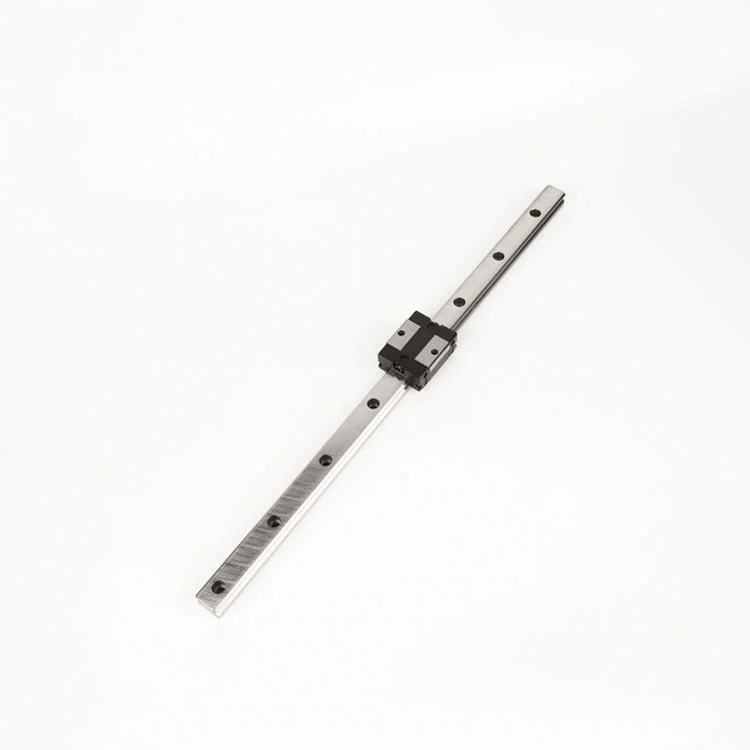
When engineers upgrade to rolling motion systems, these problems are significantly reduced. Modern Linear Guides use rolling elements between the rail and carriage, dramatically lowering friction while maintaining consistent motion accuracy.
How Do Linear Guides Improve Machine Performance?
When I evaluate motion components for industrial equipment, I focus on three essential aspects: accuracy, load capacity, and durability. Well-designed Linear Guides excel in each of these areas because their rolling structure distributes loads evenly while maintaining smooth travel.
Instead of sliding contact, ball or roller elements circulate inside the carriage, reducing resistance and preventing uneven wear. This design allows machines to operate with much greater positioning stability.
- High positioning accuracy for precision machining
- Lower friction enabling smoother movement
- Consistent load distribution across the rail
- Improved rigidity for heavy industrial equipment
- Longer operational life compared with sliding rails
In automated production lines, these advantages translate directly into better product quality and fewer maintenance interruptions.
Where Are Linear Guides Used Across Modern Industries?
Over the past decade, I have seen the adoption of Linear Guides expand far beyond traditional machine tools. Today they support motion systems in numerous advanced industries.
| Industry | Application | Key Benefit |
| CNC Machining | Machine tool axes movement | Precision positioning and smooth cutting |
| Automation Equipment | Assembly line motion systems | Reliable high-speed movement |
| Electronics Manufacturing | Semiconductor and PCB equipment | Micro-level accuracy |
| Robotics | Robotic arm linear motion | Stable repetitive operation |
| Medical Equipment | Diagnostic and imaging devices | Quiet and precise positioning |
As manufacturing becomes increasingly automated, reliable motion systems play a decisive role in maintaining production efficiency. This is one reason the demand for advanced Linear Guides continues to grow globally.
What Should Engineers Consider When Selecting Linear Guides?
Choosing the right guide system is not only about dimensions. When I work with equipment designers, I typically evaluate several technical factors before recommending a motion solution.
- Load capacity and machine weight
- Required positioning accuracy
- Operating speed of the equipment
- Environmental conditions such as dust or coolant
- Maintenance requirements and lubrication cycles
Manufacturers such as Suzhou Maitu Screw Rod Manufacturing Co., Ltd. focus on producing motion components that meet these demanding industrial conditions. Their engineering approach emphasizes stable material quality, precise grinding processes, and strict dimensional consistency—factors that strongly influence the long-term reliability of Linear Guides.
How Do High Quality Linear Guides Reduce Long Term Costs?
Many purchasing managers initially focus only on the unit price of motion components. However, when I analyze equipment operating costs over several years, the difference becomes clear. Higher quality Linear Guides often reduce total ownership costs in several ways.
- Less downtime caused by component wear
- Reduced maintenance and lubrication frequency
- Improved machining accuracy reducing product defects
- Higher production speed with stable motion
- Longer service life of the entire machine system
For production facilities operating multiple machines, even small improvements in motion stability can translate into significant financial benefits.
Why Are More Global Buyers Looking for Reliable Motion Component Manufacturers?
In conversations with international buyers, I often hear the same concern. They need suppliers who not only provide components but also understand how those components integrate into complete mechanical systems. Reliable motion component manufacturers invest heavily in precision grinding technology, surface treatment, and quality inspection.
This is why industrial buyers increasingly prefer experienced manufacturers that specialize in motion control solutions. Companies that focus on consistent engineering quality can provide Linear Guides capable of supporting demanding industrial environments for many years.
Are You Searching for High Precision Linear Guides for Your Equipment?
If you are designing automation equipment, upgrading CNC machines, or improving production line accuracy, selecting the right motion components is a crucial step. Well-engineered Linear Guides can dramatically enhance machine performance while reducing long-term maintenance costs.
If you would like to explore reliable motion solutions or discuss your equipment requirements in detail, we invite you to contact us today. The engineering team at Suzhou Maitu Screw Rod Manufacturing Co., Ltd. is ready to help you find the right Linear Guides for your project. Send us your specifications or application details, and we will respond quickly with professional recommendations and technical support.