Why Are Deep Groove Ball Bearings the Backbone of Rotating Machinery?
2026-10-20
A maintenance workshop supervisor opens a failed bearing from a conveyor drive gearbox. The bearing is a Deep Groove Ball Bearings, 6208 size. The outer ring has a single spalled area on the load zone. The balls are discolored from heat. The grease has turned dark and hard. The supervisor checks the maintenance log. The bearing was installed 6 years ago and was expected to last 3 years. The supervisor is not surprised. In his experience, most bearings that fail in rotating machinery are deep groove ball bearings, and most of them fail because of lubrication or contamination, not because of the bearing design. This guide explains why deep groove ball bearings are the backbone of rotating machinery and how to make them last longer.
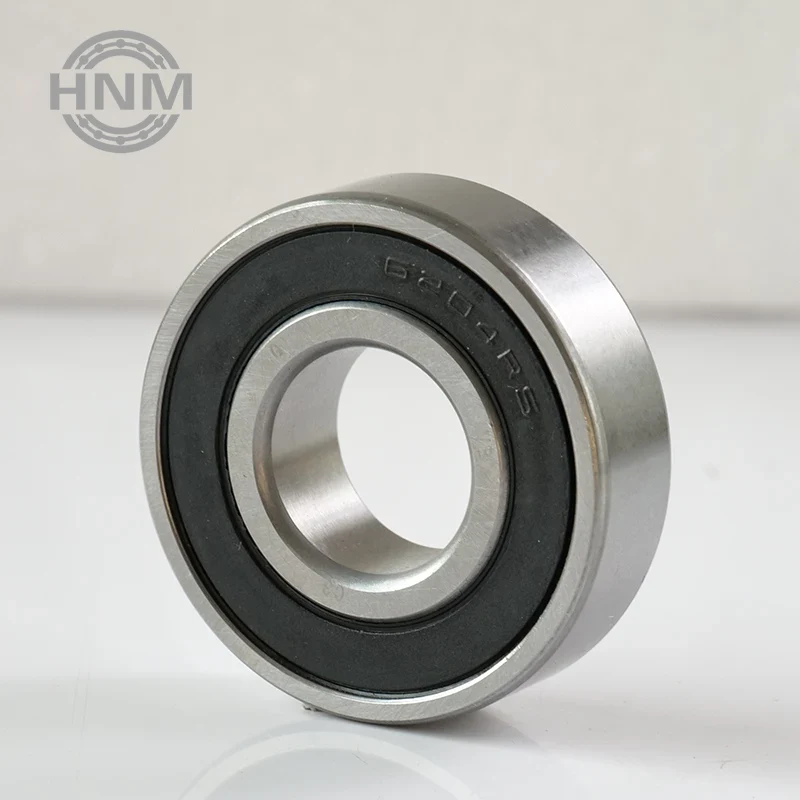
1. What Makes Deep Groove Ball Bearings So Widely Used?
The Deep Groove Ball Bearings is the most common bearing type in rotating machinery because it combines four characteristics that no other bearing type matches. First, it carries both radial and axial loads. Second, it operates at high speeds with low friction. Third, it is available in a wide range of sizes and tolerances. Fourth, it is inexpensive and easy to replace. The deep groove in the inner and outer rings allows the bearing to accommodate a certain amount of misalignment without losing its load capacity. The table below shows the typical load and speed capabilities of deep groove ball bearings compared to other bearing types.
| Bearing type | Radial load capacity | Axial load capacity | Speed capability | Relative cost |
| Deep groove ball bearing | Moderate | Moderate | High | Low |
| Cylindrical roller bearing | High | None | Moderate | Moderate |
| Angular contact ball bearing | Moderate | High (one direction) | High | Moderate |
| Tapered roller bearing | High | High (one direction) | Moderate | Moderate |
| Spherical roller bearing | Very high | Low | Low | High |
In our factory, we manufacture Deep Groove Ball Bearings in sizes from 10 mm to 200 mm bore, with open, sealed, and shielded configurations. The most common sizes used in rotating machinery are 6205, 6206, 6207, 6208, 6308, and 6310. Cixi Hengji Bearing Co., Ltd. has been manufacturing deep groove ball bearings for over 12 years and supplies to maintenance workshops and OEMs worldwide.
2. What Are the Most Common Failure Modes and Their Causes?
The failure mode of a Deep Groove Ball Bearings tells the story of its operating conditions. The table below shows the most common failure modes and their root causes, based on our workshop's failure analysis records.
| Failure mode | Visual appearance | Root cause | Prevention |
| Spalling (fatigue) | Flaking on the raceway at the load zone | Normal fatigue; overload; inadequate lubrication | Correct load rating; proper lubrication |
| Contamination | Indentations; scratches; discoloration | Dust or water ingress; failed seals | Sealed bearings; proper handling |
| Inadequate lubrication | Discolored balls; hardened grease | Wrong grease; over/under lubrication; high temperature | Correct grease; proper fill quantity |
| Misalignment | Uneven wear on the raceway; cage damage | Housing or shaft misalignment | Alignment check; self-aligning bearing |
| Corrosion | Rust on rings and balls | Moisture ingress; aggressive chemicals | Sealed bearing; corrosion-resistant coating |
In our workshop, we have analyzed over 5,000 failed bearings. The data shows that 45 percent of failures are caused by contamination, 30 percent by inadequate lubrication, 15 percent by misalignment, and 10 percent by other causes. The Deep Groove Ball Bearings itself is rarely the root cause. The failure is usually caused by the operating environment or the maintenance practice. Cixi Hengji Bearing Co., Ltd. provides failure analysis support for our customers.
3. How Do You Select the Right Clearance for a Specific Application?
The internal clearance of a Deep Groove Ball Bearings affects its performance. A bearing with too little clearance will run hot and may seize. A bearing with too much clearance will vibrate and produce noise. The clearance is classified into groups: C2 (less than normal), CN (normal), C3 (greater than normal), C4 (greater than C3), and C5 (greater than C4). The table below shows the recommended clearance for different operating conditions.
| Operating condition | Recommended clearance | Reason |
| Normal temperature, normal fit | CN | Standard clearance for general applications |
| High temperature (above 80°C) | C3 or C4 | Thermal expansion reduces clearance |
| Interference fit on shaft and housing | C3 | Interference fit reduces internal clearance |
| High speed | C3 | Centrifugal force and heat reduce clearance |
| Low noise application | C2 or CN | Reduced clearance minimizes vibration |
| Misalignment or vibration | C3 or C4 | Extra clearance accommodates deflection |
Workshop tip: When replacing a bearing, always measure the clearance before installation. If the clearance is less than the minimum specified for the application, the bearing may run hot. If it is more than the maximum, the bearing may be noisy. In our factory, we measure the clearance of every bearing before it is packaged. We also provide a clearance measurement gauge for field use. The gauge is a simple go/no-go tool that checks the clearance range.
4. How Do You Decide Whether to Replace or Reuse a Bearing?
Not every bearing that looks worn needs to be replaced. The decision depends on the application criticality, the cost of downtime, and the condition of the bearing. The table below shows the criteria for reuse and replacement.
| Condition | Reuse | Replace |
| Light discoloration on the raceway | Yes (if clearance is within specification) | No |
| Minor scratches on the balls | Yes (if noise is acceptable) | No |
| Spalling on the raceway | No | Yes |
| Cage damage | No | Yes |
| Excessive clearance | No | Yes |
| Corrosion on the rings | No | Yes |
In our workshop, we follow a simple rule: if the bearing is in a critical application and the condition is questionable, replace it. The cost of a new bearing is small compared to the cost of unplanned downtime. For non-critical applications, a bearing with light wear can be reused if the clearance is within specification and the noise level is acceptable. Cixi Hengji Bearing Co., Ltd. provides replacement bearings and technical support for maintenance workshops.
Frequently Asked Questions About Deep Groove Ball Bearings in Rotating Machinery
Summary for Maintenance Workshop Supervisors
Deep Groove Ball Bearings are the backbone of rotating machinery because they carry radial and axial loads, operate at high speeds, and are available in a wide range of sizes. The failures that occur in service are usually caused by contamination, inadequate lubrication, or misalignment, not by the bearing itself. The correct clearance selection and the proper grease fill quantity are critical for long life. When a bearing fails, the failure mode should be analyzed to identify the root cause and prevent recurrence. Cixi Hengji Bearing Co., Ltd. has been manufacturing Deep Groove Ball Bearings for over 12 years and provides failure analysis support and replacement bearings for maintenance workshops worldwide.
Cixi Hengji Bearing Co., Ltd. manufactures Deep Groove Ball Bearings in sizes from 10 mm to 200 mm bore, with open, sealed, and shielded configurations, and with C2, CN, C3, and C4 clearance groups. We provide clearance measurement gauges and failure analysis support for all of our products.