

Why Are CNC Machined Components Transforming Precision Manufacturing?
2025-12-01
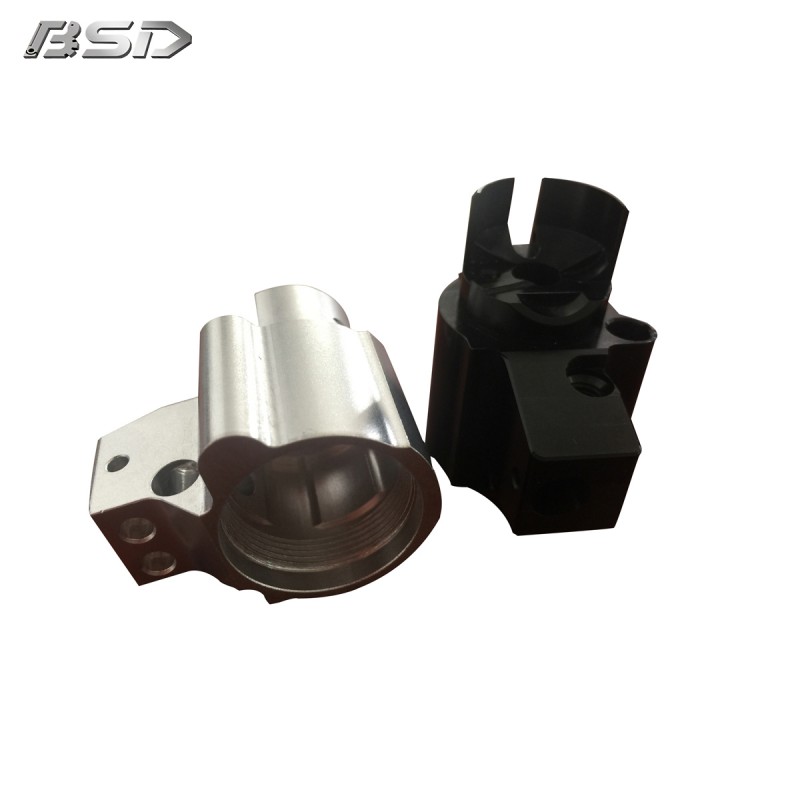
CNC machined components refer to parts manufactured through Computer Numerical Control machining, a subtractive manufacturing process that removes material from metal, plastic, or composite workpieces with exceptional precision. In industries where micron-level tolerances, repeatability, and high-performance materials are mission-critical—such as aerospace, automotive, medical devices, robotics, and industrial automation—CNC machining remains one of the most reliable and scalable production methods available.
What Functional Advantages Do CNC Machined Components Provide Across Industries?
CNC machined components deliver a combination of dimensional accuracy, mechanical stability, and material versatility that is difficult for alternative processes to match. These advantages make them essential in high-stakes applications where failure is not an option. The following parameters highlight the typical specifications and performance indicators associated with professional-grade CNC-machined components.
Key Technical Parameters of CNC Machined Components
| Category | Specification Range / Description |
|---|---|
| Tolerance Accuracy | ±0.005 mm to ±0.01 mm depending on geometry and material |
| Surface Finish | Ra 0.4 μm to Ra 3.2 μm (polishing, bead blasting, anodizing options available) |
| Material Compatibility | Aluminum alloys, stainless steel, carbon steel, titanium, brass, copper, engineering plastics (POM, ABS, Nylon, PEI, PEEK) |
| Machining Capabilities | 3-axis, 4-axis, 5-axis milling; turning; drilling; tapping; threading |
| Maximum Workpiece Size | Up to 1200 mm depending on machine platform |
| Batch Flexibility | Prototyping, small-batch, and mass production |
| Quality Inspection | CMM measurement, hardness testing, digital caliper inspection, surface roughness meter |
| Application Compatibility | Aerospace fittings, automotive brackets, medical housings, robotics gear components, custom industrial parts |
These specifications function as a baseline reference for industries that rely on precision machining for product quality and structural performance. The exact parameters may vary depending on the manufacturer, but the competitive threshold is similar across global markets.
Why Do These Specifications Matter?
-
Dimensional reliability supports complex assemblies.
Components manufactured with tight tolerances reduce downstream adjustments, eliminate unnecessary rework, and improve assembly efficiency. -
Surface finish quality impacts mechanical efficiency and durability.
Lower roughness values reduce friction, enhance fluid dynamics, and resist fatigue cracking—critical for aerospace and medical applications. -
Material versatility expands design freedom.
Engineering-grade metals and plastics allow designers to pursue performance-driven innovations rather than compromise due to process constraints. -
Scalability supports production flexibility.
CNC machining can shift from prototype development to mass production without compromising consistency or accuracy.
How Do CNC Machined Components Improve Product Performance and Manufacturing Efficiency?
CNC-machined parts serve as foundational building blocks for modern engineering projects. Their benefits extend beyond precision and durability, influencing the entire product lifecycle from design validation to long-term field performance.
1. Enhanced Structural Integrity
CNC machining operates without introducing thermal distortion, which commonly affects processes like 3D printing or laser cutting. This ensures improved stress resistance, mechanical load-bearing capability, and stable dimensional geometry.
2. Increased Manufacturing Efficiency
Because CNC machines can run continuously with minimal interruption, businesses reduce downtime and enhance operational throughput. Automated tool-changing systems, simulation software, and digital workflow controls minimize setup time and significantly reduce production lead times.
3. Compatibility With Complex Geometries
High-axis machining capabilities produce intricate shapes such as undercuts, multi-surface contours, and internal channels. This enables creative engineering solutions for weight reduction, heat dissipation, and improved aerodynamics.
4. Superior Repeatability
Once programmed, CNC machines replicate the same specifications across thousands of units. High repeatability is crucial for industries where interchangeable parts must maintain identical performance characteristics.
5. Cost Efficiency Over the Production Lifecycle
While CNC machining may involve higher initial programming and setup cost, it saves money in the long run by reducing part failure, minimizing human error, and shortening production cycles. For many companies, total cost of ownership decreases when switching to CNC-manufactured components.
What Future Trends Will Shape the Evolution of CNC Machined Components?
The future of CNC machining is defined by digitalization, automation, and material innovation. These trends indicate strong market growth and increased adoption across engineering-driven industries.
1. Integration of Smart Manufacturing
Factories are increasingly adopting digital twins, AI-driven machining optimization, real-time monitoring, and automated tool calibration. These technologies reduce scrap rates, increase reliability, and shorten development cycles.
2. Hybrid Manufacturing Combining CNC and Additive Techniques
Many manufacturers leverage 3D printing for rough shapes and CNC machining for final tolerances. This hybrid approach accelerates prototyping and enables geometries that were once impossible or cost-prohibitive.
3. Expansion of High-Performance Materials
As industries demand stronger and lighter components, CNC machining continues to evolve to handle titanium alloys, advanced composites, and engineering plastics with higher temperature and pressure thresholds.
4. Demand for Ultra-Precision Micro-Machining
Miniaturization in electronics, medical devices, and sensor technologies drives demand for micro-scale CNC components with sub-micron accuracy.
Frequently Asked Questions About CNC Machined Components
Q1: How do CNC machined components differ from 3D-printed parts?
A: CNC-machined components are produced by removing material from a solid block, ensuring superior mechanical strength, tighter tolerances, and better surface finishes. 3D printing is often used for prototyping or complex geometry creation but may lack the consistency and strength required for heavy-load or high-stress applications. For industries concerned with long-term durability—such as aerospace, automotive, and industrial machinery—CNC machining remains the preferred method due to its structural reliability and compatibility with high-performance metals.
Q2: What factors influence the cost of CNC machined components?
A: Cost depends on part complexity, material selection, surface treatment, tolerance requirements, machining time, and batch size. Components with intricate contours, deeper cavities, or hard-to-machine materials require slower cutting speeds and more tool changes, which increase production time. Surface treatments such as anodizing or plating also contribute to cost, but they offer enhanced corrosion resistance and cosmetic appearance. Larger batch quantities usually reduce unit cost due to amortized setup and tooling expenses.
Why CNC Machined Components Continue to Lead the Manufacturing Landscape
CNC machined components remain indispensable across industries that prioritize reliability, repeatability, material performance, and high-precision engineering. Their superior technical specifications, adaptability to complex designs, and compatibility with modern production systems reinforce their dominance in global supply chains. As manufacturing continues to evolve toward digital automation and intelligent machining, CNC technology will play an even greater role in enhancing product quality and reducing operational costs.
For businesses seeking consistent precision, strong mechanical performance, and high-quality production standards, CNC machining provides a stable solution with long-term advantages. BSD delivers professional-grade CNC machined components tailored for industrial, mechanical, and engineering applications, backed by strong quality control and advanced machining infrastructure.
To discuss project requirements or request a quotation, contact us and explore how BSD can support your next production initiative.
