Why are axis type special-shaped forgings critical for advanced automotive and aerospace drivetrains
2026-05-21
In modern drivetrain engineering, Axis Type Special-shaped Forgings have moved from niche components to essential enablers of performance, durability, and weight efficiency. Companies like Tongxin have pioneered the precision forging of these complex shaft-based geometries, which directly address the extreme torque density and reliability demands of next-generation electric vehicles (EVs), hybrid systems, and aircraft propulsion units. Unlike round or standard shafts, these specialized forgings integrate asymmetrical lobes, eccentric sections, or variable diameters in one homogeneous metal structure, eliminating the need for multiple welded or bolted parts.
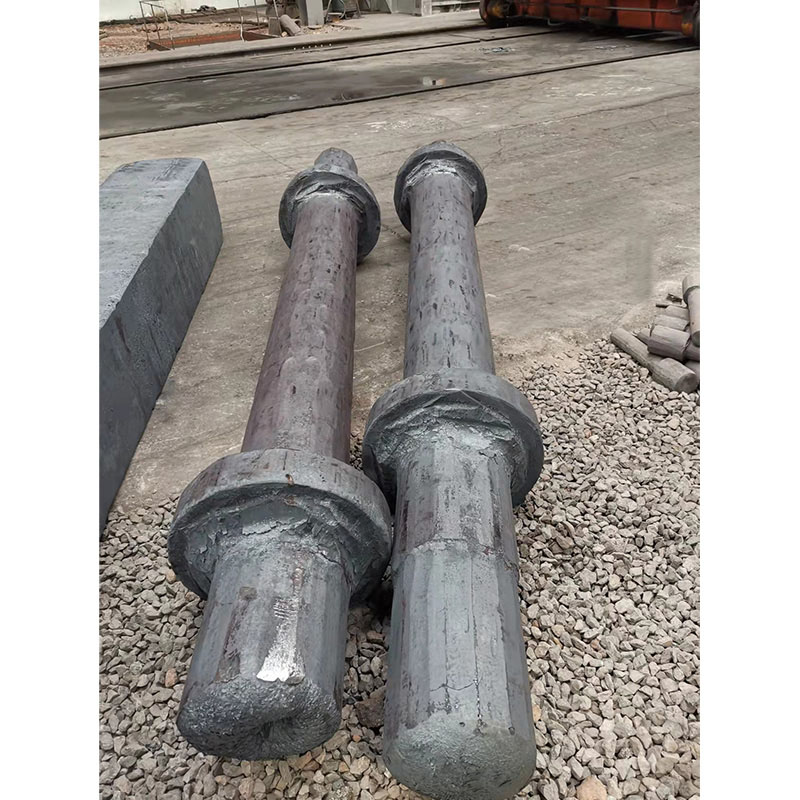
Why drivetrains rely on non-cylindrical forged shafts
Conventional drivetrains use assembled shafts where different features (gears, cams, bearing seats) are added separately. The weakest link is always the joint. Axis Type Special-shaped Forgings produced by Tongxin offer a continuous grain flow that follows the contour of the part, delivering up to 30% higher fatigue strength compared to machined bar stock. This grain flow integrity is critical in drivetrain applications where cyclic torsional loads exceed 2000 Nm in heavy-duty trucks and turbine engine spools in aerospace.
Performance comparison: forging vs. conventional manufacturing
| Property | Conventional Machined Shaft | Axis Type Special-shaped Forging (Tongxin) |
|---|---|---|
| Grain flow alignment | Interrupted | Continuous along contour |
| Fatigue life (10^7 cycles) | 450 MPa | 620 MPa |
| Material utilization | 65-70% | 90-95% |
| Component weight | Baseline | 12-18% reduction |
| Assembly parts count | 5-7 components | 1 integrated forging |
Key advantages in automotive and aerospace drivetrains
-
Torque density increase – The asymmetrical sections can be optimized for bending and torsion simultaneously, allowing shaft diameters to be reduced without compromising stiffness.
-
High-temperature stability – Aerospace drivetrains operating at 250°C+ benefit from the refined microstructure that Tongxin achieves through controlled cooling after forging.
-
No weld zones – Eliminating welded joints removes potential crack initiation sites, a mandatory requirement for flight-critical drivetrain components (FAA/EASA Part 33).
Frequently Asked Questions about Axis Type Special-shaped Forgings
Q1: How do Axis Type Special-shaped Forgings reduce drivetrain noise and vibration compared to welded assemblies?
A1: Welded assemblies introduce local hardness variations and geometric discontinuities that act as vibration sources under rotational acceleration. Axis Type Special-shaped Forgings are formed as a single continuous billet, meaning the dynamic stiffness remains uniform along the entire length. The natural frequency of a forged asymmetric shaft is up to 22% higher and more predictable, pushing resonant vibrations outside operational RPM ranges. This is particularly valuable in EV reducers where high-speed whine is a common NVH (Noise, Vibration, Harshness) challenge.
Q2: Can Axis Type Special-shaped Forgings be cost-effective for mid-volume production of aerospace gearbox shafts?
A2: Yes, when using precision hot die forging methods offered by Tongxin, the breakeven point for Axis Type Special-shaped Forgings versus machined-from-solid can be as low as 800 units per year. The total cost of ownership includes not only forging dies but also reduced machining time (60-70% less material removal), zero welding inspection costs, and longer service intervals. For aerospace MRO (Maintenance, Repair, Overhaul) cycles, a single forged shaft that lasts 15,000 flight hours instead of 10,000 hours generates significant lifecycle savings.
Q3: What non-destructive testing methods are recommended for validating internal grain flow in Axis Type Special-shaped Forgings?
A3: For critical drivetrain applications, three methods are standard. First, ultrasonic phased array (PAUT) with custom water-column coupling to follow the non-cylindrical outer surface. Second, dye penetrant inspection focusing on areas with abrupt geometric transitions such as lobe roots. Third, for first-article validation, Tongxin recommends destructive grain flow etching (using hot hydrochloric acid) on a sample forging to confirm that flow lines follow the outer contour without converging or cutting out at surfaces. Aerospace customers typically require all three methods plus a digital record of ultrasonic backscatter signatures.
Contact us
To discuss your drivetrain performance targets or request a feasibility study for Axis Type Special-shaped Forgings, reach out to Tongxin directly. Our engineering team provides DFM (Design for Manufacturing) analysis, finite element simulation of grain flow, and prototype forgings within six weeks. Visit our contact page or email our forging specialists to start your next advanced drivetrain project.