Why Are 3D Printing Services Transforming Product Development?
2025-12-02
3D printing services have become a decisive force in modern manufacturing, offering businesses faster prototyping, higher customization flexibility, and the ability to create complex geometries that traditional manufacturing cannot achieve.
How Do 3D Printing Services Deliver High-Precision Results Across Industries?
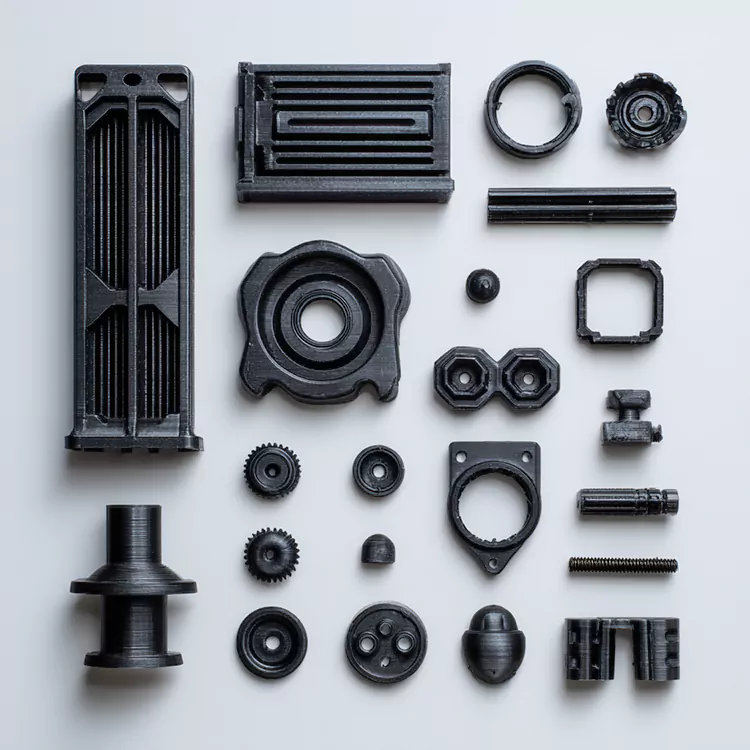
3D printing services rely on additive manufacturing technologies that build objects layer by layer based on digital models. This method allows for extremely fine resolution, enhanced material efficiency, and unprecedented flexibility compared with subtractive processes like machining or molding. By combining hardware precision, advanced software slicing, and optimal material selection, these services deliver repeatable accuracy suitable for engineering prototypes, functional components, consumer products, and medical applications.
Below is a technical overview of common parameters and specifications typically offered by professional 3D printing service providers:
Key Product Parameters of Professional 3D Printing Services
| Category | Specification / Capability |
|---|---|
| Supported Technologies | FDM, SLA, SLS, MJF, DMLS/SLM (metal printing), PolyJet |
| Layer Resolution Range | 20–250 microns depending on technology |
| Build Volume Range | Small: 200 × 200 × 200 mm; Industrial: up to 1000 × 1000 × 1000 mm |
| Material Options | ABS, PLA, PETG, TPU, Nylon, PA12, Resin (standard/tough/heat-resistant/transparent), Stainless Steel, Aluminum, Titanium |
| Tolerance Precision | ±0.1 mm typical; ±0.05 mm with SLA/SLS |
| Surface Quality Options | Raw, smooth finish, vapor polishing, sanding, painting, coating |
| Color Options | Single-color or full-color (PolyJet or MJF color) |
| Production Speed | Rapid prototyping from 24–72 hours; batch production based on complexity |
| File Formats Supported | STL, OBJ, STEP, IGES |
| Application Fields | Automotive, aerospace, medical devices, consumer electronics, architecture, education, custom tooling |
These parameters determine the suitability of each service for specific project types, whether it is functional testing, artistic modeling, engineering validation, or mass-customized production.
How Can 3D Printing Services Accelerate Product Prototyping?
The core advantage of 3D printing is agile production. Traditional prototyping often requires multiple stages of machining, molding, and modification, which can extend timelines to weeks or even months. By contrast, 3D printing transforms digital files directly into physical objects without additional tooling.
Key Reasons 3D Printing Enhances Prototyping Speed
-
Direct digital-to-physical production eliminates tooling lead times.
-
Fast iteration cycles enable teams to refine designs multiple times in days.
-
Lower material usage and subtractive waste reduce costs and time.
-
Complex designs such as internal channels or organic shapes can be produced instantly.
-
Parallel production makes it possible to print several prototypes simultaneously.
How this Benefits Product Development Teams
-
Shortened R&D timelines allow faster product launches.
-
Lower risk by enabling functional testing before full-scale investment.
-
Enhanced creativity through the ability to experiment with unconventional geometries.
-
Improved communication with stakeholders due to tangible models.
The acceleration achieved through 3D printing services fundamentally reshapes design cycles, allowing companies to move from concept to market with far greater speed and agility.
How Do 3D Printing Services Support Complex Engineering and Functional Production?
Beyond prototyping, advanced 3D printing techniques are increasingly used for end-use parts. Industries requiring durability, thermal resistance, precision, or lightweight structures benefit significantly.
Key Engineering Advantages
-
Complex Geometry Fabrication
3D printing can create lattice structures, internal channels, undercuts, and organically optimized forms. -
Lightweighting Efficiency
In aerospace and automotive sectors, metal 3D printing reduces weight while maintaining structural integrity. -
Material Diversity for Specialized Needs
High-performance materials such as PA12, PEEK, reinforced composites, and metal alloys support demanding applications. -
Low-Volume Manufacturing Flexibility
Ideal for customized or limited-run components where traditional molding is cost-prohibitive. -
Functional Performance Testing
With durable engineering-grade materials, printed parts can undergo real-world testing.
Industries Using 3D Printing for Production
-
Medical: Personalized prosthetics, dental models, surgical guides.
-
Aerospace: Lightweight brackets, complex cooling channels.
-
Automotive: Custom jigs, fixtures, and functional components.
-
Consumer Products: Wearables, home appliances, custom accessories.
-
Industrial Manufacturing: Replacement parts, custom tooling, machine components.
As technology evolves, 3D printing services are becoming integral to mass customization, technical innovation, and efficient small-batch production.
How Will 3D Printing Services Shape Future Manufacturing Trends?
The future of 3D printing services is defined by automation, sustainability, and broader material possibilities.
1. Automation and Smart Factories
3D printers are increasingly integrated into robotic systems and automated production lines. This integration results in continuous manufacturing, reduced labor costs, and real-time quality monitoring.
2. Material Innovation
Future materials will offer improved heat resistance, flexibility, and strength, allowing 3D printing to substitute traditional manufacturing in more applications.
3. Sustainable Manufacturing
Additive manufacturing reduces waste, optimizes material use, and lowers carbon footprints. Bio-based polymers and recycled materials will play an increasing role.
4. Mass Customization
Consumers increasingly expect personalized products. 3D printing will enable manufacturers to offer unique designs without raising production costs.
5. On-Demand Local Production
Distributed manufacturing networks will shorten supply chains and reduce inventory overhead.
Together, these developments hint at a future where 3D printing services are central to global manufacturing systems, enabling faster, smarter, and cleaner production.
Common FAQs About 3D Printing Services
Q1: How accurate are professional 3D printing services for engineering-grade parts?
A1: High-precision services can achieve tolerances of ±0.05–0.1 mm depending on technology. SLA and SLS provide the best dimensional accuracy, making them suitable for detailed mechanical components, fitting tests, and functional assemblies.
Q2: How should materials be selected for different applications?
A2: Material selection depends on the required strength, flexibility, heat resistance, surface finish, and function. For example, PLA is ideal for simple prototypes, ABS provides greater toughness, TPU supports flexible components, Nylon and PA12 are preferred for mechanical parts, and metal materials such as aluminum or steel are used for high-stress applications.
How Can Businesses Leverage Trusted 3D Printing Services for Long-Term Success?
3D printing services provide unmatched value in prototyping, functional manufacturing, product customization, and complex engineering solutions. By evaluating key parameters—technology type, materials, precision, surface finish, and production speed—businesses can select the right service to accelerate design cycles, reduce costs, and enhance innovation.
As industries evolve toward automation, sustainability, and on-demand production, the role of 3D printing will become even more central in global manufacturing strategies. Companies seeking consistent quality, scalable solutions, and technical reliability benefit significantly from choosing experienced service providers.
Honmor delivers professional 3D printing services equipped with diverse materials, high-precision equipment, and comprehensive production workflows, supporting clients from concept development to final product delivery. For tailored solutions, expert guidance, or technical consultation, contact us to explore how advanced 3D printing capabilities can elevate upcoming projects and long-term manufacturing goals.