Which Surface Treatment Methods Deliver Optimal Results for ACME Trapezoidal Screws
2026-03-30
When it comes to precision motion control and power transmission, the ACME Trapezoidal Screw remains a cornerstone component in industries ranging from automation to medical equipment. However, its long-term performance is heavily influenced by the surface treatment applied. Selecting the right treatment not only extends service life but also enhances efficiency and reliability. At Suzhou Maitu, we specialize in engineering ACME Trapezoidal Screw with Surface Treatment solutions tailored to demanding applications. This article explores the most effective surface treatment methods available today.
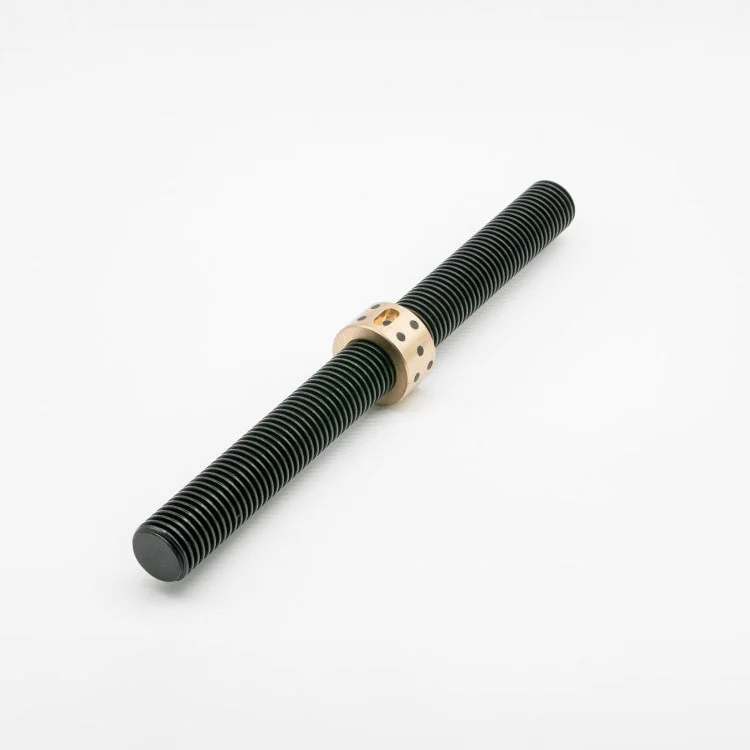
Why Surface Treatment Matters for ACME Trapezoidal Screws
Surface treatment directly impacts wear resistance, corrosion protection, friction coefficients, and load capacity. Without proper treatment, even a high-grade ACME Trapezoidal Screw can suffer premature failure in harsh environments or high-cycle operations. The choice of method must align with operating conditions, material compatibility, and performance goals.
Key Surface Treatment Methods Compared
| Treatment Method | Primary Benefit | Typical Applications | Coating Thickness | Friction Impact |
|---|---|---|---|---|
| Black Oxide | Basic corrosion resistance, improved lubricity | Indoor mechanisms, light-duty actuators | 0.5–1.5 µm | Reduces friction slightly |
| Zinc Plating | Moderate corrosion protection, cost-effective | Industrial equipment, automotive | 5–15 µm | Minimal impact |
| Hard Chrome Plating | Excellent wear resistance, high hardness | Heavy-load linear motion, high-cycle systems | 10–50 µm | Lowers friction significantly |
| Electroless Nickel | Uniform coating, superior corrosion resistance | Medical devices, marine environments | 5–25 µm | Maintains low friction |
| PTFE Coating | Lowest friction coefficient, non-stick properties | Precision instruments, cleanroom applications | 10–30 µm | Dramatically reduces friction |
| Nitriding | Surface hardening, fatigue strength improvement | High-speed, high-load transmission | 0.1–0.5 mm (case depth) | No coating build-up |
Selecting the Optimal Method
For standard industrial environments, zinc plating offers a balanced cost-to-performance ratio. When wear resistance is the priority, hard chrome plating or nitriding delivers superior durability. In applications demanding corrosion resistance with tight tolerances, electroless nickel is often the preferred choice. For ultra-low friction requirements—such as in semiconductor or laboratory automation—PTFE coating provides exceptional performance.
Suzhou Maitu evaluates each application’s load, speed, environment, and duty cycle to recommend the most suitable treatment. Our expertise ensures that every ACME Trapezoidal Screw with Surface Treatment solution meets exacting operational standards.
Common Questions About ACME Trapezoidal Screw with Surface Treatment
What is the most durable surface treatment for ACME Trapezoidal Screws in high-load industrial applications?
For high-load industrial environments, nitriding and hard chrome plating offer the highest durability. Nitriding creates a hardened case layer through thermal diffusion, significantly improving fatigue strength and wear resistance without altering screw dimensions. Hard chrome plating adds a thick, hard surface layer that withstands abrasive conditions and heavy cyclic loads. Both methods are commonly applied to ACME Trapezoidal Screw with Surface Treatment assemblies used in machine tools, presses, and heavy automation equipment. Suzhou Maitu typically recommends nitriding for applications where dimensional stability is critical and hard chrome plating when maximum surface hardness is required.
How does PTFE coating affect the efficiency of an ACME Trapezoidal Screw?
PTFE coating reduces the coefficient of friction to as low as 0.05–0.10, compared to 0.15–0.25 for untreated steel-on-bronze combinations. This reduction translates directly into lower driving torque requirements, reduced heat generation, and smoother motion. For applications such as laboratory automation or precision positioning systems, PTFE-coated ACME Trapezoidal Screw with Surface Treatment assemblies can achieve higher mechanical efficiency and extended maintenance intervals. However, Suzhou Maitu advises that PTFE coatings are softer than metallic treatments and may not be suitable for applications involving abrasive contaminants or extremely high contact pressures.
Can surface treatment improve corrosion resistance for ACME Trapezoidal Screws used in outdoor or washdown environments?
Yes, corrosion resistance is significantly enhanced by selecting the appropriate treatment. Electroless nickel plating provides exceptional uniformity and passivation, making it ideal for marine, food processing, and outdoor applications. Unlike electroplated zinc, electroless nickel deposits a consistent layer even on complex thread profiles, preventing galvanic corrosion. For extreme conditions, Suzhou Maitu offers duplex coatings combining electroless nickel with a topcoat of PTFE, delivering both corrosion protection and low friction in a single ACME Trapezoidal Screw with Surface Treatment solution. Stainless steel versions with specialized passivation are also available for environments requiring maximum chemical resistance.
Expertise You Can Trust
Adhering to Google’s EEAT principles—Experience, Expertise, Authoritativeness, and Trustworthiness—Suzhou Maitu brings decades of precision manufacturing experience to every project. Our engineers work closely with clients to validate treatment selections through testing and real-world application data. From material sourcing to final coating inspection, every ACME Trapezoidal Screw with Surface Treatment we produce undergoes rigorous quality control to ensure consistent, reliable performance.
Contact Us
Selecting the optimal surface treatment for your ACME Trapezoidal Screw can significantly impact your system’s efficiency, longevity, and total cost of ownership. Whether you require corrosion resistance for harsh environments, ultra-low friction for precision motion, or hardened surfaces for high-cycle applications, Suzhou Maitu has the expertise to deliver. Contact our engineering team today to discuss your specific requirements and request a customized solution tailored to your application.