Which materials offer the best performance for CNC machined airframe brackets in high-stress environments
2026-05-11
When an aircraft pushes its limits in high-stress environments, every component must withstand extreme forces without compromising safety or weight. Among the most critical parts are CNC Machined Airframe Brackets, which transfer loads between structural elements. Selecting the optimal material for these brackets directly impacts fatigue life, corrosion resistance, and overall airframe integrity. At BestPro, we engineer CNC Machined Airframe Brackets from advanced alloys to meet the most demanding aerospace specifications.
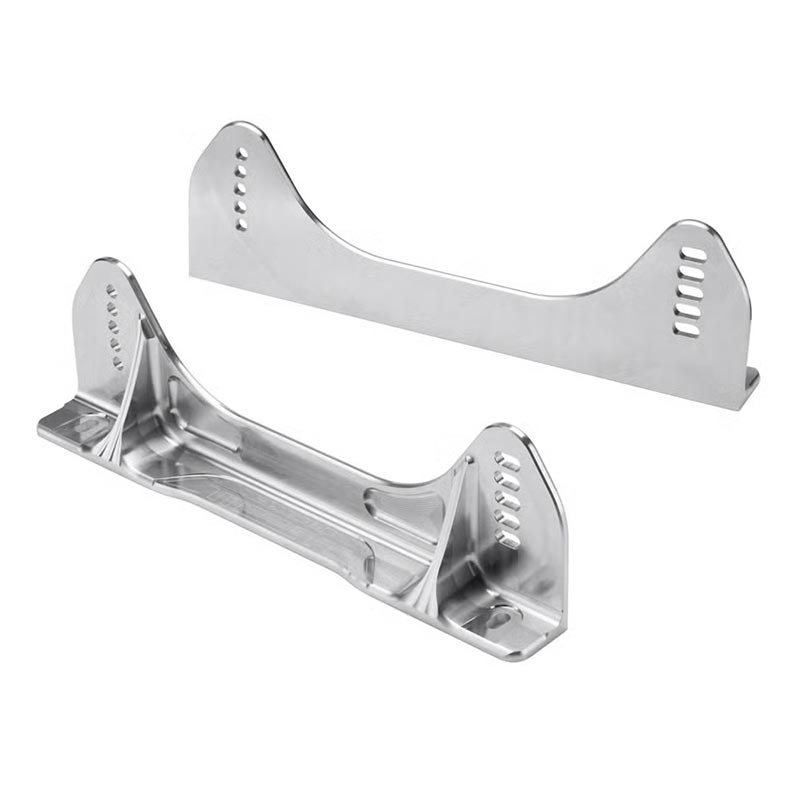
Top materials for high-stress airframe brackets
The table below compares four leading materials based on key performance criteria for CNC Machined Airframe Brackets in high-stress environments.
| Material | Tensile Strength (MPa) | Fatigue Resistance | Corrosion Protection | Weight Efficiency | Typical Cost |
|---|---|---|---|---|---|
| 7075-T6 Aluminum | 572 | Good | Anodizing required | Excellent | Moderate |
| 2024-T351 Aluminum | 469 | Very Good | Cladding needed | Excellent | Moderate |
| 6AL-4V Titanium | 950 | Outstanding | Natural oxide layer | Very Good | High |
| 17-4 PH Stainless Steel | 1100 | Excellent | Good (passivation) | Fair | High |
Why titanium often leads for extreme cyclic loads
For brackets subjected to continuous vibration and fluctuating stresses in engines or landing gear, 6AL-4V Titanium consistently outperforms alternatives. Its high strength-to-weight ratio combined with exceptional crack propagation resistance makes it the preferred choice for CNC Machined Airframe Brackets in wing-to-fuselage joints. BestPro utilizes 5-axis CNC machining to produce titanium brackets with surface finishes below 0.8 Ra, eliminating stress risers that lead to premature failure.
When to choose aluminum alloys
7075-T6 Aluminum remains the industry standard for general airframe applications. It offers the best balance of machinability, strength, and weight for CNC Machined Airframe Brackets in non-critical high-stress zones such as rib-to-skin attachments. However, designers must account for its lower galvanic corrosion resistance when mating with carbon fiber or steel components. BestPro applies hard anodizing (MIL-A-8625 Type III) to all aluminum CNC Machined Airframe Brackets destined for high-moisture environments.
FAQ: Common questions about CNC Machined Airframe Brackets
Question 1: What is the single most important material property for CNC Machined Airframe Brackets in high-stress environments?
Answer: Fatigue strength under cyclic loading is the most critical property. While ultimate tensile strength gets initial attention, most airframe bracket failures occur after thousands of stress cycles at loads well below the material's static yield point. CNC Machined Airframe Brackets made from titanium or high-purity 7075 aluminum exhibit superior fatigue limits because of their fine grain structure and absence of internal inclusions. The material must also resist fretting fatigue at bolt interfaces. BestPro performs rigorous ultrasonic testing on all material batches before machining to verify fatigue-grade consistency.
Question 2: Can CNC Machined Airframe Brackets made from 7075 aluminum replace titanium parts in existing aircraft designs?
Answer: Direct replacement is rarely safe without re-engineering the joint. Titanium and 7075 aluminum have different elastic moduli (110 GPa vs 71 GPa), meaning an aluminum bracket will deflect more under identical load. This increased deflection can alter load paths and cause adjacent composite structures to over-stress. However, if you redesign the bracket geometry with thicker sections or added ribs, CNC Machined Airframe Brackets from 7075 aluminum can often replace titanium in secondary structures, saving weight and cost. BestPro offers design-for-manufacturing reviews to help customers evaluate such material substitutions while maintaining airworthiness.
Question 3: How does machining strategy affect the final performance of CNC Machined Airframe Brackets from different materials?
Answer: Machining strategy directly determines residual stress distribution, surface integrity, and microcrack formation. For aluminum CNC Machined Airframe Brackets, high-speed machining with sharp tools produces compressive residual stresses that actually improve fatigue life. For titanium, however, aggressive feed rates generate excessive heat, leading to a recast layer and tensile residual stresses that reduce fatigue strength by up to 40%. BestPro employs cryogenic cooling and trochoidal milling paths for titanium CNC Machined Airframe Brackets to maintain surface integrity. Post-machining stress relief (thermal or vibratory) is also mandatory for every bracket we ship for high-stress applications.
Industry recommendation
For primary flight control attachments and landing gear brackets operating above 150°C, 6AL-4V Titanium provides the best performance. For everything else, 7075-T6 Aluminum with proper anodizing delivers excellent reliability at lower cost. BestPro stocks both materials with full traceability to aerospace standards.
Contact us
Ready to optimize your CNC Machined Airframe Brackets for high-stress environments? Contact BestPro today for a free material selection consultation and quote. Our engineering team will help you choose the right alloy, reduce weight, and meet your production deadlines. Reach out via our website or email [email protected] to start your project.