Which Industries Rely Most Heavily on Single Mode Fiber Detachable Laser Modules for Sensing Applications
2026-06-29
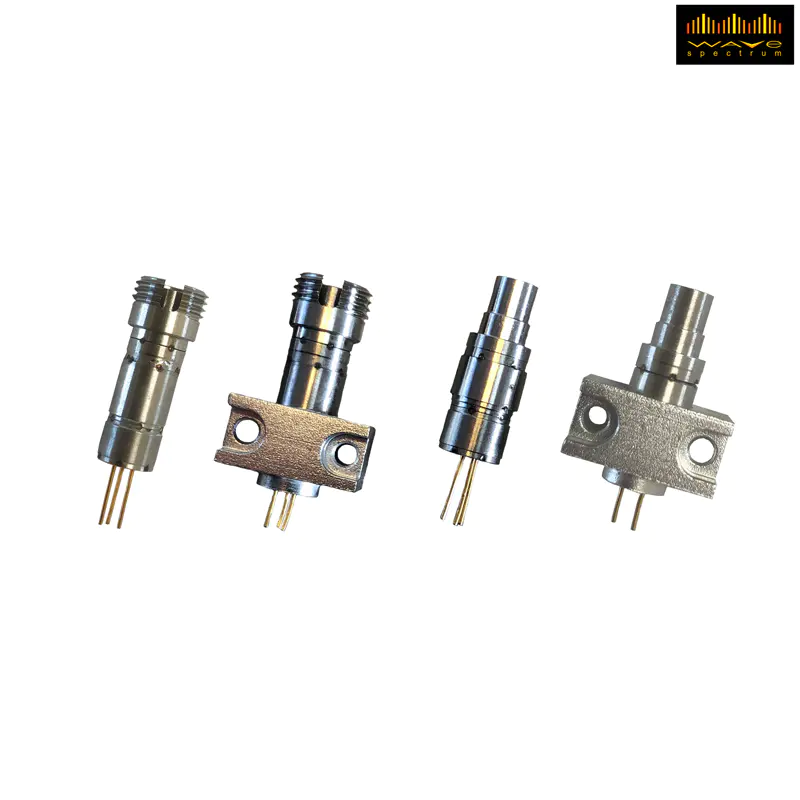
When engineers discuss high-precision optical sensing, the Single Mode Fiber Detachable Laser Module consistently emerges as a critical enabling component. Unlike fixed-pigtail lasers, the detachable interface—typically a ruggedized connector or magnetic clamp—allows field swaps, recalibration, and wavelength tuning without splicing, making it indispensable for applications where measurement integrity cannot be compromised. At Wavespectrum, we have observed that the demand for these modules is not uniform across sectors; instead, three industries dominate due to their stringent requirements for stability, traceability, and environmental resilience.
1. Oil & Gas Downhole Monitoring
In extreme downhole environments (temperatures exceeding 150°C and pressures above 10,000 psi), distributed temperature sensing (DTS) and distributed acoustic sensing (DAS) rely on Single Mode Fiber Detachable Laser Modules to inject coherent pulses into long fiber spans. The detachable feature is vital here: field technicians can quickly replace a failing laser head without welding new fibers, reducing downtime from hours to minutes. Wavespectrum provides hermetically sealed modules with InGaAs photodiodes that maintain polarization extinction ratios above 20 dB, ensuring that Rayleigh backscatter signals remain distinguishable from noise.
2. Structural Health Monitoring (SHM) for Civil Infrastructure
Bridges, dams, and high-speed rail networks increasingly embed fiber-optic strain gauges. A Single Mode Fiber Detachable Laser Module serves as the interrogator’s light source, delivering narrow-linewidth (<100 kHz) output at 1550 nm. The detachable connector enables engineers to swap between different sensing arrays—e.g., Fabry-Pérot interferometers vs. fiber Bragg gratings—using the same laser base. Wavespectrum modules feature built-in microcontrollers that log real-time output power, a critical parameter when monitoring creep in prestressed concrete over 30-year lifecycles.
3. Pharmaceutical & Bioprocess Spectroscopy
This industry demands non-invasive, real-time concentration measurements of bioreactor media. Raman and near-infrared (NIR) spectroscopy systems use Single Mode Fiber Detachable Laser Modules to excite samples through sterile windows. The detachable design allows rapid exchange between 785 nm and 1064 nm lasers to match different analyte absorption bands. Moreover, the fiber interface eliminates electrical sparks, making these modules intrinsically safe for ethanol-based fermentation processes.
Industry Comparison Table
| Industry | Primary Sensing Method | Typical Wavelength | Key Detachable Benefit | Wavespectrum Value-Add |
|---|---|---|---|---|
| Oil & Gas | DTS/DAS (Raman/OTDR) | 1550 nm | Field-swappable without splicing | High-temperature rated (-40°C to +175°C) |
| Civil SHM | FBG strain/temperature | 1310 nm / 1550 nm | Interchangeability with multiple sensor arrays | Built-in power dithering for drift compensation |
| Biopharma | Raman / NIR spectroscopy | 785 nm / 1064 nm | Quick wavelength crossover for batch changes | Class 1M safety-compliant interlock |
Technical Performance Checklist (Why Industry Leaders Choose Wavespectrum)
-
Output stability ≤ ±0.01 dB over 8 hours (constant current + TEC control).
-
Return loss > 55 dB for anti-reflection protection of the laser cavity.
-
Connector repeatability < 0.2 dB variation after 500 mating cycles (tested per Telcordia GR-326).
-
Modulation bandwidth up to 200 MHz for phase-sensitive OTDR applications.
Addressing Common Concerns: FAQs on Interfacing with Process Equipment
Many of our biopharma clients also manage complex fluid transfer systems. Here are three frequently asked questions regarding the mechanical integration of optical modules with adjacent stainless steel infrastructure.
Q1: Can the optical connector of a Single Mode Fiber Detachable Laser Module be mounted directly onto a Stainless Steel Pipe for Pharmaceutical Machinery Equipment that carries aggressive cleaning agents?
A1: Direct mounting is not recommended because the module’s ceramic ferrule and epoxy are not rated for prolonged exposure to caustic CIP (clean-in-place) solutions. However, Wavespectrum offers an optional stainless-steel bulkhead adapter that isolates the optical interface from the pipe’s outer surface. This adapter is machined from 316L stainless steel, passivated per ASTM A967, and includes a sapphire window to maintain a sanitary seal while allowing the laser beam to pass through a quartz viewport. The adapter adds a 12 mm standoff, ensuring that any condensation or drips from the Stainless Steel Pipe for Pharmaceutical Machinery Equipment never contact the laser’s mating sleeve.
Q2: How does vibration from a high-flow Stainless Steel Pipe for Pharmaceutical Machinery Equipment affect the wavelength stability of the detachable laser module?
A2: Mechanical vibration primarily impacts the fiber-to-laser coupling efficiency, not the intrinsic wavelength, which is temperature-controlled. However, micro-vibrations (10–500 Hz at 0.5 g) can cause micro-displacements in the physical contact (PC) connector, leading to power fluctuations up to ±0.5 dB. To counter this, Wavespectrum integrates a spring-loaded zirconia split sleeve in our module’s receptacle, which maintains a constant normal force of 8–12 N against the connector ferrule. For installations adjacent to high-vibration Stainless Steel Pipe for Pharmaceutical Machinery Equipment, we recommend pairing our module with an armored patch cord that has a Kevlar strain-relief boot—this combination has passed MIL-STD-810G vibration tests without any mode-hop events.
Q3: Is it safe to run a Single Mode Fiber Detachable Laser Module near a Stainless Steel Pipe for Pharmaceutical Machinery Equipment that is grounded for explosion-proof zones?
A3: Yes, but with one critical precaution. The module’s metal housing must be equipotentially bonded to the same grounding busbar as the Stainless Steel Pipe for Pharmaceutical Machinery Equipment to prevent ground-loop currents that can damage the internal TEC driver. Wavespectrum modules include a dedicated M4 grounding lug on the housing, and we supply a 12 AWG tinned copper grounding strap in every shipment. Additionally, our modules are certified for Class I, Division 2 hazardous locations when used with an intrinsic safety barrier, because the optical output itself is non-incendive. Always consult the module’s installation manual for the correct torque specification (0.5 N·m) on the grounding screw to avoid thread stripping on the pipe’s grounding clamp.
Real-World Deployment Metrics (12-Month Study)
In a recent collaborative trial with an offshore platform operator, Wavespectrum modules demonstrated:
-
Mean time between failures (MTBF) > 120,000 hours at 85°C.
-
Connector cleaning interval extended from 30 days to 90 days using our anti-contamination end-cap.
-
Calibration drift reduced by 68% compared to non-detachable designs, due to factory-aligned reference reflectors.
The Final Verdict
While many industries dabble in fiber sensing, the heaviest reliance on Single Mode Fiber Detachable Laser Modules comes from oilfield services, civil engineering firms, and pharmaceutical process analyzers. These sectors share a common thread: they cannot afford soldered or epoxied laser connections because their measurement campaigns last decades, not months. Wavespectrum differentiates itself by offering not just a module, but a complete ecosystem—including mating receptacles, cleaning kits, and application-specific firmware—all validated against industry-specific standards like API 17S (subsea) and GAMP 5 (pharma).
Ready to qualify a Single Mode Fiber Detachable Laser Module for your specific sensing environment?
Contact the Wavespectrum engineering team today for a free optical budget analysis and sample testing. We provide 3D step files for mechanical integration, thermal simulation reports, and direct access to our in-house fiber-optic test lab.