Article Summary
Co housing type forgings are important components in industrial equipment where structural strength, dimensional consistency, and long-term operational reliability are essential. Selecting the right forged housing requires more than comparing product dimensions or purchasing prices. Material properties, forging methods, structural design, machining requirements, heat treatment, and quality inspection all influence the final component's performance. This guide explains the key considerations involved in manufacturing and sourcing co housing type forgings, helping engineers, purchasing managers, and industrial buyers make informed decisions. It also explores common manufacturing challenges, application requirements, and the factors that distinguish a dependable forging supplier.
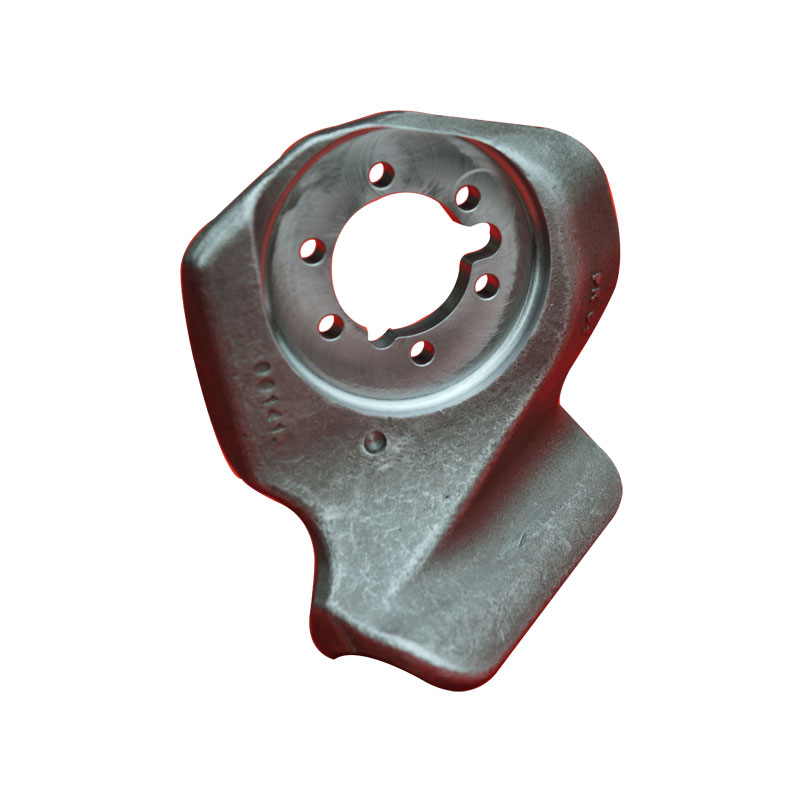
1. Understanding Co Housing Type Forgings
In industrial manufacturing, housing components play an essential role in supporting mechanical assemblies, maintaining structural stability, and protecting important internal parts. Co housing type forgings refer to forged housing components designed for specific mechanical or industrial equipment configurations. Their exact geometry and functional requirements depend on the equipment design, operating conditions, and intended application.
Unlike components manufactured entirely through conventional machining or casting, forged housings are shaped through controlled plastic deformation of metal. This process changes the metal's internal structure and can produce favorable mechanical properties when the forging process is properly designed and controlled.
For manufacturers and industrial buyers, the main objective is to obtain a housing component that meets engineering requirements while maintaining consistent quality across production batches. A well-manufactured forging should provide suitable mechanical strength, reliable dimensions, and sufficient machining allowance for subsequent operations.
Several factors determine the suitability of a co housing type forging:
- Structural integrity: The component must withstand the mechanical loads expected during operation.
- Material characteristics: The selected alloy or steel grade should meet the required strength, toughness, and service conditions.
- Dimensional accuracy: Critical surfaces must support proper assembly and alignment.
- Manufacturing consistency: Production processes should deliver repeatable results across different batches.
- Cost efficiency: Material utilization, machining requirements, and production volume should be considered together.
Understanding these fundamentals helps buyers communicate technical expectations more clearly and avoid costly specification misunderstandings.
2. Why Forged Housings Matter in Industrial Applications
Industrial housing components frequently operate under continuous mechanical stress, vibration, temperature changes, and other demanding conditions. If a housing fails, the consequences may extend beyond the replacement of a single component. Equipment downtime, maintenance expenses, production interruptions, and potential damage to connected assemblies can all increase operating costs.
Forging offers several advantages that make it suitable for applications requiring dependable structural performance.
Improved Mechanical Strength
During forging, metal is plastically deformed under compressive forces. This process can refine the grain structure and influence grain flow according to the component's geometry. When the forging design and process parameters are properly controlled, the resulting component can offer favorable strength and toughness compared with certain alternative manufacturing routes.
Greater Structural Reliability
Forged components are often selected for applications where internal soundness and resistance to mechanical loading are important. Appropriate forging practice can reduce certain types of casting-related defects, although forging quality still depends on material condition, deformation, temperature control, and inspection.
Suitable for Subsequent Machining
Many forged housings require drilling, milling, boring, or precision finishing before assembly. A properly designed forging provides machining allowance in the necessary areas, allowing manufacturers to achieve the required dimensions without removing excessive material.
Long-Term Operational Value
Although forged components may involve higher initial tooling or production costs in some situations, their mechanical performance and manufacturing consistency can make them an economical option over the equipment's service life.
The best manufacturing method is determined by the component's actual service requirements. Forging should be selected based on loading conditions, geometry, material specifications, production volume, and total manufacturing cost rather than strength claims alone.
3. Material Selection for Co Housing Type Forgings
Material selection is one of the most important decisions in producing reliable co housing type forgings. The material influences strength, toughness, machinability, heat treatment response, corrosion resistance, and overall manufacturing cost.
Different applications require different material properties. A housing designed for moderate mechanical loads may not need the same material characteristics as a component operating under high stress or elevated temperatures.
Carbon Steel
Carbon steel is commonly considered for general industrial forging applications. Depending on its carbon content and processing condition, it can provide a practical balance of strength, machinability, availability, and cost.
It is suitable for many mechanical components where extreme corrosion resistance or specialized high-temperature properties are not required.
Alloy Steel
Alloy steels contain additional elements such as chromium, molybdenum, nickel, or other alloying additions. These elements can improve hardenability, strength, toughness, and performance under demanding operating conditions.
Alloy steel may be appropriate when a housing needs to withstand higher mechanical loads or more challenging service environments. The specific grade and heat treatment condition should be selected according to the engineering specification.
Stainless Steel
Stainless steel is considered when corrosion resistance is an important requirement. Its suitability depends on the chemical environment, temperature, mechanical loading, and specific stainless steel grade.
Although stainless steel can offer significant corrosion-related benefits, its material cost and machining characteristics should also be considered during the purchasing process.
Comparing Common Material Options
| Material Type | Main Characteristics | Potential Applications | Key Consideration |
|---|---|---|---|
| Carbon Steel | Practical strength and cost efficiency | General industrial machinery | Corrosion protection may be necessary |
| Alloy Steel | Enhanced strength and hardenability | Heavy-duty mechanical assemblies | Requires suitable heat treatment |
| Stainless Steel | Corrosion resistance | Moisture-exposed or corrosive environments | Grade selection and machining costs |
Buyers should provide the required material grade, applicable standard, and mechanical property requirements before production begins. If the material grade is not finalized, a qualified forging manufacturer can help evaluate suitable alternatives based on the operating conditions.
4. How the Forging Manufacturing Process Works
Producing a dependable forged housing involves several interconnected manufacturing stages. Each stage contributes to the final component's mechanical properties, dimensional quality, and consistency.
Step 1: Engineering Review and Raw Material Preparation
Manufacturing begins with reviewing the component drawing, material requirements, production quantity, and application conditions. The manufacturer then selects suitable raw material and prepares it according to the planned forging process.
Material certificates and incoming inspection records help establish traceability and confirm that the starting material meets the specified requirements.
Step 2: Heating and Temperature Control
For hot forging, the metal is heated to an appropriate temperature range to improve its plasticity. Heating temperature and holding time depend on the material grade, workpiece dimensions, and forging method.
Incorrect heating can cause problems such as excessive oxidation, surface defects, grain growth, or inadequate deformation. Temperature control is therefore an important part of process management.
Step 3: Forging and Shape Formation
The heated workpiece is shaped using suitable dies and forging equipment. The applied force gradually forms the component into its required approximate geometry.
Die design, deformation sequence, material flow, and forging pressure all influence the quality of the finished forging. Complex geometries may require multiple forming stages to achieve a suitable material distribution.
Step 4: Trimming and Heat Treatment
After forging, excess material may be removed through trimming or other finishing operations. Depending on the material and engineering requirements, the component may undergo normalizing, annealing, quenching, tempering, or another specified heat treatment process.
Heat treatment is used to achieve the required mechanical properties and improve the consistency of the material condition. The appropriate process must be established according to the specified grade and application.
Step 5: Machining and Surface Finishing
Forged housings commonly require machining to achieve accurate dimensions and functional surfaces. Operations may include turning, milling, drilling, boring, and grinding.
Critical mounting surfaces, holes, interfaces, and alignment features must be machined according to the approved drawings and tolerances.
Step 6: Final Inspection and Delivery
Before shipment, the finished components are inspected against the relevant technical requirements. Depending on the order specification, inspection may include dimensional checks, visual examination, mechanical testing, and nondestructive testing.
Clear coordination between forging, heat treatment, and machining stages helps prevent dimensional problems, unnecessary material removal, and production delays.
5. Important Design Considerations for Co Housing Type Forgings
A successful forging project begins with a design that considers both functional requirements and manufacturing feasibility. Even a technically sound component drawing may create production difficulties if the geometry is unnecessarily complicated or difficult to forge.
Geometry and Wall Thickness
Housing geometry should provide adequate structural support while avoiding unnecessary material accumulation. Significant differences in section thickness may affect metal flow, cooling behavior, and subsequent heat treatment.
Where possible, gradual transitions between different sections can help improve manufacturability and reduce potential stress concentration areas.
Fillets and Corner Radii
Sharp internal corners can create stress concentration and may complicate metal flow during forging. Appropriate fillet radii and corner transitions should be considered during the design stage.
These details should be coordinated with the forging manufacturer to ensure that the geometry can be produced consistently.
Machining Allowance
Forged components generally require additional material in areas that will undergo machining. The allowance must account for forging tolerances, surface condition, material removal, and the final dimensional requirements.
Too little allowance can result in incomplete machining or rejected parts, while excessive allowance increases raw material consumption, machining time, and overall production costs.
Dimensional Tolerances
Not every surface requires the same level of precision. Functional interfaces, mounting positions, and alignment features may need tighter tolerances than non-critical external surfaces.
Clearly identifying critical dimensions helps manufacturers allocate appropriate machining operations and inspection resources.
Weight and Material Utilization
Reducing unnecessary material can improve production efficiency and lower transportation costs. However, weight reduction should never compromise required structural performance or safety margins.
Engineering evaluation should consider material distribution, loading conditions, and the manufacturing limitations of the selected forging process.
6. Quality Control and Inspection Requirements
Quality control is essential for ensuring that co housing type forgings meet the technical requirements of industrial applications. A component may look acceptable externally while still having dimensional deviations or internal conditions that require further investigation.
A comprehensive inspection plan should be established according to the product drawing, material specification, applicable standards, and customer requirements.
Visual Inspection
Visual inspection helps identify surface cracks, laps, folds, excessive scale, and other visible imperfections. Surface quality should be evaluated against the applicable acceptance criteria rather than subjective appearance alone.
Dimensional Inspection
Measuring tools such as calipers, micrometers, height gauges, and coordinate measuring machines can be used to verify critical dimensions. The inspection method should match the complexity and tolerance requirements of the component.
Mechanical Property Testing
Tensile testing, hardness testing, and impact testing may be required to verify the mechanical properties of the specified material and heat treatment condition.
Testing requirements should be agreed upon before production, including sample location, frequency, applicable standards, and acceptance criteria.
Nondestructive Testing
Depending on the component's criticality, nondestructive testing methods may be used to investigate potential surface or internal discontinuities.
- Ultrasonic Testing (UT): Used to detect and evaluate certain internal discontinuities.
- Magnetic Particle Testing (MT): Used to identify surface and near-surface discontinuities in suitable ferromagnetic materials.
- Liquid Penetrant Testing (PT): Used to reveal surface-breaking discontinuities in suitable nonporous materials.
The appropriate inspection method depends on material properties, component geometry, defect types of concern, and the required acceptance level.
Documentation and Traceability
For industrial buyers, quality documentation provides important evidence that products have been manufactured and inspected according to agreed requirements.
Depending on the order, relevant documents may include:
- Raw material certificates.
- Heat treatment records.
- Dimensional inspection reports.
- Mechanical test results.
- Nondestructive testing reports, where required.
- Product identification and batch traceability records.
Agreeing on documentation requirements before production helps avoid misunderstandings during final acceptance and shipment.
7. Common Manufacturing and Purchasing Challenges
Purchasing forged housing components involves more than finding a manufacturer that can produce a similar shape. Several common problems can affect delivery schedules, product quality, and total procurement costs.
Inconsistent Product Dimensions
Variations in forging conditions, machining setups, or measurement methods can result in dimensional inconsistencies. Buyers should specify critical tolerances and confirm the manufacturer's inspection procedures before placing an order.
Material Substitution Without Approval
Using an alternative material without proper technical approval can change the component's mechanical properties and service performance. Buyers should require material identification and clear documentation for every production batch.
Insufficient Communication About Drawings
Incomplete drawings or unclear technical requirements may lead to incorrect assumptions about dimensions, machining allowances, surface finish, and inspection standards.
Providing complete technical information at the quotation stage can significantly reduce production misunderstandings.
Unexpected Production Costs
A low initial quotation does not always represent the lowest total purchasing cost. Additional machining, special heat treatment, inspection requirements, rework, and transportation can increase the final expense.
Buyers should compare quotations based on the same technical specifications and delivery conditions.
Unreliable Delivery Schedules
Production delays can affect equipment assembly and downstream manufacturing schedules. A supplier should communicate realistic lead times and provide updates when material preparation, tooling, production, or inspection milestones change.
Before confirming an order, review the technical drawing, material grade, inspection requirements, production lead time, packaging method, and delivery terms together. This creates a clearer foundation for successful procurement.
8. Industrial Applications of Forged Housing Components
Co housing type forgings can be considered for various mechanical and industrial equipment applications where a forged housing configuration meets the required structural and manufacturing conditions.
Heavy Machinery
Heavy machinery often operates under repeated loading, vibration, and demanding working conditions. Forged housing components may be used in structural or mechanical assemblies that require dependable strength and dimensional stability.
Automotive and Transportation Equipment
Automotive and transportation systems contain numerous housings and mechanical support components. Forged manufacturing may be suitable for selected parts where strength, fatigue performance, and production consistency are important.
Industrial Power Transmission
Power transmission equipment includes mechanical assemblies that support rotating or load-bearing components. Housing designs must provide suitable alignment, stiffness, and mounting interfaces to maintain proper system operation.
Energy and Industrial Equipment
Energy-related machinery and industrial processing equipment may require components that operate under demanding mechanical or environmental conditions. Material selection and manufacturing controls should reflect the specific service requirements.
Custom Mechanical Assemblies
Specialized machinery frequently requires non-standard components designed around specific equipment configurations. Custom forging provides a manufacturing option for producing these parts when their geometry, material, and production volume justify the process.
For every application, the final component should be evaluated against its actual operating conditions rather than relying on general industry descriptions.
9. How to Evaluate a Co Housing Type Forgings Manufacturer
Choosing a qualified manufacturer is an important step in reducing procurement risks. The right supplier should understand both the forging process and the technical requirements of the finished component.
Evaluate Manufacturing Capabilities
Ask about available forging equipment, material processing capabilities, maximum workpiece dimensions, tooling resources, and production capacity. These factors help determine whether a manufacturer can handle the required component design and order volume.
Review Quality Management Practices
Reliable suppliers should have defined procedures for incoming material inspection, process control, heat treatment, machining, and final inspection. Ask for relevant quality certifications and supporting records when required.
Check Engineering Support
Technical support is particularly important when a project involves custom dimensions, complicated geometry, or special mechanical requirements. A manufacturer that can review drawings and discuss manufacturability may help identify potential problems before production begins.
Compare Quotation Details
When comparing suppliers, make sure that all quotations cover equivalent specifications. Differences in material grades, machining scope, testing requirements, packaging, and delivery conditions can make direct price comparisons misleading.
| Evaluation Factor | Questions to Ask | Why It Matters |
|---|---|---|
| Manufacturing Capability | Can the supplier manufacture the required geometry and dimensions? | Confirms production suitability |
| Material Control | Can material grades and certificates be verified? | Supports material consistency |
| Quality Inspection | Are dimensional and mechanical tests available? | Reduces acceptance risks |
| Engineering Support | Can the supplier review drawings and technical requirements? | Improves design coordination |
| Delivery Management | Can the supplier provide a realistic production schedule? | Supports project planning |
| Cost Transparency | Are tooling, machining, testing, and packaging costs clear? | Helps control total procurement costs |
For international buyers, communication efficiency is also important. Clear technical responses, timely quotation updates, and complete production documentation can make long-term supplier cooperation much easier.
10. The Value of Custom Forging Solutions
Standard components may not always match the dimensions or performance requirements of specialized equipment. In these situations, custom forging can provide greater flexibility in material selection, component geometry, and production planning.
Custom co housing type forgings can be developed around specific engineering drawings and application requirements. Instead of modifying an existing standard part to fit an unsuitable assembly, buyers can work with a manufacturer to evaluate a component designed for the intended equipment.
What Information Should Buyers Provide?
To obtain an accurate quotation and manufacturing assessment, prepare the following information:
- 2D engineering drawings or 3D CAD files.
- Required material grade and applicable standards.
- Overall dimensions and critical tolerances.
- Expected mechanical properties and heat treatment requirements.
- Machining and surface finishing specifications.
- Required inspection methods and documentation.
- Estimated order quantity and annual demand.
- Expected delivery schedule and packaging requirements.
Prototype Development and Batch Production
For new projects, prototype development can help verify the manufacturing approach and confirm whether the component meets the required dimensions and functional specifications.
After the prototype is approved, production planning can focus on process repeatability, tooling efficiency, inspection procedures, and batch consistency.
Manufacturers should also consider whether the expected production volume supports dedicated tooling investment. This evaluation helps buyers balance initial development costs against long-term unit pricing.
11. Maintenance and Service Life Considerations
Even a well-manufactured forged housing requires suitable operating conditions and maintenance practices to achieve its expected service life.
Regular inspection can help identify potential problems before they affect the complete equipment assembly.
Important maintenance considerations include:
- Check for visible damage: Inspect accessible surfaces for cracks, deformation, corrosion, or other signs of deterioration.
- Monitor vibration: Unexpected vibration may indicate alignment issues, loosened connections, or problems in related mechanical components.
- Verify mounting conditions: Incorrect installation or excessive tightening can create additional stresses.
- Maintain corrosion protection: Apply suitable coatings or protective measures according to the working environment and material specification.
- Follow equipment maintenance schedules: Inspection intervals should reflect actual operating conditions and manufacturer recommendations.
If damage or abnormal deformation is discovered, the component should be evaluated by qualified personnel before the equipment returns to service. Repair or replacement decisions should follow the applicable engineering and safety requirements.
12. Frequently Asked Questions About Co Housing Type Forgings
Q1: What are co housing type forgings?
Co housing type forgings are forged metal housing components designed for particular mechanical or industrial equipment configurations. Their dimensions, material requirements, and functional characteristics depend on the intended assembly and engineering specifications.
Q2: What are the main advantages of forged housing components?
Forged housing components can offer favorable mechanical strength, controlled material flow, and good structural reliability. They are suitable for applications where load-bearing performance and manufacturing consistency are important.
Q3: Which materials are commonly considered for housing forgings?
Carbon steel, alloy steel, and stainless steel are potential material options. The appropriate choice depends on mechanical loading, corrosion exposure, operating temperature, required mechanical properties, and applicable standards.
Q4: Are custom co housing type forgings available?
Custom manufacturing may be available depending on the supplier's equipment, tooling, engineering capabilities, and production capacity. Buyers should provide drawings, material specifications, tolerances, and estimated quantities for evaluation.
Q5: What information is needed to request a quotation?
Buyers should provide component drawings, material grades, dimensions, tolerances, heat treatment requirements, machining specifications, inspection requirements, order quantities, and delivery expectations.
Q6: How is the quality of forged housing components inspected?
Quality inspection may include visual examination, dimensional measurement, mechanical property testing, and nondestructive testing. The specific inspection plan should be agreed upon according to the component's technical requirements.
Q7: What is the difference between forged and cast housing components?
Forging shapes metal through plastic deformation, while casting involves pouring molten metal into a mold. Forging can provide favorable grain flow and mechanical properties for suitable geometries, whereas casting may offer greater flexibility for certain complex shapes. The best choice depends on component design, material, performance requirements, and production economics.
Q8: Does forging require additional machining?
Many forged housings require subsequent machining to achieve precise dimensions, mounting features, holes, and functional surfaces. The amount of machining depends on the component design and the required finished tolerances.
Q9: How can buyers reduce the purchasing cost of forged housings?
Buyers can improve cost efficiency by optimizing component geometry, selecting appropriate materials, defining realistic tolerances, reducing unnecessary machining, and coordinating production quantities with the supplier. Comparing complete quotations is more useful than focusing only on the initial unit price.
Q10: What should buyers consider when selecting a forging supplier?
Important factors include manufacturing capacity, material traceability, process control, machining capabilities, inspection resources, engineering support, delivery reliability, and communication efficiency.
13. Conclusion: Making the Right Choice for Co Housing Type Forgings
Selecting suitable co housing type forgings requires a comprehensive understanding of material properties, forging processes, component geometry, machining requirements, and quality inspection standards. Every decision, from raw material preparation to final dimensional verification, can influence the reliability and manufacturing cost of the finished component.
For industrial buyers, the most effective approach is to establish clear technical specifications, evaluate supplier capabilities, and consider the complete production process rather than comparing quotations based on price alone.
Yidu Tongxin Precision Forging Co.,Ltd. focuses on precision forging manufacturing and understands the importance of coordinating material selection, production processes, and customer requirements. For buyers seeking dependable forging manufacturing cooperation, clear technical communication and careful project evaluation are important starting points.
Looking for a Reliable Forging Manufacturing Partner?
Have a project involving co housing type forgings or other custom forged components? Share your drawings, material specifications, and production requirements with our team.
Yidu Tongxin Precision Forging Co.,Ltd. is ready to discuss your project requirements and explore suitable manufacturing solutions for your industrial applications.
Contact us today to discuss your forging project, request a quotation, and learn more about our manufacturing capabilities.
Contact Us