Which common machinery uses rely on Stud Type Track Rollers for linear guidance
2026-11-27
Mechanical designers and maintenance engineers choose compact, easy-to-mount rolling components for smooth, repeatable linear motion under radial loads. BMT supplies precision Stud Type Track Rollers with threaded stud mounting and crowned outer rings, built to run directly along straight rails and cam profiles without complex housings. Their simple bolt-on structure makes them a popular linear guidance solution for automated production, logistics and processing equipment across many industrial sectors.
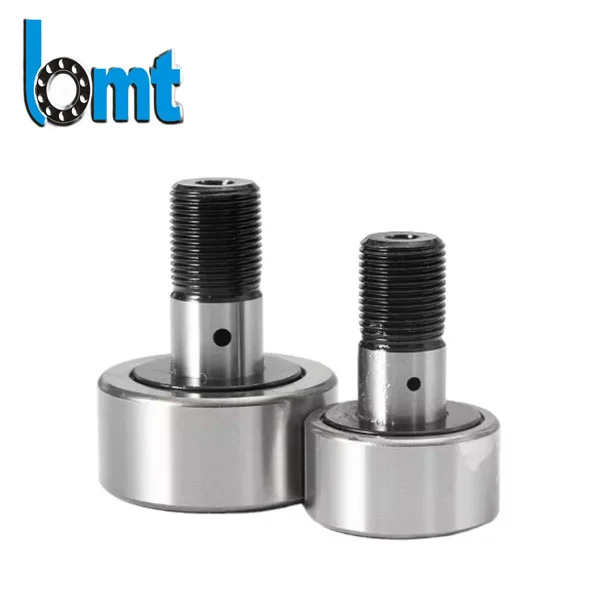
Typical Machinery Application Table
| Equipment Category | Core Guidance Function | Key Advantage of Stud Type Track Rollers |
|---|---|---|
| Packaging & Labeling Machinery | Guide reciprocating pushers, sealing heads and transfer slides | Compact footprint, works well in tight machine frames |
| Automated Warehouse Stackers & Telescopic Forks | Support fork extension rails and cargo shuttle movement | High radial load capacity, adjustable eccentric stud options |
| Conveyor & Material Handling Systems | Side guiding for pallets, boxes and transfer trolleys | Resists continuous impact and dust on production lines |
| Cam-Driven Indexing Machines | Follow cam tracks to control timed positioning cycles | Stable tracking for high-frequency intermittent motion |
| Textile Processing Equipment | Guide yarn carriages and fabric feeding assemblies | Consistent low-friction movement for long-running cycles |
Premium Stud Type Track Rollers from BMT adopt double rubber seals and integrated grease nipples for relubrication, extending service life in dusty factory environments.
Practical Application Notes
- Crowned outer ring designs compensate for minor track misalignment and reduce edge wear.
- Eccentric stud variants allow fine clearance adjustment between roller and guide rail.
- Avoid heavy axial loads; these rollers are optimized primarily for radial contact.
- Regular greasing is critical for equipment running 24 hours per day.
Stud Type Track Rollers FAQ
Q: Can Stud Type Track Rollers replace linear ball bearings on long linear guide rails? A: They can serve this purpose, but they are not a universal replacement. Stud Type Track Rollers excel when the roller directly contacts a simple flat or profiled steel track, ideal for medium-precision, heavy-load or dirty environments. Linear ball bearings are better for ultra-tight tolerance motion on precision profile rails.
Q: Are sealed Stud Type Track Rollers suitable for outdoor construction machinery guidance? A: Sealed versions offer basic protection from dust and splash water, but they are not fully waterproof for heavy mud exposure. For construction sites, select heavy-duty sealed models and schedule frequent lubrication and inspection. Harsh muddy conditions often require additional protective guards around the roller assembly.
Q: What is the difference between Stud Type Track Rollers and yoke type track rollers for linear guidance? A: Stud Type Track Rollers use a threaded stud for direct mounting, which saves installation space and simplifies alignment. Yoke type rollers require a separate bolt passing through the bore, better for applications with higher axial load. Most linear guidance tasks on simple rails prefer stud-type for faster assembly.
Final Note
Stud Type Track Rollers deliver reliable linear guidance for a wide range of automated and material-handling machinery, balancing load capacity, installation convenience and cost. BMT provides standard and custom-sized Stud Type Track Rollers, including eccentric stud and special surface treatment options for corrosive or high-wear workshops. Contact us today to share your machine load, speed and track layout, and our bearing engineering team will recommend the right model and provide a formal quotation.