Industrial Hose Connection Guide
Article Summary: Choosing the right Claw Coupling European Type is essential for maintaining secure hose connections, reducing compressed-air leakage, and simplifying industrial maintenance. Buyers must consider coupling dimensions, thread compatibility, material, surface finish, pressure ratings, sealing performance, and operating conditions before placing an order. This guide explains how European-type claw couplings work, where they are used, how to select the correct configuration, and how to avoid common purchasing and installation mistakes. It also outlines the information industrial distributors, equipment manufacturers, and maintenance teams should prepare when sourcing couplings from Beideli.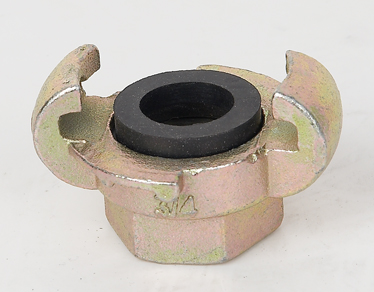
01 / The Fundamentals
Why European-Type Claw Couplings Matter in Industrial Hose Systems
In industrial environments, a hose connection is a small component with a significant responsibility. A loose connection can interrupt compressed-air delivery, reduce equipment efficiency, create unexpected maintenance work, and expose workers to avoidable hazards. When several machines share a compressed-air network, an unreliable coupling can affect more than one workstation.
The Claw Coupling European Type is a mechanical hose connection designed for applications such as compressed air and, where the specifications permit, water service. Its claw-style connection allows compatible coupling halves to be connected quickly without relying on a conventional threaded joint between the two coupling heads.
For maintenance departments, this design can simplify hose changes and routine equipment servicing. For distributors and industrial buyers, a standardized coupling configuration can help streamline replacement-parts management, provided the connection pattern, dimensions, and operating limits are verified.
European-type claw couplings are available in different configurations, including hose ends, threaded ends, and blanking ends. Beideli lists carbon-steel construction with zinc-plated finishes and indicates that brass and stainless-steel options are also available. Actual availability should be confirmed against the required product specification.
02 / Operating Principle
How Does a European-Type Claw Coupling Work?
A claw coupling uses matching projections on two coupling halves to create a mechanical connection. The operator aligns the claws, brings the halves together, and rotates them as required by the specific design. A sealing washer or gasket helps prevent fluid or compressed-air leakage at the mating interface.
The coupling's apparent simplicity should not be mistaken for universal compatibility. Similar-looking claw couplings may follow different dimensional patterns. A coupling that appears to fit another product may fail to engage correctly, compress its seal properly, or remain securely connected during operation.
The connection process
- Inspect: Check both coupling halves for cracks, deformation, damaged claws, contamination, and worn sealing surfaces.
- Align: Position the compatible claws and sealing faces correctly.
- Engage: Bring the halves together and rotate them according to the manufacturer's instructions.
- Secure: Install any specified locking pin or secondary retention device when the design requires one.
- Verify: Check the assembled connection and perform an appropriate leak and functional test before returning the system to service.
Always depressurize the system before connecting, disconnecting, or servicing a coupling. Never use hand pressure or an improvised tool to force incompatible parts together.
03 / Design Details
Key Components and Design Features That Affect Reliability
1. Claw engagement geometry
The claw arrangement determines whether two compatible halves can engage properly. Buyers should verify the relevant claw dimensions and connection pattern instead of relying only on descriptions such as European type or universal coupling.
2. Sealing washer
The seal provides the sealing interface between the coupling halves. A missing, hardened, cracked, or incorrectly sized washer can cause leakage even when the mechanical connection appears secure. Seal material must also be compatible with the conveyed medium and operating temperature.
3. Hose-tail connection
A hose-tail configuration connects the coupling to a flexible hose. The hose's inside diameter, outside diameter, construction, and pressure rating should be considered when selecting the fitting and its retention method. A nominal hose size alone does not guarantee a secure assembly.
4. Threaded connection
Threaded configurations connect the coupling to machinery, manifolds, valves, or other piping components. Beideli lists R-thread and G-thread options. Buyers should identify the exact thread standard and size required, because tapered and parallel threads are not automatically interchangeable.
5. Protective collar and retention features
Some configurations incorporate a collar or provisions for an additional safety device. These features may help support the hose connection or reduce the risk of accidental separation when used as intended. Their presence does not eliminate the need to follow the manufacturer's assembly and safety instructions.
04 / Material Selection
Which Materials and Surface Finishes Suit Your Operating Environment?
Material selection influences corrosion resistance, mechanical durability, service life, and total maintenance cost. The best choice depends on the working environment, the conveyed medium, cleaning procedures, and the required service conditions.
| Material or Finish | Potential Advantages | Important Considerations |
|---|---|---|
| Carbon steel | Practical mechanical strength and broad industrial use | Corrosion protection and environmental exposure must be considered. |
| Zinc-plated carbon steel | Protective surface finish for many general industrial environments | Coating condition, moisture exposure, and chemical contact affect service life. |
| Brass | Useful for certain applications requiring a non-ferrous fitting material | Confirm pressure, media, temperature, and mechanical compatibility. |
| Stainless steel | Potentially improved corrosion resistance for demanding environments | Grade selection and actual chemical exposure determine suitability. |
Beideli identifies carbon steel as a standard material and lists brass and stainless steel as additional options. Confirm the exact material grade, manufacturing specification, and surface treatment for the model being quoted.
Do not overlook the seal
The coupling body and sealing washer perform different functions. Even a corrosion-resistant body cannot compensate for an incompatible gasket. Ask the supplier to identify the seal material and its suitable temperature and media range. If the system handles oils, cleaning chemicals, or other substances beyond ordinary compressed air and water, obtain explicit compatibility confirmation.
05 / Application Guide
Where Are European-Type Claw Couplings Commonly Used?
When the product specification and operating conditions are suitable, European-type claw couplings can support a range of industrial hose connection tasks.
- Compressed-air distribution: Connecting compatible air hoses to equipment and distribution points.
- Manufacturing workshops: Supplying air to pneumatic tools and machinery through suitable hose assemblies.
- Equipment maintenance: Replacing damaged hoses or fittings during planned maintenance.
- Construction and repair operations: Connecting approved air hoses for compatible equipment.
- Industrial water service: Supporting water transfer where the coupling materials, seals, pressure rating, and application are approved.
- Equipment manufacturing and distribution: Providing hose-end and threaded connection components for specified systems.
Application suitability must be established for the complete assembly. A coupling advertised for air and water should not automatically be used with steam, hazardous chemicals, combustible gases, or other unapproved media. Confirm the manufacturer's restrictions before selecting a product for any specialized service.
06 / Purchasing Guide
How to Select the Correct Claw Coupling European Type
For procurement teams, choosing the correct coupling is a process of matching technical requirements with the intended installation. The following steps help reduce incorrect orders, compatibility problems, and avoidable returns.
Step 1: Confirm the connection standard
Identify the required European-type claw pattern and verify its dimensions against the mating component. Do not assume that all two-claw or four-claw fittings are interchangeable based on appearance.
Step 2: Identify the connection end
Determine whether the installation requires a hose-tail end, male thread, female thread, or blanking end. For threaded connections, specify the thread standard and size. Beideli lists male and female BSP-thread configurations as well as hose-end options.
Step 3: Match the hose dimensions
Record the hose's nominal inside diameter and relevant outside diameter. Check the fitting's dimensions and the manufacturer's instructions for the required clamp, ferrule, or other retention method. The hose material and construction should also be suitable for the operating conditions.
Step 4: Establish the operating limits
Confirm maximum working pressure, temperature range, and any pressure fluctuations or mechanical loads. The allowable operating pressure of the complete hose assembly is governed by its components and configuration, not simply the highest rating printed on one fitting.
Step 5: Evaluate material and corrosion exposure
Consider indoor or outdoor installation, humidity, washdown, corrosive substances, and cleaning agents. Select the body material and surface finish based on actual exposure rather than appearance or initial purchase price alone.
Step 6: Verify the sealing arrangement
Check that the correct washer or seal is included and compatible with the service medium. Confirm replacement availability if the coupling will be used frequently or maintained over a long service period.
Step 7: Request technical confirmation
Provide the supplier with the required connection type, size, thread, material, working pressure, temperature, medium, quantity, and relevant drawings or reference samples. This information helps reduce uncertainty before the order is finalized.
07 / Configuration Overview
European-Type Claw Coupling Configurations Compared
Different end configurations solve different connection problems. Use the following table as a preliminary purchasing guide, then confirm the exact dimensions and availability for your application.
| Configuration | Typical Purpose | Key Checks Before Ordering |
|---|---|---|
| Hose-tail end | Connecting a compatible flexible hose | Hose diameter, retention method, material, and pressure rating |
| Hose-tail end with collar | Hose connection using the specified collar-style configuration | Hose dimensions, collar geometry, and compatible securing components |
| Male threaded end | Connecting to a compatible female threaded port | Thread standard, nominal size, sealing method, and port specification |
| Female threaded end | Connecting to a compatible male threaded component | Thread type, port dimensions, and sealing requirements |
| Blanking end | Closing a compatible connection when the system design permits | Connection pattern, seal condition, pressure rating, and retention |
Nominal sizes and configuration availability
Beideli's product listing identifies sizes ranging from 1/4 inch to 2 inches for certain male-thread, female-thread, and hose-end configurations. Hose-end options with collars and blanking ends have their own listed size ranges. These ranges are configuration-specific, so buyers should confirm the exact size and product drawing before ordering.
Similarly, a published pressure rating applies only under its stated conditions. Beideli lists a rating of 150 PSI at an ambient temperature of 70°F for its European-type universal coupling product. Do not treat that figure as a blanket rating for every size, material, seal, or assembled hose system. Obtain confirmation for the exact model and application.
08 / Avoidable Problems
Common Purchasing and Installation Mistakes That Cause Downtime
Assuming similar couplings are interchangeable
Different coupling patterns can have similar external appearances but incompatible engagement dimensions. Verify the mating geometry and relevant product standard before purchasing replacement fittings.
Ordering by nominal size alone
A 1/2-inch connection description does not identify every necessary dimension. The hose size, thread type, coupling pattern, and end configuration must all match the intended installation.
Ignoring thread differences
Threaded fittings can appear compatible even when their thread forms differ. Confirm whether the connection requires a specified tapered or parallel thread and follow the applicable sealing method.
Choosing only by price
A low initial cost may be offset by leakage, corrosion, repeated replacements, or unplanned downtime. Evaluate dimensional consistency, material documentation, sealing components, and supplier support alongside unit price.
Reusing damaged seals
Flattened, brittle, cut, or distorted washers may not seal reliably. Inspect sealing components during maintenance and replace them when their condition or the manufacturer's instructions require it.
Exceeding operating limits
Using a coupling beyond its approved pressure or temperature range can result in leakage or mechanical failure. Verify the rating of the assembled system and account for operating fluctuations.
Disconnecting a pressurized hose
Residual pressure can cause sudden hose movement and injury. Isolate the supply, release pressure safely, and follow the equipment's lockout and maintenance procedures before disconnection.
09 / Maintenance Checklist
Installation and Maintenance Practices for Longer Service Life
Correct installation and regular inspection help maintain reliable hose connections. Establish a maintenance schedule based on operating frequency, environmental conditions, manufacturer instructions, and the consequences of connection failure.
Before installation
- Verify the coupling type, size, thread, and mating connection.
- Inspect the body and claws for damage, corrosion, or deformation.
- Check the seal for correct size, cleanliness, and condition.
- Confirm that the hose and retention components are suitable for the service.
- Ensure the equipment is isolated and depressurized where required.
During installation
- Follow the manufacturer's instructions for hose attachment and retention.
- Engage compatible coupling halves correctly without forcing them together.
- Fit specified locking or safety devices where required.
- Avoid excessive bending, twisting, or tension at the hose connection.
- Use only approved tools and sealing methods for threaded connections.
During routine inspections
- Look for air or water leakage, loose fittings, and abnormal movement.
- Check for corrosion, damaged claws, and worn sealing faces.
- Inspect the hose near the fitting for cracking, bulging, or abrasion.
- Replace worn seals and damaged components with compatible parts.
- Record recurring failures to identify pressure, vibration, or compatibility issues.
10 / For B2B Buyers
What Should Industrial Buyers Confirm Before Placing a Bulk Order?
For importers, wholesalers, distributors, and OEM purchasing teams, the right supplier should be able to clarify product specifications before production or shipment. A structured inquiry also makes quotations easier to compare across suppliers.
Recommended purchasing information
| Information to Provide | Why It Matters |
|---|---|
| Product type or reference drawing | Helps establish the correct coupling pattern and geometry. |
| Size and end configuration | Prevents mismatches between hose, equipment, and fitting. |
| Thread standard and size | Ensures compatibility with the existing threaded port. |
| Material and finish | Supports durability and corrosion-resistance requirements. |
| Working pressure and temperature | Allows the supplier to check application suitability. |
| Operating medium | Helps establish body and seal compatibility. |
| Quantity and delivery destination | Supports quotation preparation and shipment planning. |
| Inspection or documentation requirements | Clarifies the evidence needed for incoming quality control. |
Before approving a bulk order, request a written quotation identifying the selected model, material, surface finish, included seal, applicable pressure rating, packaging, and delivery terms. Where dimensional interchangeability is essential, request drawings or a sample for verification.
For recurring purchases, agree on the product identification method and the process for communicating specification changes. Clear documentation helps purchasing, warehouse, quality, and maintenance teams work from the same requirements.
11 / Supplier Information
Sourcing European-Type Claw Couplings from Beideli
Beideli, operated by Cixi Beideli Pipe Fitting Co., Ltd., supplies industrial coupling and hose-fitting products for business customers. Its European-type claw coupling range includes several connection configurations designed to support different hose and equipment interfaces.
According to the company's product information, the European-type coupling range includes carbon-steel products with zinc-plated finishes, with brass and stainless-steel options also listed. The available configurations include male and female threaded ends, hose ends, and blanking ends. R and G thread options are identified in the product description.
For international buyers, the most effective way to begin a sourcing inquiry is to provide a clear specification rather than request a quotation based only on the product name. Include your intended application, size, connection type, thread requirements, operating pressure, material preference, and estimated order quantity.
Beideli's team can then be asked to confirm the applicable model, available specifications, sample arrangements, and quotation details. Final product selection should always be based on verified technical information and the operating requirements of the complete assembly.
Explore the Beideli Claw Coupling European Type product page for product information, or visit the Beideli company profile to learn more about the supplier.
12 / Frequently Asked Questions
Frequently Asked Questions About Claw Coupling European Type
1. What is a Claw Coupling European Type?
It is a claw-style hose coupling configuration used for compatible industrial applications, particularly compressed air and approved water service. Matching claws connect the coupling halves, while a sealing component helps prevent leakage.
2. Which applications are suitable for European-type claw couplings?
Typical applications include compressed-air distribution, pneumatic equipment, industrial maintenance, and compatible water-transfer systems. The specific product must be approved for the medium, pressure, temperature, and working environment.
3. Are European-type claw couplings compatible with every claw coupling?
No. Couplings with similar appearances may use different dimensions or connection patterns. Verify the exact standard, claw geometry, and mating dimensions before connecting components from different manufacturers or product families.
4. Which materials are available from Beideli?
Beideli lists carbon steel with a zinc-plated finish as a standard option and identifies brass and stainless steel as additional material choices. Confirm the material grade, finish, and availability for the specific model.
5. Which thread types can buyers request?
The product page identifies R-thread and G-thread options. Male and female threaded configurations are listed. Buyers should specify the exact thread standard, size, and required sealing method when requesting a quotation.
6. What is the working pressure of a European-type claw coupling?
Beideli lists a rating of 150 PSI at an ambient temperature of 70°F for its European-type universal coupling product. This value should not be assumed to apply to every configuration. Confirm the rating and operating limits of the exact coupling and complete hose assembly before use.
7. Can these couplings be used for steam or chemical transfer?
Do not assume they are suitable. Beideli identifies the product for air and water service. Steam and chemical applications require explicit confirmation of the coupling design, body material, seals, temperature limits, pressure rating, and manufacturer approval.
8. How can buyers reduce the risk of air leakage?
Select compatible coupling halves, use the correct seal, attach the hose according to the manufacturer's instructions, and inspect the assembled connection before use. Replace damaged seals and components instead of repeatedly adjusting a defective connection.
9. What information is needed for a wholesale quotation?
Provide the coupling type, nominal size, end configuration, thread standard, material, surface finish, working pressure, operating temperature, medium, quantity, destination, and any inspection or documentation requirements. A drawing or reference sample can further improve accuracy.
10. How should European-type claw couplings be maintained?
Inspect the claws, seals, hose attachment, and threaded interfaces at suitable intervals. Check for leakage, corrosion, deformation, and hose deterioration. Follow the manufacturer's maintenance instructions and depressurize the system before servicing.
11. Are samples available before bulk purchasing?
Beideli's product listing mentions free samples. Buyers should contact the company to confirm sample eligibility, available models, shipping arrangements, and any applicable conditions before placing an order.
12. How can I verify the correct coupling before ordering?
Compare the manufacturer's drawing, dimensions, thread details, material, and pressure rating against your installation requirements. When compatibility is uncertain, request technical confirmation or a sample for evaluation before approving a larger order.
Your Industrial Coupling Partner
Need a Reliable Claw Coupling European Type Supplier?
The right hose coupling helps your equipment operate reliably, simplifies maintenance, and reduces the risk of costly connection problems. Whether you are sourcing replacement fittings, building an industrial hose assembly, or planning a wholesale purchase, confirming the specifications first is the best way to move forward.
Contact Beideli to discuss your European-type claw coupling requirements, request product details, and obtain a quotation for your application.
Visit the Claw Coupling European Type product page or contact us to discuss your requirements with the Beideli team.