When Should You Choose an Internal Coolant Multi-Function Indexable Boring Bar Over a Standard Boring Bar
2026-10-29
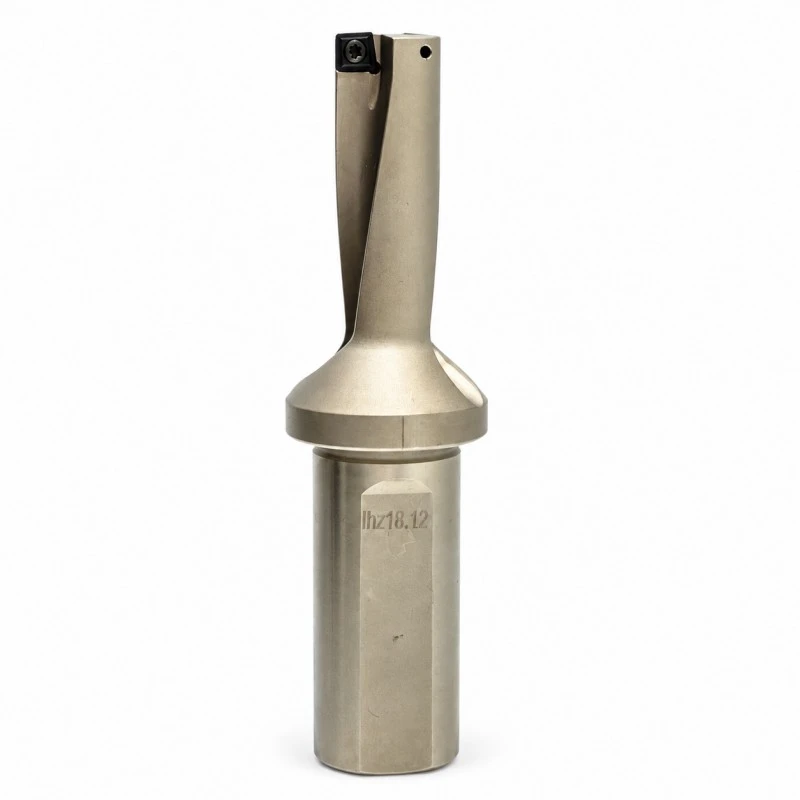
In modern CNC turning and boring operations, tool selection directly affects cycle time, bore quality, and tool life. An Internal Coolant Multi-Function Indexable Boring Bar from RONGKE combines through-tool coolant delivery with interchangeable boring, chamfering, and facing capability in a single platform. A standard boring bar, by contrast, relies on external coolant and a single fixed function. Understanding where these two solutions diverge helps shops make defensible purchasing decisions rather than defaulting to the lowest unit price.
The Core Difference: Coolant Delivery and Functional Range
The defining advantage of an Internal Coolant Multi-Function Indexable Boring Bar is that coolant exits directly at the cutting edge, not from a nozzle positioned above the workpiece. This distinction matters most in deep bores, small diameters, and materials prone to built-up edge formation.
| Performance Factor | Standard Boring Bar | Internal Coolant Multi-Function Indexable Boring Bar |
|---|---|---|
| Coolant delivery | External flood or mist | Through-tool, directed at cutting edge |
| Chip evacuation in deep bores | Limited; chips recirculate | Strong; coolant pressure flushes chips |
| Functional operations | Boring only | Boring, chamfering, facing, back-boring |
| Tool changes per part | Multiple | Reduced through multi-function inserts |
| Thermal control at cutting zone | Inconsistent | Consistent and repeatable |
| Suitability for small-diameter bores | Moderate | High |
| Initial tooling cost | Lower | Higher, offset by cycle time gains |
When the Internal Coolant Multi-Function Indexable Boring Bar Is the Right Choice
Choose the Internal Coolant Multi-Function Indexable Boring Bar when one or more of the following conditions apply:
-
Bore depth exceeds 3× diameter. Through-tool coolant prevents chip packing and reduces the risk of insert fracture.
-
Bore diameter is small (below 20 mm). External coolant rarely reaches the cutting zone effectively at these sizes.
-
The part requires boring plus chamfering or facing. A multi-function platform eliminates a second tool and an additional tool change.
-
Workpiece material is gummy or heat-resistant. Stainless steel, Inconel, and titanium benefit from directed coolant that controls heat at the edge.
-
Cycle time is the dominant cost driver. Reduced tool changes and higher cutting parameters typically offset the higher initial price within weeks.
-
Surface finish and dimensional repeatability are critical. Stable thermal conditions at the cutting edge translate into tighter bore tolerance.
When a Standard Boring Bar Remains the Practical Choice
A standard boring bar is still appropriate for shallow bores, large-diameter work, low-volume jobs, and operations where external coolant access is unobstructed. Shops running simple through-bores in free-machining steel should not assume the multi-function platform is automatically justified.
FAQ: Internal Coolant Multi-Function Indexable Boring Bar
Q: Can an Internal Coolant Multi-Function Indexable Boring Bar run on a machine without through-spindle coolant?
A: Yes. RONGKE offers variants compatible with external coolant supply routed through a tool holder adapter, though through-spindle coolant delivers the full performance benefit; shops should confirm pump pressure and flow before specifying the tool.
Q: How much coolant pressure does an Internal Coolant Multi-Function Indexable Boring Bar require?
A: Most applications perform well at 20–70 bar, with deep or small-diameter bores favoring the higher end; insufficient pressure causes chip recirculation and defeats the purpose of internal delivery.
Q: Is an Internal Coolant Multi-Function Indexable Boring Bar compatible with existing CNC lathes and insert grades?
A: It mounts on standard turret interfaces and accepts industry-standard insert geometries, so integration requires no machine modification; RONGKE provides dimensional drawings and application support to confirm fit before purchase.
Conclusion and Next Step
Selecting between these two tool types is a question of application economics, not general superiority. Where bore depth, material difficulty, or multi-operation requirements dominate, the Internal Coolant Multi-Function Indexable Boring Bar delivers measurable gains in chip control, tool life, and cycle time.
Contact us at RONGKE today to discuss your boring application, request dimensional drawings, or obtain a tooling recommendation tailored to your workpiece material and machine specifications.