When Should Buyers Choose Stainless Steel Self Drilling Screws Over Carbon Steel Options?
2026-11-20
Choosing between stainless steel and carbon steel Self Drilling Screws requires more than comparing purchase prices. Buyers need to assess exposure to moisture, airborne contaminants, chemicals, dissimilar metals and the mechanical demands of the connection. Stainless steel can provide better long-term corrosion resistance in demanding environments, while hardened carbon steel often offers stronger drilling performance and a lower initial cost. The right specification depends on the substrate, installation method and expected service conditions.
When Does the Operating Environment Justify Stainless Steel Fasteners?
Corrosion exposure is usually the first factor to assess. Carbon steel is susceptible to oxidation when moisture and oxygen reach its surface. Zinc plating and other protective coatings can slow this process, but their effectiveness depends on coating type, thickness, surface preparation, installation damage and the surrounding atmosphere. Once a protective layer is damaged, the exposed steel may begin to corrode.
Stainless steel obtains much of its corrosion resistance from chromium, which forms a thin passive oxide layer on the surface. If the surface is scratched under suitable conditions, this layer can reform. This makes stainless steel a practical choice for many exposed assemblies where routine coating maintenance or early replacement would be difficult.
Buyers should consider stainless steel for applications involving frequent condensation, persistent humidity, coastal air, outdoor exposure or regular cleaning. Examples include exterior metal cladding, window and door assemblies, selected photovoltaic structures, infrastructure components and equipment installed in damp industrial buildings. However, stainless steel is not immune to corrosion. Chloride deposits, chemical concentration, temperature and crevice conditions can still cause pitting or other forms of localized attack.
For less demanding environments, coated carbon steel may remain a sensible option. Dry indoor framing, enclosed equipment housings and general sheet metal fabrication often do not require the additional corrosion resistance of stainless steel. A properly specified coating can provide adequate protection without increasing the fastener budget unnecessarily.
Jiaxing Join Fasteners Co., Ltd. lists stainless steel Phillips pan head products as part of its screw range. Buyers evaluating this option should match the material grade to the actual exposure category rather than treating all stainless steel grades as interchangeable.
How Do Stainless Steel and Carbon Steel Compare in Drilling Performance?
Corrosion resistance is only one side of the decision. A self-drilling fastener must penetrate the substrate, form or engage threads and clamp the connected components without damaging the joint. Drill point hardness, screw geometry, substrate thickness, rotational speed and applied pressure all influence installation performance.
Hardened carbon steel is widely used for self-drilling applications because its heat-treated drill point can provide the hardness needed to penetrate steel sections. Depending on the design, carbon steel screws may be available with different drill point capacities for light-gauge or heavier steel. Buyers should never assume that a longer screw can drill through a thicker substrate. The point designation and the manufacturer's stated drilling capacity are more relevant.
Austenitic stainless steel, including common 18-8 grades, presents a different engineering challenge. It is generally not hardened through conventional heat treatment in the same way as carbon steel. As a result, stainless steel screws intended to drill steel may use a specially engineered drill-point arrangement. The construction of the point and the relationship between the drilling section and the load-bearing shank must be confirmed for the particular product.
Installation technique also matters. Excessive rotational speed, insufficient axial pressure or a worn driver bit can generate heat, increase friction and cause poor drilling results. Stainless steel fasteners can be susceptible to galling, particularly when threads experience high friction or excessive torque. Using the recommended driver, maintaining steady pressure and following the supplier's installation guidance can reduce the risk of seized threads and damaged recesses.
| Comparison factor | Stainless steel option | Carbon steel option |
| Corrosion behaviour | Generally better resistance, depending on grade and exposure | Relies on coatings or other protective treatments |
| Drill point hardness | Depends on grade and point construction | Hardened points are commonly used for steel drilling |
| Galling risk | Requires attention to friction, speed and torque | Generally less prone to stainless-on-stainless galling |
| Initial purchase cost | Usually higher | Usually lower |
| Maintenance considerations | Can reduce corrosion-related maintenance in suitable environments | Coating condition and exposed areas may require closer attention |
| Typical selection priority | Corrosion resistance and service life | Drilling performance and cost control |
Before approving a specification, buyers should request the maximum drilling capacity for the exact screw size and substrate. Our technical review should also distinguish between the drill point's ability to penetrate the material and the finished connection's ability to carry the required load. These are separate performance considerations.
Which Material and Product Specifications Should Buyers Verify?
Material grade is more informative than a general description such as stainless steel. The stainless steel Phillips pan head product listed by Jiaxing Join Fasteners Co., Ltd. specifies Grade 18-8. This is a common stainless steel designation used for fasteners, but the exact alloy and applicable mechanical requirements should be confirmed in the order documentation. Buyers working in chloride-rich or marine environments should evaluate whether a higher-corrosion-resistance grade is necessary.
The listed product uses a pan head and a cross-recessed Type I drive. Its dimensions reference ASME B18.6.3, with SAE J78 identified except for length tolerance. The finish is specified as plain under ASTM A380/A380M. The product information identifies BSD threads and gives drill point details by nominal screw size: sizes #4 through #8 use a #2 point, while sizes #10 and above use a #3 point.
These details provide a useful starting point for procurement, but they should not be generalized to every screw in the product range. Our product specification should be checked against the exact part number, drawing and purchase order before production approval.
| Published product detail | Stainless steel Phillips pan head model |
| Material and grade | Stainless steel, 18-8 |
| Head style | Pan head |
| Drive | Cross recessed, Type I |
| Thread | BSD thread |
| Dimensional reference | ASME B18.6.3 |
| Additional reference | SAE J78, except length tolerance |
| Finish | Plain, ASTM A380/A380M |
| Drill point | #2 for sizes #4 to #8; #3 for sizes #10 and above |
For comparison, a separately listed carbon steel Phillips wafer head model specifies a case-hardened construction, a #3 drill point and Fe/Zn 3AN coating under ASTM F1941/F1941M. Its head, drive and thread details differ from the stainless pan head model. This is why a fair material comparison must account for product design as well as steel type.
Our factory information should be supported by the relevant inspection records, material certificates and product drawings when a project has strict acceptance criteria. Buyers should request confirmation of nominal diameter, length, thread dimensions, point type, coating requirements and applicable tolerances. Where drilling capacity, tensile performance or corrosion resistance is critical, obtain the corresponding test evidence instead of relying on a general product description.
How Should Buyers Assess Total Cost and Metal Compatibility?
Stainless steel fasteners normally carry a higher purchase price than comparable carbon steel products. However, unit price alone does not show the full cost of a connection. In exposed installations, corrosion-related replacement can involve labour, access equipment, removal of surrounding panels and interruption to building or production operations. A higher initial investment may be justified where the service environment makes maintenance difficult or expensive.
For a large indoor project with limited moisture exposure, coated carbon steel may offer a better balance of cost and performance. For an exterior assembly exposed to persistent moisture, stainless steel may reduce the frequency of corrosion-related maintenance. The decision should be based on the expected service life, inspection access, replacement cost and the consequences of connection failure.
Metal compatibility is another important consideration. When stainless steel fasteners contact carbon steel or galvanised steel in the presence of an electrolyte, galvanic corrosion may occur. The less noble metal can corrode faster, depending on the material combination, exposed surface area, moisture and electrical contact. A stainless steel screw is therefore not automatically the safest choice for every mixed-metal connection.
Aluminium assemblies also require attention. The risk of galvanic corrosion depends on the alloy combination and exposure conditions. Suitable isolation washers, sleeves, coatings or other separation measures may be required by the project specification. The connection should be assessed as a complete assembly, not as an individual screw.
Our selection process should account for the fastener material, connected metals, environmental exposure and installation details together. For projects near the coast or in industrial atmospheres, buyers should specify the expected exposure and request recommendations for the complete fastening system. Where the consequences of corrosion are significant, a qualified engineer should review the joint design.
What Should Procurement Teams Confirm Before Placing an Order?
A clear purchase specification reduces the risk of receiving a fastener that looks correct but does not suit the installation. Buyers should provide the supplier with the substrate material, combined material thickness, required screw diameter and length, head style, drive type and expected operating environment. If the screw will be installed into steel, the required drilling capacity should be stated explicitly.
For stainless steel orders, confirm the exact grade rather than accepting a broad material description. Check whether the finish is plain or treated, and verify whether the selected grade is suitable for the site's moisture and chemical exposure. For carbon steel orders, identify the coating system and any required coating thickness or corrosion test criteria. A coating designation should be tied to the applicable specification and inspection method.
Installation requirements should also be agreed before shipment. Confirm the recommended driver bit, tool settings, installation speed and any restrictions on torque. For repetitive production work, a trial installation can help identify problems with point penetration, thread engagement, head seating or surface damage before a full production run begins.
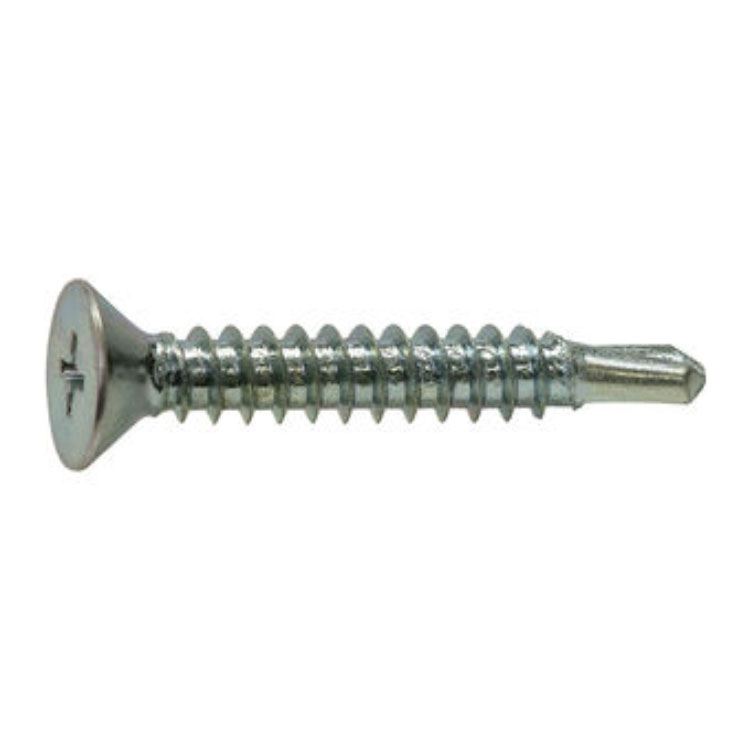
Jiaxing Join Fasteners Co., Ltd. presents several head styles and self-drilling screw configurations, including pan head, wafer head, hex washer head and flat head options. Buyers should use the exact product drawing and approved sample to confirm that the selected configuration matches the application. Our order documentation should record the agreed dimensions, material, finish, standards and inspection requirements so that repeat orders remain consistent.
For projects with demanding service conditions, our quality review should include material traceability, dimensional inspection and any agreed mechanical or corrosion testing. Our team can use the buyer's drawings and application details to clarify the required product configuration before an order is finalised. Our factory should provide only the test reports and certificates applicable to the specific ordered item.
Frequently Asked Questions
When are stainless steel self-drilling fasteners a better choice for outdoor projects?
They are generally worth considering when the connection is exposed to frequent rain, condensation, coastal air or industrial contaminants and long-term corrosion resistance is a priority. The stainless steel grade must still match the exposure. Standard 18-8 stainless steel may be suitable for many general outdoor applications, but chloride-rich or marine conditions can require a more corrosion-resistant grade. Buyers should also check the drill point design and compatibility with the base metal before specifying the fastener.
Can stainless steel screws replace hardened carbon steel screws in every steel drilling application?
No. Stainless steel and hardened carbon steel designs can have different drill point constructions and drilling capacities. A stainless steel screw should only be used when its manufacturer confirms that the specific point can penetrate the substrate thickness and steel grade. Some stainless steel self-drilling designs use a specially engineered hardened point. Buyers should verify the point construction, maximum drilling capacity and load-bearing specification rather than assuming that material choice alone determines suitability.
Are coated carbon steel screws suitable for humid or coastal environments?
They may be suitable in some moderately humid environments when the coating system is designed and tested for the expected exposure. However, coating damage, cut edges, installation abrasion and prolonged salt exposure can reduce protection. Direct marine exposure and chloride-rich conditions usually require a more carefully selected fastening system. Buyers should compare the specified corrosion category, coating test evidence, expected maintenance interval and total service-life cost before choosing coated carbon steel for an exposed project.
Conclusion
Stainless steel is often the more appropriate choice when corrosion resistance, reduced maintenance and long-term exposure are the main concerns. Hardened carbon steel remains a practical option when drilling performance, substrate thickness and initial cost carry greater weight, particularly in dry or protected environments. Neither material is universally superior. The correct decision depends on the complete joint design, including the base metals, drill point, coating, installation method and service conditions. Jiaxing Join Fasteners Co., Ltd. can help buyers review the available product configuration and confirm the specifications required for their application. Contact our team with your drawings, material details and project conditions to discuss a suitable fastening solution.