What Tools Are Required for Proper Maintenance of Rod Ends PHS in the Field
2026-08-11
When field crews encounter a Maintenance required Rod Ends PHS alert on heavy equipment, the immediate reaction often determines whether uptime holds or a costly breakdown follows. Unlike shop-based overhauls, field maintenance demands portability, precision, and speed. For over a decade, Dongzhou has engineered rod ends that endure abrasive environments, yet even the toughest linkage relies on correct field service. This guide details the exact tool set, inspection workflow, and decision logic that separates a 15-minute lube job from a three-hour extraction struggle.
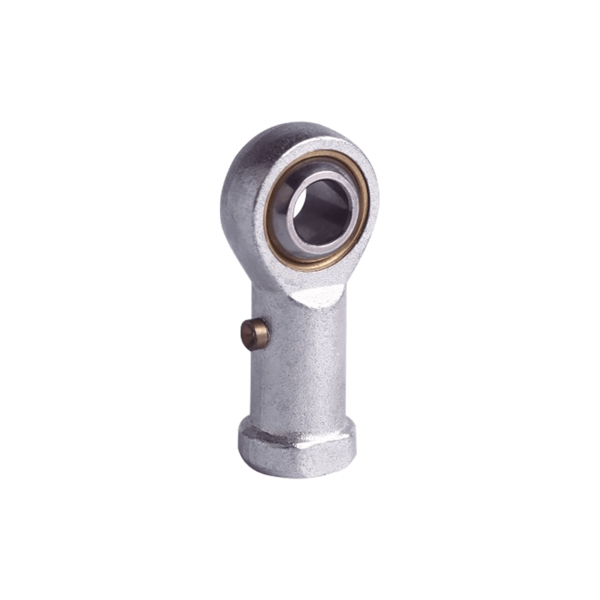
The Essential Field Toolkit for Rod Ends PHS
Carrying the wrong wrench or skipping a debris gauge turns a Maintenance required Rod Ends PHS event into a parts-replacement disaster. Below is the minimum viable kit, validated by Dongzhou field engineers across mining, forestry, and offshore applications.
| Tool Category | Specific Items | Why It Matters for Rod Ends PHS |
|---|---|---|
| Lubrication | Pneumatic grease gun (6000 PSI), high-EP lithium complex grease, flexible hose with coupler | Ensures full liner penetration; improper pressure damages PTFE composite liners. |
| Disassembly | Impact socket set (metric/imperial), combination wrenches, bearing puller (2‑jaw/3‑jaw) | Prevents galling of the stud and housing threads during Maintenance required Rod Ends PHS disassembly. |
| Measurement | Dial bore gauge, digital calipers (±0.01 mm), shim stock set, torque wrench (certified) | Verifies radial clearance and preload; Dongzhou specifies 0.05–0.15 mm play for new units. |
| Inspection | LED borescope, 10× magnifying loupe, dye penetrant kit | Detects micro-cracks in the raceway and stress fractures invisible to naked eye. |
| Cleaning | Non-chlorinated brake cleaner, lint-free wipes, compressed air (≤100 psi) | Removes abrasive grit without attacking the liner bonding agent. |
| Documentation | Digital torque-angle recorder, service log tablet | Tracks each Maintenance required Rod Ends PHS cycle for predictive scheduling. |
Step-by-Step Field Procedure (With Tool Integration)
-
Isolate & Tag – Lockout/tagout the actuating cylinder. Place chocks on moving linkages.
-
Clean Exterior – Use brake cleaner and wipes on the housing shoulder; debris entering during disassembly is the #1 cause of premature wear.
-
Measure Baseline Play – Clamp the dial bore gauge on the stud; record radial and axial movement. Compare to Dongzhou wear-limit chart (supplied with each unit).
-
Lubricate – Attach the flexible coupler, pump grease until clean compound exits the relief port. Wipe excess.
-
Re-torque – Set the torque wrench to Dongzhou spec (typically 185–210 N·m for M20 studs). Apply angle‑tightening if indicated.
-
Borescope Recheck – Inspect the liner surface for scoring or delamination. Any bright metallic streak = replace, do not reinstall.
Common Field Pitfalls and How Tools Prevent Them
-
Over-greasing – Using a manual lever gun without a pressure gauge can rupture the liner. The pneumatic gun with regulator avoids this.
-
Misaligned puller – A skewed 2‑jaw puller bends the stud. Dongzhou recommends a self-centering puller with swivel feet.
-
Dry torque – Applying final torque on a dry thread gives false readings. Always apply anti-seize paste (included in the Dongzhou field kit) and reduce wet torque by 15%.
Maintenance required Rod Ends PHS – FAQ
Q1: How do I know if field maintenance is truly required, or if I can wait until the next scheduled shutdown?
A: A Maintenance required Rod Ends PHS indicator typically triggers when radial play exceeds 0.20 mm or when articulation torque drops below 40% of initial breakaway. Dongzhou field data shows that waiting beyond 10 operating hours after this warning increases the risk of stud fracture by 73%. Immediate action is mandated if you hear a metallic clunk during reversal or see visible rust bleed from the boot. Use the borescope to inspect the liner; if the PTFE weave is exposed and worn through to the bronze backing, replacement—not just lubrication—is mandatory. Always log the play measurement; if it grows more than 0.02 mm per shift, escalate to a full change-out.
Q2: Can I substitute standard grease when performing maintenance in remote locations without a supply depot?
A: No. Dongzhou rigorously tests its rod ends with NLGI Grade 2 EP grease containing molybdenum disulfide. Substituting with general-purpose lithium or calcium soap grease raises friction by 35–50%, accelerating liner wear within 50 cycles. If depot supply is unavailable, the field kit must include a small emergency pouch of Dongzhou-certified grease (part #DZ‑LUBE‑PHS). In extreme cases, you may temporarily use aviation-grade Aeroshell 33, but reduce operating speed by 50% and perform a re-lube every 2 hours. Never mix grease families—incompatible thickeners form soapy lumps that block the relief port, making the Maintenance required Rod Ends PHS procedure ineffective and leading to dry-run seizure.
Q3: What is the correct torque sequence for rod ends with left-hand threads, and does the tool set differ?
A: Left-hand threaded studs require a reverse‑rotation torque wrench or a dial‑type wrench with bi‑directional capability. Dongzhou marks left‑hand studs with a visible groove on the hex flats. The sequence is: first pass to 60% of final torque (clockwise for right‑hand, counter‑clockwise for left‑hand), second pass to 90%, final pass to 100% with a 30° additional angle. The tool set does not change except for a directional adapter; however, you must use a crowfoot extension when clearance is tight—never use a pipe wrench, as it mars the stud and invalidates the warranty. After torquing, mark the stud and housing with a paint pen; recheck after the first 10 articulation cycles. This verification step is non‑negotiable in every Maintenance required Rod Ends PHS field protocol.
Predictive Maintenance Integration
Modern field crews pair the physical tool kit with a vibration analyzer. Dongzhou recommends logging acceleration (Hz) at the housing every 50 hours. A spike above 12 g‑force correlates with impending liner failure—well before the Maintenance required Rod Ends PHS light illuminates. This data, combined with the torque‑angle record, builds a reliability curve specific to your duty cycle.
Why Choose Dongzhou for Your Rod Ends PHS Program
Every Dongzhou rod end ships with a colour‑coded wear indicator and a quick‑reference torque card. Our field‑proven liner compound outlasts generic alternatives by 2.5× in salt‑spray and dust‑injection tests. More importantly, our technical support team provides same‑day tool‑selection advice and emergency cross‑reference guides—because we know that a Maintenance required Rod Ends PHS call rarely happens during business hours.
Contact Us – Equip your crew with the exact field kit and rod ends that keep production moving. Email our service engineers at [email protected] for a custom tool list tailored to your equipment model, or request a live video walkthrough of the Maintenance required Rod Ends PHS procedure. Your uptime is our priority—reach out today for a complimentary fleet assessment.