What Standards Should Qualified Ball Bearing Steel Balls Comply With
2026-11-24
BMT manufactures and supplies premium Ball Bearing Steel Ball products for bearing assembly, linear motion systems and industrial machinery. Reliable Ball Bearing Steel Ball relies on unified global standards to control sphericity, dimensional tolerance, surface roughness and material performance, avoiding premature wear, noise and bearing failure in high-speed or heavy-load applications. Understanding these recognized specifications helps engineers and buyers verify quality before purchase.
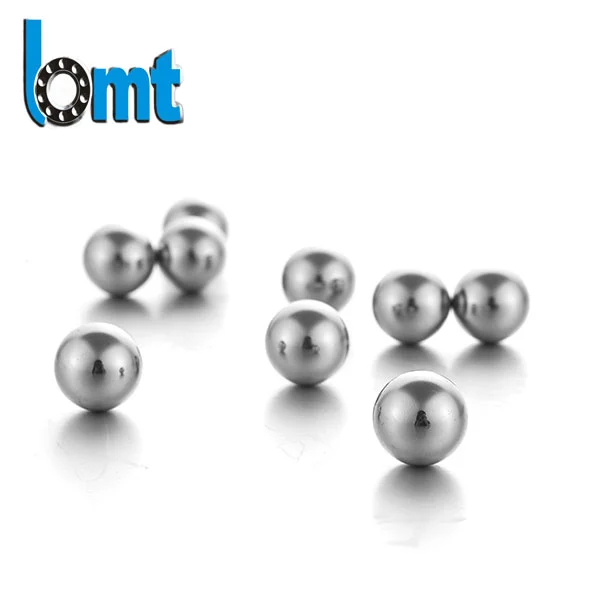
Core Global Standards for Ball Bearing Steel Ball
- ISO 3290-1: The primary international standard, defining precision grades, size tolerances, spherical error and surface quality for finished bearing steel balls.
- ABMA Std 10A: Widely adopted in North America, aligned closely with ISO 3290 for consistent grade classification.
- DIN 5401: European specification for chrome steel bearing balls, common in European mechanical and automotive projects.
- ISO 683-17: Governs bearing steel raw material, chemical composition, hardness and heat treatment requirements.
- JIS B1501: Japanese industrial standard frequently used for high-speed bearing and precision equipment sourcing.
Precision Grade Reference Table
| Grade | Typical Application | Sphericity Tolerance | Common Material |
|---|---|---|---|
| G5 | High-speed spindles, precision instrument bearings | Ultra-tight | AISI 52100 Chrome Steel |
| G10 | Motor bearings, gearboxes, general precision bearings | Low | AISI 52100 Chrome Steel |
| G40 | Conveyor bearings, low-speed industrial equipment | Medium | AISI 52100 / Stainless Steel |
| G100 | Low-load, non-critical mechanical structures | Loose | Carbon or stainless steel |
Ball Bearing Steel Ball FAQ
Q: Does a Ball Bearing Steel Ball marked G10 automatically meet ISO 3290-1? A: Not always. The grade label only indicates tolerance class; suppliers must provide inspection certificates proving compliance with the full ISO 3290-1 clause, including surface defect limits and batch sampling rules. All BMT Ball Bearing Steel Ball with G-grade marking come with third-party test reports covering dimension, roughness and hardness.
Q: What standard controls the raw material hardness of Ball Bearing Steel Ball? A: Material and heat treatment follow ISO 683-17. Standard chrome steel balls (AISI 52100 / SUJ2) require final hardness between HRC 60–66 after quenching and tempering. Hardness below this range will cause rapid denting, while over-hardened balls are prone to cracking under impact loads.
Q: Can stainless steel Ball Bearing Steel Ball follow the same standards as chrome steel versions? A: They can share ISO 3290-1 geometric tolerance standards for size and sphericity, but stainless steel does not fall under ISO 683-17 bearing chrome steel rules. Stainless variants have separate material limits for corrosion resistance and lower hardness. BMT adjusts testing procedures accordingly for stainless steel ball orders.
Standard compliance is the foundation of stable bearing operation. Even visually smooth Ball Bearing Steel Ball may fail service requirements without certified inspection against ISO, ABMA or DIN standards. If you need certified test reports, grade selection guidance or bulk quotations for your bearing project, contact us today. The technical team at BMT provides fully compliant Ball Bearing Steel Ball matched to your target standard and application load demands.