What Materials Are Commonly Used in Gravity Die Casting
2026-01-15
When selecting a manufacturing process like Gravity Die Casting, the choice of material is paramount to the component's final performance, cost, and application suitability. At BSD, we leverage decades of expertise to match the perfect alloy with our precision Gravity Die Casting process, ensuring optimal results for every project. This permanent mold technique is favored for producing high-integrity, repeatable castings with excellent mechanical properties and superior surface finish. But which metals truly shine in this process?
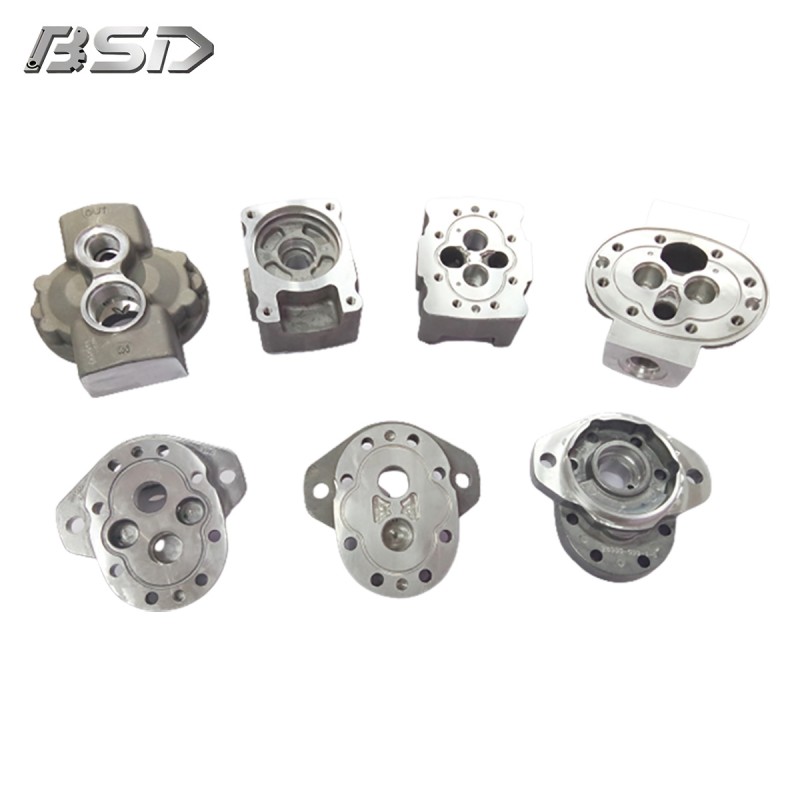
The most commonly used materials fall into two primary families of non-ferrous alloys:
-
Aluminum Alloys: The most prevalent choice due to their excellent blend of strength, lightweight, and corrosion resistance.
-
Magnesium Alloys: Chosen for applications where minimizing weight is the absolute critical factor.
-
Copper-Based Alloys (e.g., Brass & Bronze): Selected for their outstanding conductivity, wear resistance, and corrosion properties.
To provide a clearer comparison, here is a breakdown of typical alloys and their key characteristics:
| Alloy Family | Common Examples | Key Properties | Typical Applications |
|---|---|---|---|
| Aluminum | A356, LM25, 413 | Good strength-to-weight ratio, excellent corrosion resistance, good machinability. | Automotive wheels, cylinder heads, structural aerospace parts. |
| Magnesium | AZ91, AM60 | Extremely lightweight, good damping capacity, decent strength. | Aerospace components, automotive gearboxes, electronic housings. |
| Copper-Based | Brass (CZ122), Bronze (BS 1400) | High thermal/electrical conductivity, excellent wear and corrosion resistance. | Marine hardware, plumbing fittings, busbars, decorative pieces. |
Gravity Die Casting FAQ Common Questions
What is the main advantage of using Aluminum A356 in Gravity Die Casting?
A356 aluminum is renowned for its exceptional combination of castability, weldability, and response to heat treatment (T6 temper). This allows BSD to produce castings with enhanced strength and durability, making it ideal for high-stress structural applications.
Can Gravity Die Casting use steel or iron materials?
No, the Gravity Die Casting process is almost exclusively used for non-ferrous metals with lower melting points, such as aluminum, magnesium, and copper alloys. Ferrous metals require much higher temperatures that would damage the permanent steel molds and are better suited for other foundry processes.
Why choose Magnesium for a Gravity Die Casting project?
The primary reason is weight reduction. Magnesium alloys are approximately 33% lighter than aluminum and 75% lighter than steel. When a project's core driver is minimizing mass without sacrificing structural integrity—common in aerospace and high-performance automotive sectors—magnesium processed via Gravity Die Casting at BSD is an outstanding solution.
Selecting the correct material is a critical first step in engineering any component. The Gravity Die Casting process at BSD offers a versatile and high-quality manufacturing solution for a range of non-ferrous alloys. Our expertise ensures that from material selection through to final finishing, your project benefits from optimal performance, efficiency, and value.
Contact us today to discuss your specific project requirements. Our engineering team at BSD is ready to collaborate with you on selecting the ideal material and process for your next Gravity Die Casting component.