

What Materials Are Best for a High-Temperature Heat Exchanger Manifold Return
2026-07-14
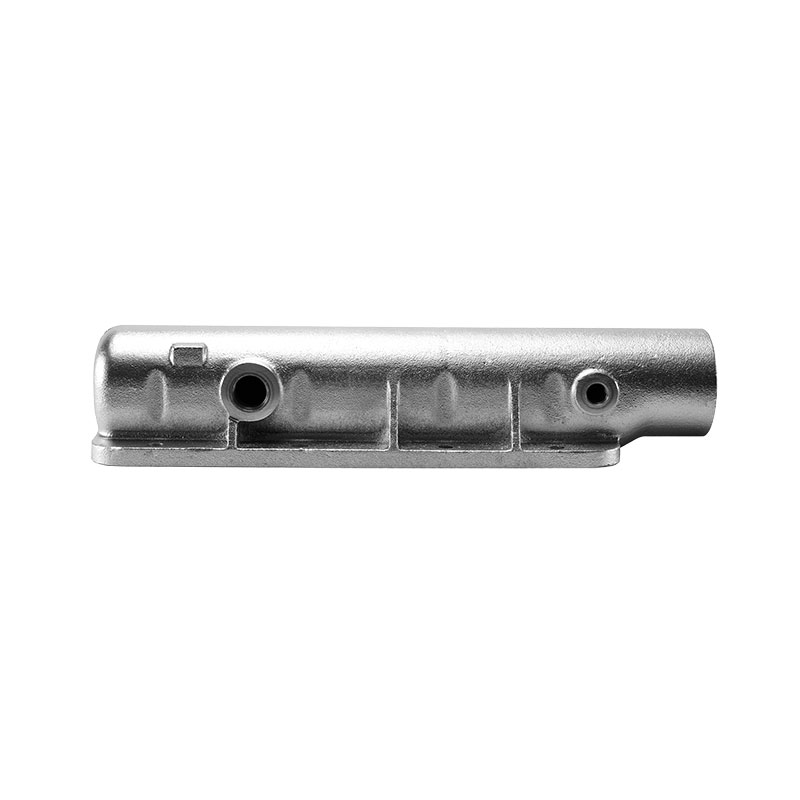
Selecting the optimal material for a Heat Exchanger Part Manifold Return is one of the most critical decisions an engineer or plant operator can make. In high-temperature service—typically defined as continuous operation above 400°C (752°F)—the manifold return endures not only extreme thermal stress but also corrosion, erosion, and cyclic fatigue. At HEC, we have spent decades analyzing field failures and performance data to determine which alloys and composites deliver the best balance of creep resistance, oxidation resistance, and cost-effectiveness. The wrong choice can lead to unplanned shutdowns, safety hazards, and massive replacement costs. The right choice, however, extends equipment life by years.
Key Material Classes for High-Temperature Service
| Material Class | Maximum Continuous Temp (°C) | Oxidation Resistance | Creep Strength | Relative Cost | Typical Applications |
|---|---|---|---|---|---|
| Stainless Steel 310/310S | 1000 | Good | Moderate | Low-Medium | Refinery preheaters, fired heaters |
| Inconel 625 | 980 | Excellent | High | High | Chemical reactors, waste heat boilers |
| Hastelloy X | 1150 | Excellent | Very High | Very High | Gas turbine exhaust, aerospace derivatives |
| Duplex 2205 | 600 | Fair | Moderate | Medium | Lower-temp high-pressure services |
| Titanium Grade 2 | 540 | Excellent (in oxidizing acids) | Low | High | Aggressive wet high-temp processes |
| Silicon Carbide (SiC) Composites | 1400 | Superior | Very High (compressive) | Very High | Extreme pyrolysis, ceramic heat exchangers |
Performance Factors That Drive Material Selection
When evaluating a Heat Exchanger Part Manifold Return for high-temperature duty, HEC recommends prioritizing four interdependent parameters:
-
Creep Rupture Strength – The manifold return sees sustained hoop stresses from internal pressure. At temperatures above 0.4× the melting point (absolute), creep accelerates. Nickel-based superalloys (e.g., Inconel 625) significantly outperform 300-series stainless steels in this regime.
-
Oxidation and Carburization Resistance – High-temperature process streams often contain oxygen, steam, or hydrocarbons. A protective oxide layer (Cr₂O₃ or Al₂O₃) is essential. Alloys with >20% Cr and >8% Al offer the longest spallation-free life.
-
Thermal Fatigue Endurance – Rapid start-ups and shut-downs induce strain-controlled fatigue. Low thermal expansion coefficients (e.g., Incoloy 800H) minimize thermal stress, reducing crack initiation at weld joints.
-
Weldability and Fabricability – Complex manifold geometries require reliable fusion welds. Some high-strength superalloys are prone to strain-age cracking post-weld; HEC employs controlled preheat and post-weld heat treatment (PWHT) to mitigate this.
Material Recommendation Matrix by Process Temperature
| Operating Temperature Range | Recommended Material | Key Limitation | HEC Preferred Grade |
|---|---|---|---|
| 400°C – 650°C | Duplex 2205 or 347H SS | Limited to low-chloride environments | 347H with stabilized Nb |
| 650°C – 850°C | Alloy 800H / 310S | Creep becomes design-limiting above 800°C | 800HT (fine-grain control) |
| 850°C – 1050°C | Inconel 625 / Hastelloy X | Cost and machining difficulty | Inconel 625 (AWS ERNiCrMo-3) |
| >1050°C | SiC/SiC Composites or Cast HP40+Nb | Brittle nature; requires special joining techniques | HEC-CerMet™ lined design |
FAQ – Common Questions About the Heat Exchanger Part Manifold Return
Q1: How do I know when my existing high-temperature manifold return is approaching end-of-life?
A1: At HEC, we recommend a three-pronged monitoring protocol. First, track external visual signs: surface discoloration (dark scaling) or visible distortion at flange connections indicates progressive oxidation. Second, perform periodic ultrasonic thickness (UT) measurements at the return bend’s outer radius—this area sees the highest tangential stress and thins fastest due to creep. A thickness reduction exceeding 12% of original nominal wall (per API 510) warrants immediate metallurgical replication (replica) analysis to evaluate microstructural cavitation. Third, monitor process data: a gradual increase in pressure drop across the manifold (without fouling changes) suggests internal erosion or deformation of the flow-splitting ribs. Combine these three indicators, and you can predict residual life within ±10% accuracy.
Q2: Can I weld-repair a cracked manifold return made of Inconel 625, or must I replace the entire part?
A2: Weld repair is technically feasible but highly dependent on crack morphology and service history. For shallow surface cracks (<2 mm depth) not intersecting fusion lines, HEC successfully uses GTAW (gas tungsten arc welding) with matching ERNiCrMo-3 filler, followed by a solution anneal at 980°C for 1 hour per 25 mm thickness and rapid argon quench to restore ductility. However, for deep through-wall cracks or multiple clustered cracks (indicative of creep-fatigue interaction), full replacement is economically superior. Our internal cost models show that repair costs exceed 65% of a new Heat Exchanger Part Manifold Return when post-weld NDT (radiographic + dye penetrant) and heat treatment are included. We always advise a risk-based decision: if the unit operates above 900°C, replace; below 900°C, repair with qualified procedure.
Q3: Why does HEC recommend 800HT over standard 310S for sulfur-bearing high-temperature streams?
A3: The answer lies in sulfidation kinetics. At 750–850°C, sulfur compounds (H₂S, SO₂) react preferentially with chromium to form low-melting-point chromium sulfides (Cr₃S₄), which spall and expose fresh metal to rapid attack. While 310S contains 25% Cr, its relatively low nickel content (20%) allows sulfur to penetrate grain boundaries. 800HT, with 32% Ni and controlled titanium/aluminum additions, forms a stable, tenacious Al₂O₃-rich subscale that drastically reduces sulfur diffusivity. In a side-by-side field trial conducted by HEC at a crude distillation unit, 800HT manifold returns outlasted 310S counterparts by 2.7× (41 months vs. 15 months) under identical 780°C, 2.3% H₂S conditions. Furthermore, 800HT’s higher creep strength permits a 15% thinner wall design, improving thermal response. For any sour service above 700°C, HEC exclusively specifies 800HT as our baseline.
Practical Selection Workflow from HEC
-
Define the worst-case continuous and peak temperatures (include start-up transients).
-
Obtain a representative process gas composition – partial pressures of O₂, H₂O, H₂S, and chlorides are non-negotiable.
-
Calculate the design pressure – apply a 1.5× safety factor for creep range.
-
Consult HEC’s in-house selection tool – which cross-references ASME Section II, Part D allowable stresses with our proprietary corrosion database.
-
Perform a life-cycle cost analysis – include fabrication, PWHT, NDT, and expected replacement frequency.
Final Verdict
For the vast majority of industrial high-temperature applications (650–950°C), Inconel 625 and Alloy 800HT represent the gold standard for a Heat Exchanger Part Manifold Return, balancing oxidation resistance, creep strength, and field-proven weldability. For extreme services above 1050°C, ceramic-matrix composites offer unparalleled performance, albeit with higher initial investment and specialized joining requirements. Never compromise on material verification—always demand mill test reports (MTR) with positive material identification (PMI) confirmation.
Ready to specify the right manifold return for your next heat exchanger project? Contact HEC today for a tailored material recommendation, complete with FEA-based stress analysis and projected service life estimates. Our team of senior metallurgists and pressure-vessel engineers is standing by to review your process datasheet and deliver a firm quote within 48 hours. Reach out via our website or call your regional HEC representative—let us help you extend run lengths, reduce unplanned outages, and optimize your total cost of ownership. Your reliability is our engineering legacy.
