What Makes Steel Casting the Smarter Choice When Strength and Design Freedom Both Matter?
2026-05-06
When I talk with buyers who are comparing manufacturing routes for demanding metal parts, the same concerns come up again and again. They want reliable strength, stable dimensions, reasonable cost control, and a process that does not force them to compromise on shape. That is exactly why Ningbo Supreme Machinery Co.,Ltd. gradually comes into the conversation when I discuss practical sourcing options for Steel Casting. In my experience, Steel Casting is not simply about pouring metal into a mold. It is a practical engineering solution for components that need durability, design flexibility, and repeatable production quality without creating unnecessary machining and fabrication pressure later in the project.
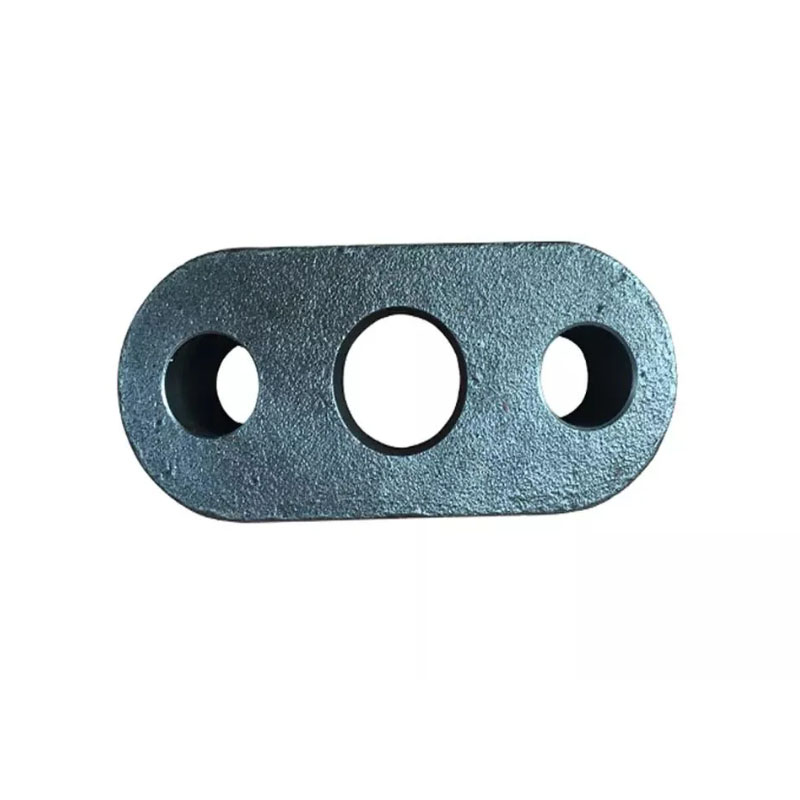
Why Do So Many Buyers Struggle When They Source Complex Metal Parts?
I have seen many projects slow down not because demand is unclear, but because the part itself is difficult to make well. Some buyers start with weldments, fabricated assemblies, or simplified designs, only to realize later that too many secondary operations increase lead time, cost uncertainty, and quality risk. Others choose a process that looks cheaper at the beginning, but the total expense rises once rework, dimensional inconsistency, and assembly trouble start to show up.
When that happens, I usually step back and ask a simple question. Does the part need higher strength, better shape freedom, and fewer manufacturing compromises? If the answer is yes, Steel Casting often becomes the more practical option. It gives me a better path when the part geometry is too complex for easy machining alone or when multiple fabricated pieces create too many weak points, welding steps, or tolerance stacking issues.
- I can simplify part structure by reducing unnecessary assemblies
- I can support more complex geometries without forcing awkward redesigns
- I can reduce follow-up machining or welding pressure in many applications
- I can improve consistency when the project moves from prototype thinking to batch production
What Problems Can Steel Casting Help Me Solve in Real Purchasing Work?
From a purchasing perspective, I do not judge a part only by its unit price. I care about the full chain of risk. Will the part fail early? Will the drawing need to be simplified? Will my team spend extra time fixing alignment or assembly problems? Will the supplier be able to hold quality across multiple orders?
This is where Steel Casting becomes valuable. It helps me address several pain points at the same time. I can pursue stronger material performance than many ordinary cast iron applications allow, while still keeping the freedom to manufacture parts with more challenging shapes. That balance matters when the final component works in machinery, transport systems, industrial equipment, or other load-bearing environments where design and performance must work together.
| Buyer Pain Point | What I Usually Worry About | How Steel Casting Helps |
| Complex geometry | Too many machining limits or assembly steps | Supports intricate part shapes more naturally |
| Strength demand | Material may not perform well under real load | Offers a stronger route for demanding applications |
| Cost drift | Welding, correction, and rework inflate actual cost | Can reduce downstream processing pressure |
| Quality variation | Dimensional inconsistency causes installation trouble | Supports better repeatability with process control |
| Design compromise | Engineering must weaken the original concept to make it producible | Allows more design freedom without oversimplification |
How Does Steel Casting Give Me More Design Freedom Without Creating More Trouble?
One of the biggest advantages I notice is that Steel Casting lets me think about the function of the part first, rather than being trapped by the limitations of a more rigid manufacturing route. If the component needs contours, internal transitions, connection features, or a shape that would otherwise require several operations and joined pieces, a casting-based approach can be more sensible.
I like that because real industrial parts are rarely simple blocks or plates. They often need to fit into a larger system, carry load, resist wear, or maintain alignment in service. When I rely on a process that gives me broader geometric freedom, I have more room to solve those practical problems early. That usually means less compromise between engineering intent and production reality.
- I can combine functional features into one more integrated component
- I can reduce weak points introduced by excessive joining or section changes
- I can support cleaner transitions in parts that experience stress concentration
- I can make sourcing decisions based on total manufacturability, not just raw material cost
Which Product Advantages Actually Matter More Than Marketing Words?
I am always cautious about vague promises. Buyers do not need dramatic language. We need useful advantages that affect drawings, lead times, fit-up, durability, and total cost. When I evaluate Steel Casting, I focus on the points that make a measurable difference during production and use.
| Advantage | Why It Matters to Me |
| Higher structural capability | Helps me source parts for applications where ordinary lower-strength routes may be limiting |
| Good dimensional potential | Reduces risk of mismatch during assembly or installation |
| Better surface and finish potential | Improves downstream handling and can reduce extra corrective work |
| Flexible shape creation | Allows more sophisticated parts without forcing an overly simplified design |
| Lower dependence on multiple secondary processes | Helps control total project cost rather than chasing a misleading low starting price |
| Adaptability across industries | Useful when I source for different applications with changing performance targets |
What Should I Check Before I Choose a Steel Casting Supplier?
I never choose a supplier based only on a product title. I want to know whether the supplier can understand the part, the tolerance logic, the service condition, and the quality expectations behind the drawing. If a supplier only talks about price, I already know the conversation is incomplete.
When I review a source for Steel Casting, I usually pay attention to these points.
- Whether the supplier can discuss material options clearly and practically
- Whether the team understands dimensional requirements instead of quoting blindly
- Whether the process route matches the complexity of the part
- Whether quality control is treated as a production discipline, not a sales slogan
- Whether communication is clear enough to prevent misunderstandings before tooling and mass production
I also value suppliers that can talk through the actual use environment. A part that works in agricultural equipment may not face the same priorities as a part for conveying systems, hydraulic applications, machinery frames, or industrial motion components. Good sourcing decisions come from matching the manufacturing route to the real job the part needs to do.
How Do I Compare Steel Casting With Fabrication or Heavy Machining More Fairly?
This is where many buyers can save money if they think beyond the quote sheet. A fabricated or heavily machined part may look familiar, but that does not automatically make it the better option. I try to compare methods based on total production logic.
| Comparison Point | Fabrication or Heavy Machining | Steel Casting |
| Design complexity | May require multiple parts and extra operations | Can support more integrated shapes |
| Assembly burden | Often higher when many pieces must be joined | Often lower when geometry is built into one casting |
| Total processing effort | May rise with welding, cutting, fitting, and correction | Can reduce pressure from excessive downstream work |
| Design flexibility | May force simplification for manufacturability | Gives more freedom to preserve functional design intent |
| Scaling to repeat orders | Can become labor-intensive and variable | Can be more stable once the process is properly established |
I am not saying Steel Casting is always the answer. That would be too simplistic. But when the part is complex, performance-sensitive, and costly to fabricate in multiple steps, it often becomes the more rational manufacturing path.
Why Does Process Knowledge Matter So Much When I Buy Steel Casting?
I have learned that good results rarely come from material choice alone. The supplier’s process discipline matters just as much. If the production route is aligned with the part geometry and quality target, I get more predictable results. If it is not, even a good drawing can turn into a frustrating project.
That is why I prefer to work with manufacturers that can communicate clearly about how they approach casting production, dimensional control, and finish expectations. I do not need endless theory. I need practical coordination that helps me avoid delays, repeated modifications, and unnecessary back-and-forth after the order starts moving.
In sourcing conversations, I usually look for a partner who can do three things well. First, understand the drawing beyond the obvious dimensions. Second, identify possible production risks before they become shipment problems. Third, recommend a realistic route that balances quality, timing, and budget instead of pretending every requirement is easy.
What Kind of Applications Make Steel Casting Especially Worth Considering?
I tend to consider Steel Casting more seriously when the part is expected to work in demanding industrial conditions and when shape plus strength both matter. That can include components used in machinery systems, transport-related equipment, handling systems, hydraulic environments, energy-related equipment, and other applications where operational reliability matters more than a superficial low quote.
What matters to me is not the label of the industry by itself, but the function of the part. If the component must carry load, connect motion, support alignment, or survive continuous service, then I want a manufacturing solution that respects those demands from the start. In many such cases, Steel Casting deserves a place on the shortlist.
- Load-bearing components
- Motion and linkage parts
- Industrial machinery components
- Conveying and handling system parts
- Hydraulic and mechanical support structures
How Can I Reduce Purchasing Risk Instead of Just Chasing a Lower Unit Price?
If I only negotiate for the cheapest quote, I may create bigger costs later. That is why I try to reduce purchasing risk at the source. I compare process fit, part complexity, communication quality, and likely downstream expenses. A stronger sourcing decision is usually the result of better judgment, not just harder bargaining.
With Steel Casting, I see the most value when I treat it as a total solution rather than a raw component category. I want to know whether it will help me reduce fabrication headaches, protect part function, and support stable repeat orders. When the answer is yes, the purchasing logic becomes much clearer.
If you are evaluating a complex metal component and want a more practical path between strength, manufacturability, and cost control, this is the right time to look more closely at Steel Casting. If you want to discuss your drawing, material expectations, or application needs in more detail, contact us today and leave your inquiry. The team at Ningbo Supreme Machinery Co.,Ltd. is ready to help you explore a more efficient solution for your next project.