

What Makes Metal Stamped Parts a Reliable Choice for Precision Manufacturing?
2025-11-20
Metal stamped parts refer to components produced through a cold-forming process that uses dies and stamping presses to shape metal sheets into precise, repeatable forms. These parts are widely used across industries such as automotive, electronics, aerospace, home appliances, industrial machinery, and medical equipment. Their popularity is driven by high dimensional accuracy, production efficiency, and strong material performance.
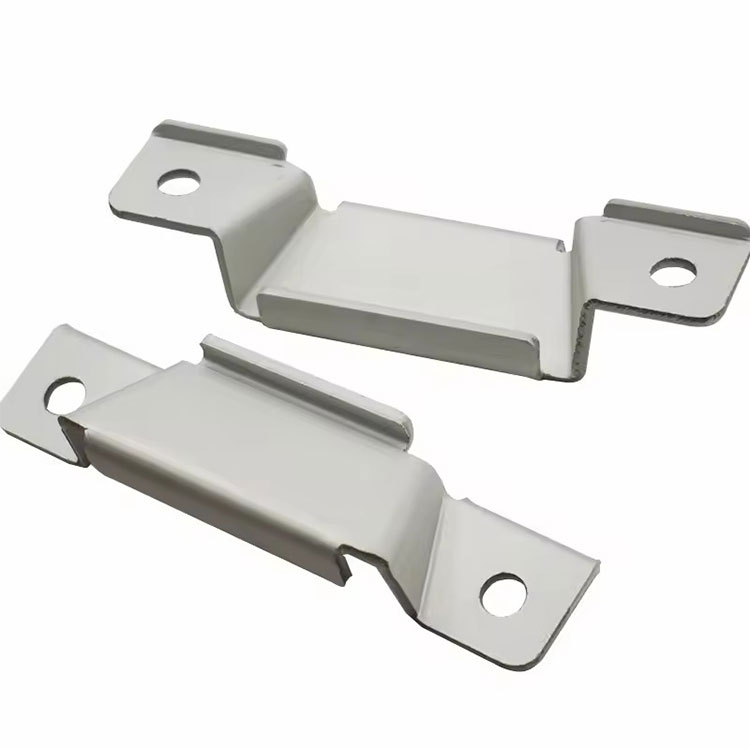
The core purpose of this article is to examine what metal stamped parts are, why industries continue to rely on them, and how technological advancements contribute to their evolving functions and future applications. From product parameters to material characteristics, from performance benefits to manufacturing trends, each aspect plays a role in determining why metal stamped parts remain essential in global production.
Below is a professional parameter list commonly associated with metal stamped parts:
Product Parameter Overview
| Parameter Category | Specification Details |
|---|---|
| Material Types | Stainless steel, carbon steel, aluminum, copper, brass, nickel alloys, spring steel |
| Sheet Thickness Range | 0.1 mm – 12 mm depending on application |
| Manufacturing Processes | Blanking, punching, bending, forming, deep drawing, embossing, coining |
| Tolerances | ±0.01 mm to ±0.05 mm depending on complexity |
| Surface Finishes | Electroplating, anodizing, powder coating, brushing, polishing, passivation |
| Application Industries | Automotive, electronics, aerospace, machinery, appliances, telecommunications |
| Quality Standards | ISO 9001, IATF 16949, ROHS, REACH, material certification available |
Why Do Metal Stamped Parts Provide Unique Advantages?
Metal stamped parts are valued because they combine accuracy, cost-efficiency, and scalability. Many industries require large quantities of consistent components, and stamping offers unmatched repeatability while reducing material waste.
Why do metal stamped parts ensure structural consistency?
Because stamping uses precision-developed dies, each piece is produced with identical geometry. This consistency is essential for assembly lines, where even small dimensional variations can cause production delays or product failure.
Why is stamping more cost-effective than alternative processes?
Stamping minimizes labor input once the tooling is completed. Material utilization is optimized through controlled punching layouts. Long-term, high-volume production becomes significantly more economical than machining or casting.
Why does stamping enhance material strength?
Cold-forming increases metal hardness through strain hardening. This allows stamped parts to maintain durability even when manufactured from lighter materials.
Why do industries rely on stamping for safety-critical components?
Automotive braking systems, electronic shielding, and precision connectors depend on stamped parts because of their dimensional accuracy and predictable performance. These are components that cannot tolerate unpredictability.
Functional Advantages of Metal Stamped Parts
-
High-volume production capability
-
Excellent repeatability with tight tolerances
-
Low per-unit cost for large batches
-
Compatibility with various metals and alloys
-
High tensile strength after cold-forming
-
Flexible geometry options, including complex forms
-
Compatibility with automation and progressive dies
-
Reduced material waste and improved sustainability
These advantages make metal stamped parts ideal for modern mass manufacturing environments requiring speed, precision, and reliability.
How Do Metal Stamped Parts Function Within Different Applications?
Understanding how metal stamped parts are used helps highlight their industrial importance. Their functions extend beyond simple brackets or connectors—they often serve as supporting frameworks, protective elements, or critical contact points in complex assemblies.
How do metal stamped parts improve performance in automotive systems?
Automotive manufacturers use stamped components such as chassis brackets, exhaust components, sensor housings, and structural clips. Stamping ensures parts maintain shape under continuous vibration, temperature changes, and mechanical stress.
How do stamped parts ensure reliability in electronic applications?
Electronic assemblies depend on stamped shielding cases, terminals, and micro-precision linkages. Tighter tolerances reduce electric noise, stabilize signals, and prevent failures in compact circuit environments.
How does stamping support aerospace-grade quality requirements?
Aerospace components rely on lightweight but strong materials like aluminum alloys and titanium. Stamping allows precise shaping while meeting demanding stress and fatigue requirements.
How do stamped components contribute to household appliances?
Appliance manufacturers integrate stamped parts into motors, compressors, casings, and mounting plates. Stamping minimizes cost while improving production efficiency and product lifespan.
Key Functional Roles of Stamped Parts Across Industries
-
Structural support and load-bearing
-
Electrical conductivity and signal stability
-
Vibration resistance and mechanical reliability
-
Heat resistance and lightweight performance
-
Precision alignment for mechanical assemblies
-
Protective shielding for sensitive components
The versatility of metal stamped parts comes from the ability to shape them into countless forms while preserving material integrity and dimensional accuracy.
What Are the Future Trends of Metal Stamped Parts and How Will Technology Transform the Industry?
The future of metal stamping involves a combination of digital innovation, material development, and advancements in manufacturing automation. Several major trends are reshaping how stamped parts will be produced and applied.
How will automation continue to enhance stamping efficiency?
Robotics, smart feeding lines, and automated inspection systems are becoming standard in modern stamping facilities. Automation increases speed, reduces defects, and improves workplace safety.
How will digital design tools shape future stamping production?
Simulation-driven design, including tools for stress testing, deformation analysis, and die optimization, allows manufacturers to minimize trial-and-error and shorten production lead times.
How will new materials change the capabilities of stamped components?
High-strength steel grades, lightweight aluminum alloys, corrosion-resistant metals, and environmentally friendly materials will expand potential applications. These materials support sectors such as electric vehicles and renewable energy equipment.
How does sustainability influence the future of metal stamping?
Stamping inherently generates low waste. As manufacturers prioritize reducing carbon footprints, stamping remains attractive for both efficiency and material conservation. Recycling programs and environmentally safe coatings will also play essential roles.
How will miniaturization impact stamped components?
Electronics, medical devices, and precision instruments are becoming smaller and more complex, requiring micro-stamped parts with extraordinary accuracy. Progressive die technology continues to evolve to support micro-scale production.
Future stamping environments will rely on a fusion of smart technology, advanced materials, and improved tooling techniques to support global demand for precise, durable components.
Frequently Asked Questions (FAQ)
Q1: What materials are best suited for metal stamped parts?
A1: The choice of material depends on performance requirements such as strength, conductivity, corrosion resistance, and flexibility. Common materials include stainless steel for durability, aluminum for lightweight applications, carbon steel for structural strength, copper and brass for electrical components, and nickel alloys for heat-resistant environments.
Q2: How does the precision of stamping compare to machining?
A2: Stamping provides excellent precision when producing high volumes with tight tolerances. While machining can achieve extremely precise tolerances for single or low-volume parts, stamping becomes more accurate and cost-effective in mass production due to controlled die designs and stable forming processes.
Q3: How are defects controlled during the stamping process?
A3: Quality control involves automated inspection systems, die maintenance schedules, precision lubrication, material certification, and in-process monitoring to ensure each stamped piece meets dimensional and structural requirements. Advanced sensors and imaging technology improve defect detection accuracy.
Metal stamped parts continue to play a vital role in global manufacturing because of their precision, efficiency, and adaptability across countless applications. Their advantages include consistent dimensional accuracy, high production speed, low operational cost, strong structural performance, and compatibility with various metals. As industries evolve, technological advancements in automation, materials, and digital simulation will further strengthen the relevance and reliability of stamped components.
Manufacturers seeking dependable, high-quality stamped parts turn to experienced partners capable of delivering consistency and advanced engineering support. KwongTo offers a comprehensive range of metal stamped solutions backed by strong technical expertise, providing reliable performance for diverse industries. For more details or custom project discussions, contact us to explore tailored solutions for your manufacturing needs.
