What Makes DED Different in Metal 3D Printing?
2026-09-18
1. How Does DED Fit Into the Metal 3D Printing Landscape?
Metal 3D Printing encompasses several distinct processes, each with its own material delivery method, energy source, and application niche. The three most common are powder bed fusion, binder jetting, and directed energy deposition. Powder bed fusion spreads a thin layer of powder and selectively melts it with a laser or electron beam. Binder jetting deposits a liquid binder onto a powder bed and then sinters the part in a furnace. DED, by contrast, delivers the material directly to the melt pool. There is no powder bed, no spreading, and no sintering. The part is built in the open, on a substrate, which means the size is limited only by the motion system.
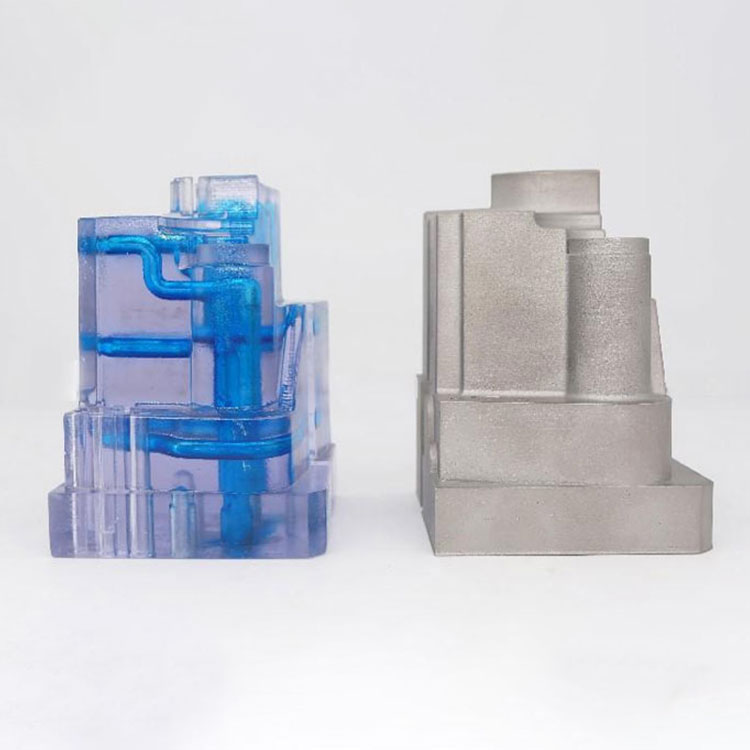
The table below compares the three processes across key parameters.
| Process | Material delivery | Energy source | Max part size | Typical build rate | Feature resolution |
| Powder bed fusion | Powder layer spread across bed | Laser or electron beam | < 500 mm | 0.05 – 0.5 kg/h | 0.05 – 0.2 mm |
| Binder jetting | Powder layer + liquid binder | None (sintering furnace) | < 800 mm | 1 – 10 kg/h | 0.1 – 0.3 mm |
| Directed energy deposition | Powder or wire through nozzle | Laser or electron beam | > 2000 mm | 0.5 – 5 kg/h | 0.5 – 2.0 mm |
Nextgen Advanced Materials INC has been developing DED processes for over 10 years. Our factory focuses on laser-based DED systems that use powder feedstock, and we also work with wire-based systems for high deposition rate applications. We supply DED feedstock materials and provide process development services for customers in aerospace, energy, and heavy industry.
2. What Unique Capabilities Does DED Bring to Metal 3D Printing?
DED brings four unique capabilities to Metal 3D Printing that are difficult or impossible to achieve with powder bed fusion or binder jetting. The first is large part size. Because there is no powder bed, the build volume is limited only by the motion system. Industrial DED systems can build parts that are several meters in size, which is not feasible with powder bed systems. The second is repair and restoration. DED can add material to a worn or damaged component, such as a turbine blade, a stamping die, or a valve seat. The repaired component can be returned to service at a fraction of the cost of a new part. The third is functionally graded materials. DED can deposit different materials in different locations, creating a smooth transition from one alloy to another. This is used in applications where wear resistance and toughness are both required. The fourth is cladding and coating. DED can apply a wear-resistant or corrosion-resistant layer to a substrate, which extends the life of the component.
Key advantage of DED in Metal 3D Printing: The open architecture of DED allows it to be integrated with CNC machining centers. A hybrid machine can deposit metal and then machine it to final dimensions in the same setup. This is not possible with powder bed systems, which require a separate machining operation.
The table below shows the unique capabilities of DED compared to other Metal 3D Printing processes.
| Capability | DED | Powder bed fusion | Binder jetting |
| Maximum part size | Several meters | < 500 mm | < 800 mm |
| Repair of existing parts | Yes | No | No |
| Functionally graded materials | Yes | Limited | No |
| Cladding and coating | Yes | No | No |
| Hybrid machining integration | Yes | No | No |
3. What Materials and Deposition Rates Are Achievable With DED in Metal 3D Printing?
DED can process a wide range of metals, including titanium alloys, nickel-based superalloys, stainless steels, cobalt alloys, and even some refractory metals. The material is typically supplied as powder with a particle size of 45 to 150 microns, or as wire with a diameter of 0.8 to 1.6 mm. The choice between powder and wire depends on the application. Powder allows for finer control of the deposition rate and the ability to mix different materials in situ. Wire is more efficient for large deposits and is easier to handle in some environments. The table below lists the common materials processed by DED and their typical deposition rates in Metal 3D Printing.
| Material | Form | Typical application | Deposition rate (kg/hour) |
| Titanium Ti-6Al-4V | Powder or wire | Aerospace structural repair | 0.5 – 2.0 |
| Inconel 718 | Powder | Turbine blade repair, wear coating | 0.8 – 2.5 |
| Stainless steel 316L | Powder or wire | Mold repair, corrosion-resistant cladding | 1.0 – 3.0 |
| Cobalt-chromium alloy | Powder | Valve seats, wear-resistant surfaces | 0.6 – 1.8 |
| Nickel-aluminum bronze | Wire | Marine propeller repair | 2.0 – 5.0 |
Nextgen Advanced Materials INC supplies DED feedstock materials in both powder and wire form. Our factory provides certification for particle size distribution, chemistry, and flowability. We also offer custom alloy development for specific Metal 3D Printing applications.
4. When Should You Choose DED Over Other Metal 3D Printing Processes?
The decision to use DED depends on four factors: part size, feature resolution, material, and production volume. DED is the best choice when the part is too large for a powder bed system, when the application involves repair or cladding, when a functionally graded material is required, or when the deposition rate is more important than the feature resolution. Powder bed fusion is the best choice when the part has fine features, internal channels, or a complex geometry that requires support structures. Binder jetting is the best choice for high-volume production of small parts with a good surface finish. The table below provides a decision matrix for process selection in Metal 3D Printing.
| Application requirement | Recommended Metal 3D Printing process | Reason |
| Part size > 500 mm | DED | No powder bed size limitation |
| Feature resolution < 0.2 mm | Powder bed fusion | Finer laser spot and layer thickness |
| Repair of existing component | DED | Can add material to a substrate |
| Functionally graded material | DED | Can switch materials during deposition |
| High volume production of small parts | Binder jetting | Lower cost per part at volume |
Practical rule of thumb for Metal 3D Printing: If the part fits in a shoe box and has complex internal channels, use powder bed fusion. If the part is larger than a shoe box or needs to be repaired, use DED. If you need thousands of small identical parts, use binder jetting.
Frequently Asked Questions About DED in Metal 3D Printing
Summary for Process Engineers
DED is a distinct approach to Metal 3D Printing that delivers material directly to the melt pool without a powder bed. This gives it unique capabilities in large part size, repair, functionally graded materials, and cladding. The trade-off is feature resolution, which is coarser than powder bed fusion. The choice between DED and other Metal 3D Printing processes depends on the application requirements. For large parts or repair, DED is the only option. For fine features, powder bed fusion is the better choice. Nextgen Advanced Materials INC has been developing DED processes and materials for over 10 years and supplies to aerospace, energy, and industrial customers worldwide.
Nextgen Advanced Materials INC provides DED process development, feedstock materials, and prototype manufacturing for Metal 3D Printing applications. We offer full metallurgical testing and certification for all of our DED-printed parts.