What Makes CNC Machining PEEK the Ultimate Solution?
2025-09-03
In today’s fast-paced manufacturing landscape, industries demand materials and processes that can deliver precision, durability, and cost-effectiveness. Among high-performance engineering plastics, PEEK has gained widespread popularity due to its exceptional mechanical properties, chemical resistance, and thermal stability. When combined with CNC machining, PEEK becomes an unparalleled solution for producing precision components used in aerospace, automotive, medical, and industrial applications.
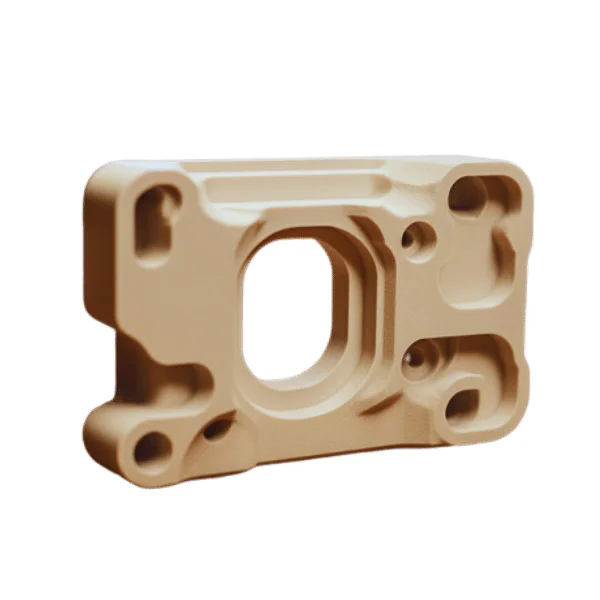
Understanding CNC Machining for PEEK: Why It Matters
PEEK is a high-performance thermoplastic widely used in industries where precision, strength, and heat resistance are critical. However, machining PEEK is not the same as machining metals or low-grade plastics. Its unique properties require a deep understanding of CNC machining techniques, including cutting speeds, tooling, and cooling systems.
Key Advantages of CNC Machining PEEK
-
High Precision & Tight Tolerances
CNC machining ensures PEEK components meet exact specifications, maintaining tolerances as tight as ±0.02 mm. This is vital for industries like aerospace and medical devices. -
Superior Mechanical Performance
PEEK offers high tensile strength, impact resistance, and creep resistance, even under extreme load conditions, making it ideal for structural applications. -
Thermal and Chemical Resistance
CNC-machined PEEK parts can operate continuously at temperatures up to 250°C and withstand aggressive chemicals, acids, and solvents. -
Versatile Applications
PEEK’s properties make it suitable for components such as gears, bushings, seals, insulators, medical implants, and aerospace parts.
Technical Specifications of CNC Machined PEEK
To better understand the performance potential of PEEK, here’s a detailed overview of its material properties relevant to CNC machining:
| Property | Value | Benefit |
|---|---|---|
| Density | 1.31 g/cm³ | Lightweight yet strong |
| Tensile Strength | 90–100 MPa | Handles high loads without deformation |
| Flexural Modulus | 4.1 GPa | Excellent rigidity for structural stability |
| Melting Point | ~343°C | High thermal endurance |
| Continuous Use Temp | Up to 250°C | Reliable in extreme environments |
| Chemical Resistance | Excellent | Resistant to acids, bases, and hydrocarbons |
| Electrical Insulation | High | Ideal for electronic and aerospace components |
| Water Absorption | <0.1% | Maintains dimensional stability |
These properties make CNC-machined PEEK components suitable for mission-critical applications where other plastics or metals may fail.
How CNC Machining Optimizes PEEK Performance
Unlike injection molding, CNC machining provides superior precision and is ideal for low-to-medium-volume production where complex geometries and tight tolerances are required. Below are the key techniques used to maximize PEEK’s potential during CNC machining:
Optimizing Cutting Parameters
-
Spindle Speed: PEEK requires moderate spindle speeds, usually between 1,000–3,000 RPM, to prevent overheating.
-
Feed Rate: A higher feed rate helps reduce friction and material melting.
-
Coolant Use: Air cooling is preferred; liquid coolants may cause thermal shock and dimensional instability.
Selecting the Right Tooling
-
Carbide and Diamond Tools: These reduce tool wear and improve surface finish.
-
Sharp Tool Edges: Minimize burr formation and maintain tight tolerances.
-
Multi-Axis CNC Machines: Enable the production of complex, intricate designs without compromising precision.
Quality Control and Inspection
-
CMM (Coordinate Measuring Machines) ensure part dimensions meet stringent industry requirements.
-
Surface Finish Testing guarantees smooth surfaces, which are especially important in medical and aerospace applications.
Applications of CNC Machined PEEK Across Industries
Because of its remarkable combination of strength, heat resistance, and chemical stability, CNC-machined PEEK parts are used in a wide range of sectors:
Aerospace & Defense
-
Lightweight brackets and housings
-
High-strength fasteners
-
Electrical insulators for avionics systems
Medical Technology
-
Surgical instruments
-
Orthopedic implants
-
Dental equipment components
Automotive & Transportation
-
Engine components exposed to high temperatures
-
Lightweight yet strong transmission parts
-
Seals and gaskets resistant to chemicals and wear
Industrial Equipment
-
Bearings and bushings
-
Valve seats and pump components
-
High-voltage insulators
These industries rely on CNC-machined PEEK to achieve long-term durability and cost efficiency, reducing downtime and maintenance expenses.
CNC Machining PEEK FAQs
Q1: Why choose CNC machining over injection molding for PEEK components?
A1: CNC machining is ideal when you require low-volume production, custom geometries, and tight tolerances. Injection molding, while cost-effective for large quantities, cannot match the precision and flexibility CNC machining provides.
Q2: Can CNC-machined PEEK parts withstand extreme environments?
A2: Yes. PEEK maintains structural integrity at high temperatures up to 250°C, resists aggressive chemicals, and performs reliably in vacuum conditions and radiation environments, making it suitable for aerospace and medical applications.
Why Choose KGL for CNC Machined PEEK Components
When precision and performance are critical, choosing the right manufacturing partner makes all the difference. KGL specializes in CNC machining PEEK and other high-performance materials, offering:
-
Advanced CNC Capabilities: Multi-axis CNC machines for complex geometries
-
Strict Quality Control: Comprehensive testing to ensure exact tolerances
-
Industry Expertise: Serving aerospace, medical, automotive, and industrial clients
-
Custom Solutions: Tailored designs and rapid prototyping for unique applications
At KGL, we combine technical expertise with state-of-the-art equipment to deliver high-quality PEEK components that meet the most demanding specifications.
If you are looking for precision CNC machining of PEEK or want to discuss your project requirements, contact us to speak with our experts and explore how KGL can help bring your designs to life.