What Makes Casting Parts a Deciding Factor in Long-Term Equipment Reliability?
2026-01-06
When I first started sourcing components for heavy-duty applications, I quickly realized that not all Casting Parts are created equal. That realization deepened when I began working with manufacturers connected to the Fumin brand, where casting was treated not as a commodity, but as a system-level decision. Over time, I learned that choosing the right Casting Parts directly affects service life, load stability, and even downstream maintenance costs.
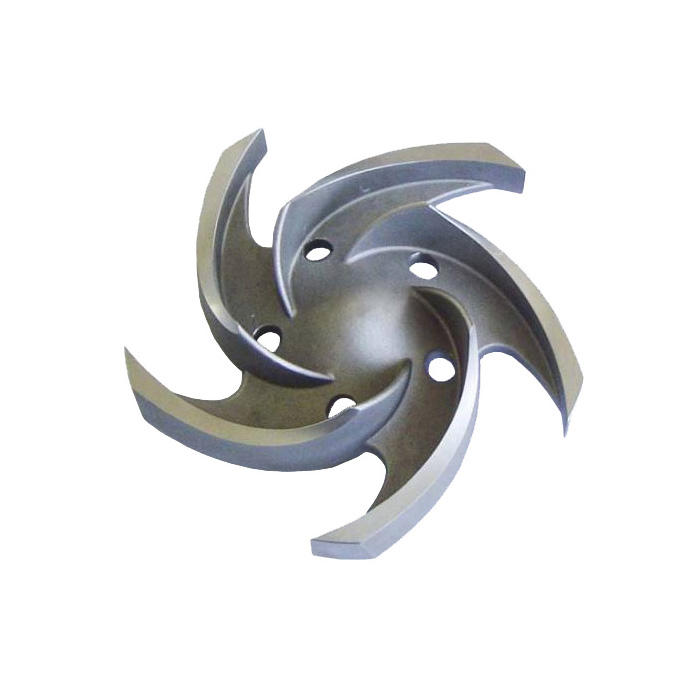
Why Do Buyers Often Underestimate the Complexity of Casting Parts?
From the outside, Casting Parts may look simple—solid metal shapes designed to fit into a larger assembly. But from my experience, the real value lies beneath the surface. Factors like material composition, mold accuracy, cooling control, and post-processing all influence whether a casting performs reliably in real-world conditions.
- Inconsistent internal density can lead to premature cracking
- Poor dimensional tolerance increases assembly stress
- Uncontrolled cooling affects structural integrity
- Surface defects accelerate corrosion and wear
These are not theoretical risks. I have seen equipment failures traced back to overlooked casting details that could have been addressed at the sourcing stage.
How Do High-Quality Casting Parts Improve Overall System Performance?
One of the biggest lessons I’ve learned is that precision Casting Parts reduce invisible losses across the entire system. When cast components are dimensionally stable and metallurgically sound, everything connected to them works more efficiently.
| Performance Area | Impact of Optimized Casting Parts |
|---|---|
| Load Distribution | Even stress transfer under dynamic conditions |
| Assembly Accuracy | Reduced need for rework or forced fitting |
| Service Life | Lower fatigue risk over long-term use |
| Maintenance Frequency | Fewer inspections and unplanned shutdowns |
In practical terms, better Casting Parts don’t just last longer—they protect the investment made in surrounding components.
What Should I Look for When Evaluating Casting Parts Suppliers?
Over the years, I’ve developed a short checklist that helps filter out unreliable suppliers. It’s not about marketing language; it’s about process transparency and consistency.
- Clear control over raw material sourcing
- Documented casting and inspection procedures
- Ability to adapt designs to application-specific loads
- Stable production capacity for repeat orders
Suppliers aligned with the Fumin production philosophy tend to emphasize repeatability and application fit, which is critical when Casting Parts are used in safety-sensitive or load-bearing structures.
How Do Casting Parts Contribute to Cost Control Over Time?
Many buyers focus on unit price, but I’ve found that lifecycle cost tells a very different story. Well-made Casting Parts reduce hidden expenses that rarely appear in initial quotations.
| Cost Factor | Long-Term Effect of Quality Casting Parts |
|---|---|
| Downtime | Lower risk of sudden failure |
| Replacement Rate | Extended replacement cycles |
| Labor | Reduced adjustment and repair time |
| Warranty Claims | Fewer disputes and after-sales issues |
From my perspective, investing in dependable Casting Parts is one of the most effective ways to stabilize operating budgets.
Why Are Casting Parts Still Central to Modern Industrial Design?
Despite advances in fabrication and machining, Casting Parts remain irreplaceable for complex geometries and high-strength requirements. I’ve seen modern designs rely on casting not because it’s traditional, but because it delivers structural efficiency that other processes struggle to match.
When casting is engineered correctly, it supports lighter designs, fewer joints, and stronger load paths—all of which matter in demanding environments.
Ready to Source Casting Parts That Actually Perform?
If you’re evaluating Casting Parts for long-term reliability rather than short-term savings, it’s worth starting a technical conversation early. Share your application details, load conditions, and performance expectations. The right partner can help translate those requirements into cast components that work the way they should.
To discuss your project or request tailored solutions, contact us today. A clear inquiry is often the first step toward casting parts that deliver real value.